
Student loan payments can look manageable at first glance, then suddenly feel confusing when interest, repayment terms, and monthly budgets enter the picture. Many borrowers accept the number they are given without knowing how it was calculated. That is usually where costly mistakes begin.
If you want to know what your student loan will really cost each month, you need more than a rough estimate. You need to understand how the loan amount, interest rate, and repayment term work together. A small change in one number can raise or lower your payment more than most people expect.
This guide will show you how to calculate student loan payments step by step, what affects the final number, and how to estimate the total cost of borrowing before you commit. You will also learn how to compare repayment options, avoid common errors, and make smarter decisions with your money.
What is a student loan payment?
A student loan payment is the amount you pay to your lender each month to repay what you borrowed for education, plus interest. In most cases, your monthly payment includes two parts:
- Principal: the original amount you borrowed
- Interest: the cost of borrowing that money
The exact payment depends on several factors, including your balance, your interest rate, and how long you have to repay the loan.
Some student loans have fixed payments over the full repayment period. Others may change based on income, refinancing terms, or temporary relief programs. That is why knowing how to calculate the payment yourself matters.
How do student loan payments work?
Here’s the problem. Many borrowers think the lender simply divides the loan balance by the number of months. That is not how installment loans usually work.
Most student loans use an amortized payment structure. This means your lender calculates one monthly payment designed to cover both interest and principal over a set term. Early in repayment, a larger portion of your payment goes toward interest. Later, more of it goes toward principal.
If you want to see how loan payments are generally structured, an EMI and loan calculator can help you test how the monthly amount changes when you adjust the rate, term, or balance.
What information do you need to calculate student loan payments?
Before you calculate anything, gather these details:
- Loan amount: your starting balance
- Annual interest rate: the lender’s yearly rate
- Repayment term: how many years or months you have to pay
- Loan type: federal, private, fixed-rate, or variable-rate
- Payment frequency: usually monthly
This small detail changes everything. If even one of these numbers is wrong, your estimated payment will be off.
How to calculate student loan payments step by step
Let’s break this down. Most standard student loans use a fixed monthly payment formula.
Step 1: Convert the annual interest rate to a monthly rate
Divide the annual interest rate by 12.
Example: If your interest rate is 6%, the monthly rate is 0.06 ÷ 12 = 0.005
Step 2: Convert the repayment term into months
Multiply the number of years by 12.
Example: A 10-year repayment plan becomes 120 monthly payments.
Step 3: Use the loan payment formula
The standard formula is:
M = P × [r(1+r)^n] ÷ [(1+r)^n - 1]
- M = monthly payment
- P = loan amount
- r = monthly interest rate
- n = total number of monthly payments
Step 4: Calculate the result
Suppose you borrow $30,000 at 6% interest for 10 years.
- Loan amount = 30,000
- Monthly interest rate = 0.005
- Number of payments = 120
Using the formula, the monthly payment is about $333.
That means you would repay roughly $39,960 over 10 years, with about $9,960 going to interest.
Student loan payment example table
Now comes the important part. A quick comparison shows how much the term and interest rate affect the monthly cost.
| Loan Amount | Interest Rate | Term | Estimated Monthly Payment | Estimated Total Paid |
|---|---|---|---|---|
| $20,000 | 5% | 10 years | $212 | $25,440 |
| $30,000 | 6% | 10 years | $333 | $39,960 |
| $40,000 | 7% | 15 years | $360 | $64,800 |
| $50,000 | 8% | 20 years | $418 | $100,320 |
Longer terms often reduce the monthly payment, but they usually increase the total interest paid.
Why does your student loan payment feel higher than expected?
This is where many people struggle. The payment may look larger than expected for a few common reasons:
- Your interest rate is higher than you assumed
- Your repayment term is shorter
- Interest accrued during school was added to the balance
- You have multiple loans with different rates
- Your loan entered standard repayment after a deferment or grace period
Federal and private student loans can behave differently. For example, unsubsidized loans may accumulate interest while you are still in school. Once that unpaid interest is added to the balance, future payments are based on a higher amount.
How does loan term affect student loan payments?
The answer depends on one thing: whether you care more about lower monthly payments or lower total borrowing cost.
| Repayment Term | Monthly Payment | Total Interest Paid | Best For |
|---|---|---|---|
| Shorter term | Higher | Lower | Borrowers who want to save on interest |
| Longer term | Lower | Higher | Borrowers who need more room in the monthly budget |
Here’s what experienced professionals do differently. They do not focus only on the smallest monthly payment. They also calculate the total amount repaid over time. A lower payment can feel helpful now but become expensive later.
How does interest affect the total cost of a student loan?
Interest is the price of borrowing. Even a difference of 1% can change your long-term cost by thousands of dollars.
For example, a $35,000 loan at 5% over 10 years costs far less than the same loan at 8%. The monthly payment rises, and the total repayment grows even faster.
If you want to measure how percentages affect cost, a percentage calculator can help you quickly test rate differences and compare scenarios.
Can you estimate payments without doing the formula by hand?
Yes, and most people should. Manual math is useful for understanding how the system works, but online calculators are faster and reduce mistakes.
A calculator can help you:
- Estimate monthly student loan payments
- Compare multiple loan amounts
- See how extra payments reduce total interest
- Understand the tradeoff between short and long terms
- Preview affordability before borrowing
If you want a month-by-month view of how your balance changes, a loan amortization calculator is especially useful. It shows how much of each payment goes toward interest and principal over time.
How to calculate payments for federal vs private student loans
Not all student loans are repaid the same way.
Federal student loans
Federal loans often offer more repayment flexibility. Depending on the plan, your payment might be based on:
- A standard fixed repayment schedule
- A graduated plan with lower starting payments
- An income-driven repayment plan
- An extended repayment term
For standard federal repayment, the fixed payment formula works well. For income-driven plans, your payment may depend more on earnings and family size than the balance alone.
Private student loans
Private loans are usually based on traditional lending terms. Your payment typically depends on:
- Loan amount
- Interest rate
- Repayment term
- Fixed or variable rate structure
Variable-rate loans deserve extra attention. A low payment today can rise later if rates increase.
How to know if your student loan payment is affordable
A lender may approve a loan that puts real pressure on your monthly finances. Approval does not always mean comfort.
Start by comparing your estimated loan payment with your income and living expenses. Include:
- Rent
- Food
- Transportation
- Utilities
- Insurance
- Emergency savings
- Other debt payments
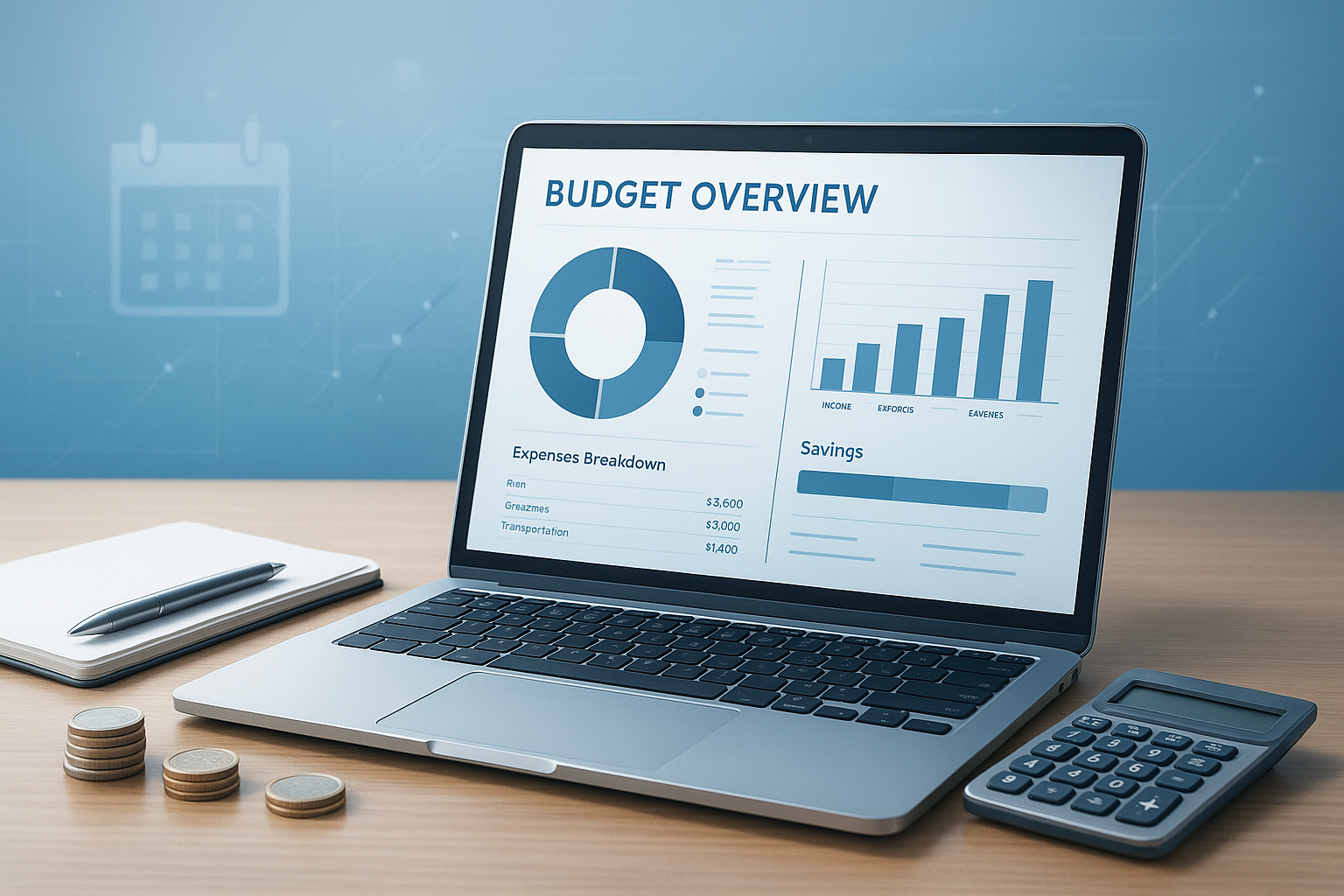
A simple way to test this is by using a budget planner before you borrow or before you change repayment plans. This gives you a more realistic picture of what you can handle each month.
What happens if you pay extra on a student loan?
This small detail changes everything. Extra payments often reduce the principal faster, which lowers future interest charges.
Benefits of paying extra include:
- Paying off the loan sooner
- Reducing total interest paid
- Lowering your debt burden faster
- Freeing up future cash flow
Here is a simple example:
If your required payment is $333 but you pay $383 each month, that extra $50 can shorten the loan term and save a meaningful amount in interest over the life of the loan.
Always confirm with your lender that extra payments are applied to principal and not simply held for future scheduled payments.
Common mistakes people make when calculating student loan payments
Let’s look at why estimates often go wrong.
- Ignoring accrued interest: especially during school or deferment
- Using the wrong term: 10 years and 15 years create very different payments
- Forgetting fees: some loans include costs beyond interest
- Assuming all loans have one blended rate: many borrowers have several separate loans
- Not accounting for variable rates: current payments may not stay the same
- Focusing only on monthly payment: total repayment matters too
Best practices before taking a student loan
Borrowing for education is sometimes necessary, but smart planning matters.
- Borrow only what you actually need
- Estimate your monthly payment before signing
- Compare fixed and variable interest rates carefully
- Understand when interest starts accruing
- Check repayment options before graduation
- Plan for life after school, not just school costs
If your money is sitting in savings while you are planning future education expenses, it can also help to understand how growth works over time. A compound interest calculator can show whether saving more now may reduce how much you need to borrow later.
Student loan payment strategies that can save money
Here’s what experienced professionals do differently. They look beyond the basic payment and build a repayment strategy.
1. Pay interest early if possible
If your loan accrues interest while you are in school, making small early payments can prevent that interest from building up.
2. Choose the shortest affordable term
A shorter term usually means less total interest, as long as the monthly payment fits your budget.
3. Make extra payments consistently
Even small recurring overpayments can make a difference over the life of the loan.
4. Recalculate after major life changes
A salary increase, refinance offer, or change in expenses may open the door to faster repayment.
5. Review all loans together
If you have multiple balances, prioritize high-interest loans first when possible.
How to compare student loan scenarios before borrowing
Before choosing a loan, compare at least three versions:
| Scenario | Loan Amount | Rate | Term | What to Watch |
|---|---|---|---|---|
| Lower balance | Smaller | Moderate | 10 years | May require more upfront savings |
| Longer term | Same | Moderate | 15 to 20 years | Lower monthly payment but higher total cost |
| Lower rate | Same | Lower | 10 years | Best for reducing total repayment |
This is one of the smartest habits you can build. Instead of asking, “Can I get approved?” ask, “What will this cost me every month and over the full life of the loan?”
Frequently Asked Questions
How do I calculate my student loan monthly payment?
Use your loan amount, annual interest rate, and repayment term in months. Most fixed student loans follow an amortization formula that produces one monthly payment over the life of the loan.
What is a normal monthly student loan payment?
There is no single normal payment. It depends on how much you borrowed, your interest rate, and your repayment plan. For many borrowers, payments range from under $100 to several hundred dollars per month.
Do student loan payments include interest?
Yes. In most cases, your monthly payment covers both principal and interest. Early payments usually include more interest than later ones.
How can I lower my student loan payment?
You may lower the payment by extending the loan term, switching repayment plans if eligible, refinancing at a lower rate, or enrolling in an income-based plan for qualifying federal loans. Lower monthly payments can increase total interest, so compare the full cost.
Is it better to pay off student loans early?
Often yes, if there are no prepayment penalties and your budget is stable. Paying early can reduce interest and shorten your repayment period.
How do I estimate total student loan cost?
Multiply your monthly payment by the number of payments, then compare that total with the original balance. The difference is the total interest and borrowing cost.
What if I have multiple student loans?
Calculate each loan separately if the balances, rates, or terms differ. Then add the monthly payments together to estimate your total monthly obligation.
Do private student loan payments change over time?
They can. Fixed-rate private loans usually stay the same. Variable-rate loans may increase or decrease depending on market conditions.
Can I make payments while still in school?
Yes. In many cases, making small payments while in school can reduce accrued interest and lower your future balance.
Why is my actual payment different from my estimate?
Your actual payment may differ because of accrued interest, capitalization, lender rounding, fees, variable interest changes, or a different repayment plan than the one you assumed.
Final thoughts
Calculating student loan payments is not just a math exercise. It is one of the best ways to protect your future budget. Once you understand how balance, interest, and term work together, you can spot expensive loans early and make more confident decisions.
The key is simple. Do not guess. Run the numbers before you borrow, and review them again before repayment begins. A payment that seems manageable today can become stressful later if you ignore total interest, changing rates, or your real monthly expenses.
If you take the time to calculate your student loan properly, you put yourself in a stronger position from the start. That gives you more control, fewer surprises, and a much clearer path to paying your debt off wisely.