
Do you ever check your bank balance and wonder where the money went? That feeling usually has one cause: spending is happening faster than tracking. A good budget planner fixes that. It shows what comes in, what goes out, and what needs to change.
The goal is not to make life feel restrictive. It is to give every dollar a job so you can spend with less stress and save with more confidence. Whether you are trying to pay bills on time, build an emergency fund, or simply stop overspending, a budget planner gives you a system you can trust.
In this guide, you will learn how a budget planner works, how to set one up, what categories to include, and how to make it realistic enough to stick with. You will also see common mistakes, smarter tracking methods, and simple ways to improve your monthly savings.
What is a budget planner?
A budget planner is a simple system for tracking income, expenses, savings, and financial goals. It helps you compare what you planned to spend with what you actually spent, so you can make better decisions each month.
Think of it as a financial map. Without one, money moves in different directions and small purchases pile up unnoticed. With one, you can see patterns clearly. If you need help with quick number checks while setting categories or payment amounts, tools like a percentage calculator can make planning much faster.
- Tracks income from all sources
- Lists fixed and variable expenses
- Shows how much you can save
- Highlights overspending areas
- Helps you plan for future bills
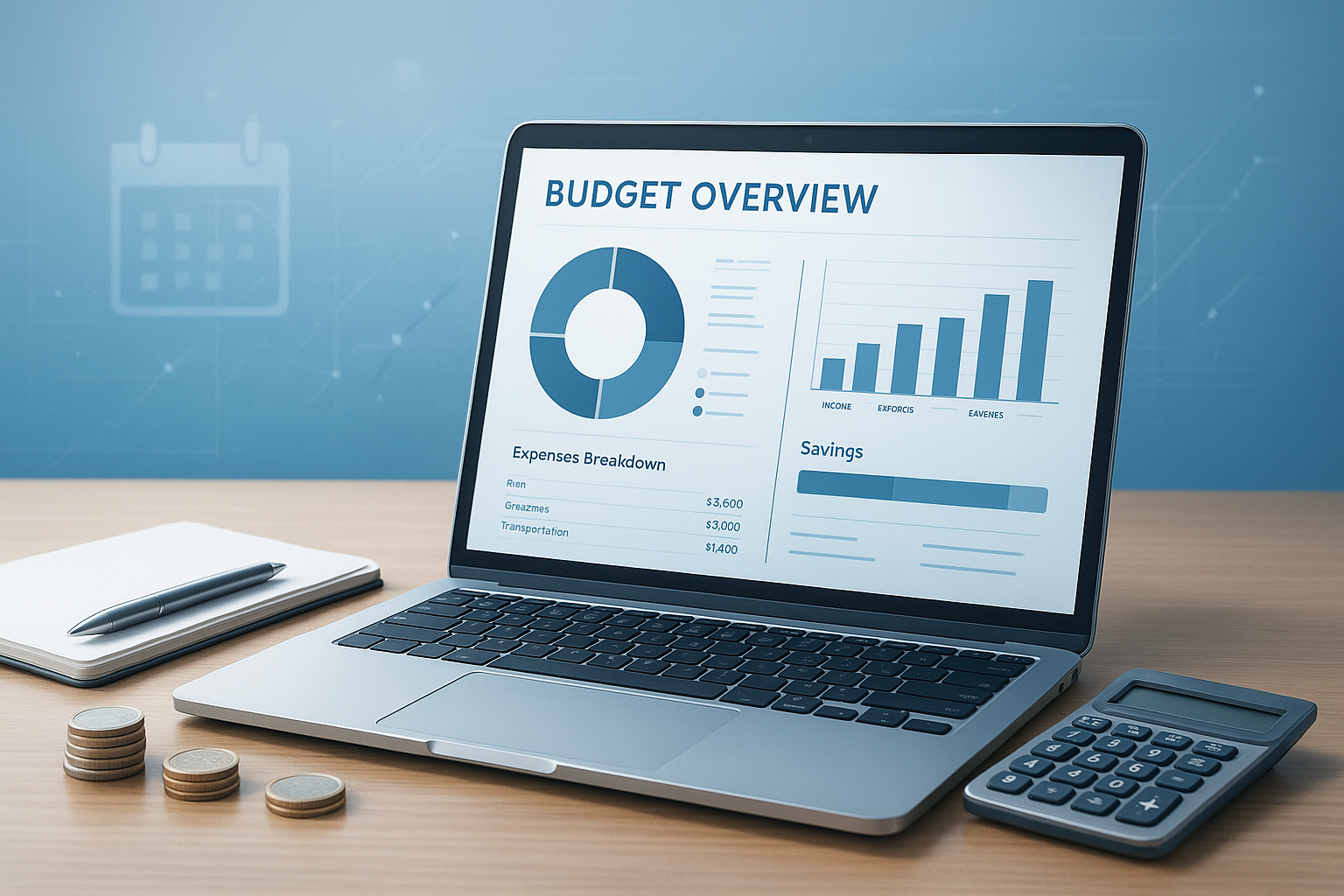
Suggested Image: Monthly Budget Planner Layout With Income, Expenses, and Savings Sections
Why does a budget planner matter so much?
A budget planner matters because most money problems are tracking problems first. When you know where your money goes, you can reduce waste, prepare for bills, and save intentionally instead of hoping something is left over.
Here’s the problem. Many people think budgeting is only for those in debt. It is not. A budget planner is useful at every income level. It helps if you are living paycheck to paycheck, but it also helps if you earn well and still want stronger control over spending.
According to the Consumer Financial Protection Bureau budgeting resources, tracking spending is one of the core steps in managing money responsibly. The reason is simple: clear numbers lead to better habits.
| Without a Budget Planner | With a Budget Planner |
|---|---|
| Bills may surprise you | Bills are scheduled in advance |
| Savings happen inconsistently | Savings are planned monthly |
| Spending leaks go unnoticed | Problem categories are easy to spot |
| Financial goals stay vague | Goals become measurable and realistic |
How to create a budget planner that actually works
A budget planner works when it is simple, realistic, and updated regularly. The best system is not the most detailed one. It is the one you will actually use every week.
Now comes the important part. A budget planner should fit your real life, not an ideal version of it. If your income changes every month or your spending varies, build flexibility into your setup from the beginning.
- Calculate your monthly income. Include salary, freelance income, side work, support payments, and any regular income source. If your income changes, use a three to six month average.
- List fixed expenses. Add rent, mortgage, insurance, subscriptions, loan payments, and school fees.
- Estimate variable expenses. Include groceries, transport, dining out, entertainment, fuel, and small personal purchases.
- Add savings and debt goals. Plan these as fixed line items, not leftovers.
- Compare income and expenses. If spending is higher than income, reduce categories before the month starts.
- Track actual spending. Update your planner weekly so problems do not build up silently.
If you want to estimate how much debt payments affect your monthly cash flow, a loan calculator can help you test different payment scenarios before adding them to your budget.
What should you include in a monthly budget planner?
A monthly budget planner should include every recurring and occasional money movement. The more complete the picture, the more useful your budget becomes for day-to-day decisions.
This is where many people struggle. They include rent and groceries, but forget annual renewals, school costs, holiday spending, medical expenses, or gifts. Those skipped categories make a budget look better than reality.
Income categories
- Main salary or wages
- Freelance or contract income
- Business income
- Investment income
- Child support or alimony
- Other regular payments
Core expense categories
- Housing
- Utilities
- Internet and phone
- Transportation
- Groceries
- Insurance
- Debt payments
- Healthcare
- Childcare
- Education
Flexible spending categories
- Dining out
- Shopping
- Subscriptions
- Entertainment
- Travel
- Personal care
Saving and planning categories
- Emergency fund
- Retirement
- Vacation fund
- Home maintenance
- Car repairs
- Holiday spending
For long-term savings estimates, try using a compound interest calculator to see how regular contributions may grow over time.
What budgeting method is best?
The best budgeting method depends on how predictable your income is and how much detail you like. Most people do best with a simple method they can review in five to ten minutes each week.
Let’s break this down. You do not need a perfect budgeting style. You need one that feels easy enough to maintain after the first month.
| Budgeting Method | Best For | How It Works |
|---|---|---|
| 50/30/20 Budget | Beginners | 50% needs, 30% wants, 20% savings or debt |
| Zero-Based Budget | Detailed planners | Every dollar is assigned a job before the month starts |
| Envelope Method | Overspenders | Set cash or fixed limits for categories like food and shopping |
| Pay Yourself First | Savvy savers | Move money to savings first, then spend the rest |
If you are just starting, the 50/30/20 method is often the easiest. You can quickly calculate category targets with a ratio calculator if you want to split income into percentages without doing the math manually.
For basic guidance on this budgeting approach, the Investopedia guide to the 50/30/20 budget rule offers a clear overview.
How do you track spending without making budgeting exhausting?
The simplest way to track spending is to review transactions weekly, sort them into categories, and compare totals to your budget limits. Weekly tracking works better than monthly catch-up because it keeps mistakes small and manageable.
Here’s what experienced professionals do differently. They do not rely on memory. They use statements, receipts, notes apps, spreadsheets, or simple digital tools. The method matters less than consistency.
- Pick a review day each week
- Open your bank and card transactions
- Sort each purchase into a category
- Mark whether it was planned or unplanned
- Adjust the remaining budget for the month
- Cut back early if one category is rising too fast
If your budgeting sheet includes dates and planning periods, a date calculator can help you map bill cycles, paycheck timing, and due dates more accurately.
Suggested Screenshot: Weekly Spending Tracker With Planned vs Actual Categories
How can a budget planner help you save more money?
A budget planner helps you save more by turning vague savings goals into fixed monthly actions. Instead of saving whatever is left over, you decide in advance how much goes to emergency savings, debt reduction, or future expenses.
The answer depends on one thing: whether your planner treats savings as a priority or an afterthought. Most people save more once they create a savings category before they start spending.
Practical ways to increase savings through budgeting
- Set an automatic transfer on payday
- Create a separate category for irregular bills
- Reduce one high-leak area, such as takeout or impulse shopping
- Round up your savings target each month
- Send part of tax refunds or bonuses directly to savings
- Review subscriptions every 60 to 90 days
If you are planning future savings goals, such as building a six-month emergency fund, a savings calculator can help estimate how long it may take based on your monthly contribution.
The FDIC Money Smart resources also explain practical saving habits that support long-term financial stability.
Common budget planner mistakes to avoid
The biggest budgeting mistakes are usually small setup errors repeated every month. A budget planner fails when it ignores real habits, skips irregular expenses, or sets savings goals that are too aggressive to maintain.
This small detail changes everything. A budget is not supposed to be strict. It is supposed to be accurate. If your planner does not reflect your actual life, you will stop trusting it.
- Underestimating variable spending: Groceries, fuel, and dining out often fluctuate.
- Forgetting annual or seasonal costs: Renewals, gifts, school supplies, and repairs deserve their own line items.
- Setting unrealistic limits: Cutting spending too hard often leads to rebound overspending.
- Ignoring cash withdrawals: If it leaves your account, it should be tracked.
- Not reviewing the budget: A planner only works when updated regularly.
- Only budgeting for normal months: Real life includes emergencies and uneven expenses.
If you need to compare how small spending cuts affect monthly totals, a unit price calculator can also help with smarter shopping decisions, especially for groceries and household supplies.
Budget planner example for a typical month
A sample budget planner makes the process easier because it shows how categories fit together. The numbers below are only an example, but the structure works well for many households.
| Category | Planned Amount | Actual Amount |
|---|---|---|
| Income | $4,000 | $4,000 |
| Housing | $1,300 | $1,300 |
| Utilities | $220 | $245 |
| Groceries | $450 | $490 |
| Transport | $250 | $235 |
| Debt Payments | $300 | $300 |
| Savings | $500 | $500 |
| Dining and Fun | $300 | $420 |
| Other Expenses | $680 | $510 |
This example shows why comparison matters. Even when total spending stays close to plan, category shifts can reveal habits that need attention. In this case, dining out is the main category to review next month.
Is a digital budget planner better than paper?
A digital budget planner is usually better for speed, editing, and long-term tracking, while a paper planner can work well for people who prefer writing things down. The best option is the one you will use consistently.
Some people enjoy paper because it feels more intentional. Others need fast edits, formulas, and automatic totals. If you like organized digital documents, a PDF to Excel converter can be useful when moving financial tables into editable spreadsheets for easier budget analysis.
| Paper Budget Planner | Digital Budget Planner |
|---|---|
| Simple and distraction-free | Easy to edit and update |
| Good for manual reflection | Supports formulas and automation |
| Harder to compare over time | Better for monthly trend tracking |
| No backup if lost | Can be stored and backed up easily |
How often should you review your budget planner?
You should review your budget planner weekly and do a deeper check at the end of each month. Weekly reviews help you catch overspending early, while monthly reviews help you improve category targets for the next cycle.
Most people fail because they only look at their budget after the money is already gone. A short weekly review is usually enough to stay in control.
- Weekly: Check spending, adjust categories, and note surprises
- Monthly: Compare planned versus actual totals
- Quarterly: Reassess savings goals, debt progress, and fixed costs
- Yearly: Review subscriptions, insurance, taxes, and long-term plans
The IRS Tax Withholding Estimator can also help if paycheck changes or tax withholding are affecting your monthly take-home pay and making your budget inaccurate.
Frequently Asked Questions
1. What is the easiest budget planner for beginners?
The easiest budget planner for beginners is one with basic sections for income, fixed bills, flexible spending, and savings. Many people start with a simple 50/30/20 layout because it is easy to understand. The key is not complexity. It is consistency. If a planner takes too long to update, most beginners stop using it. Start small, then add detail only when you need it.
2. How much should I save each month in my budget planner?
A common starting point is 10% to 20% of income, but the right amount depends on your bills, debt, and goals. If that range feels too high, start with a smaller fixed amount and increase it gradually. Even a modest monthly savings habit is better than waiting for the perfect time. Your planner should reflect a number you can repeat consistently, not one that looks good only on paper.
3. Should I budget based on gross income or net income?
Use net income for your actual budget planner because that is the amount you can spend, save, or invest. Gross income is useful for salary discussions, but monthly budgeting works best when based on money that actually reaches your account. This reduces planning errors and makes your expense categories more realistic. If your paycheck changes, update your budget using recent average net income rather than guesswork.
4. What if my income changes every month?
If your income is irregular, build your budget around a conservative monthly average based on the last three to six months. Start with essential expenses first, then savings, then flexible categories. It also helps to create a buffer fund for low-income months. Variable income budgeting works best when you separate must-pay bills from optional spending and avoid making commitments based on your best month.
5. How do I budget for irregular expenses like car repairs or holidays?
The best way is to turn irregular expenses into monthly sinking funds. Estimate how much you spend on these categories in a year, then divide by 12 and save that amount monthly. This approach makes annual and seasonal costs easier to manage. Instead of being surprised by holiday shopping, repairs, or school costs, you prepare for them little by little throughout the year.
6. Can a budget planner help me pay off debt faster?
Yes. A budget planner helps you pay off debt faster by showing where money can be redirected. Once your spending is organized, you can identify categories to trim and apply the difference to extra debt payments. It also helps you compare debt priorities and avoid missing due dates. When payments are planned in advance, debt reduction becomes a strategy instead of a monthly scramble.
7. Is budgeting safe if I use online tools?
Budgeting is generally safe if you use reputable tools, secure passwords, and avoid sharing sensitive financial information carelessly. If you use a spreadsheet or calculator, double-check where your data is stored. For connected financial apps, review privacy settings and permissions carefully. A safer option for many people is using offline sheets or basic calculators that do not require bank logins.
8. How long does it take for a budget planner to start working?
Most people start seeing value in the first month because they immediately notice where spending is going. Clear improvement usually happens after two to three months, once category estimates become more accurate and habits start changing. The first month is mainly for observation. The next few months are where real progress shows up through better planning, fewer surprises, and stronger savings behavior.
9. What is the biggest mistake people make when using a budget planner?
The biggest mistake is building a budget that does not match real life. People often underestimate flexible spending, forget irregular bills, or set limits that are too strict to maintain. That leads to frustration and eventually abandoning the system. A better approach is to track honestly for one month, then create realistic limits based on actual numbers rather than optimistic guesses.
10. Do I need a separate budget planner for personal and family expenses?
If you manage shared money with a partner or family, separate planning sections usually help. You can keep one household budget planner for shared bills and another for personal spending. This setup creates clarity without turning every purchase into a household discussion. It also reduces confusion around responsibilities, goals, and category limits, especially when more than one person contributes income.
Final thoughts
A budget planner is not about controlling every small purchase. It is about seeing your money clearly enough to make better choices. Once you know what you earn, what you spend, and what you want to save, financial decisions become simpler.
Start with one month. Keep the categories clear. Review them weekly. Adjust without guilt. If you want to make the process easier, use practical tools like a budget calculator alongside calculators for savings, loans, percentages, and date planning. The best budget planner is the one that helps you