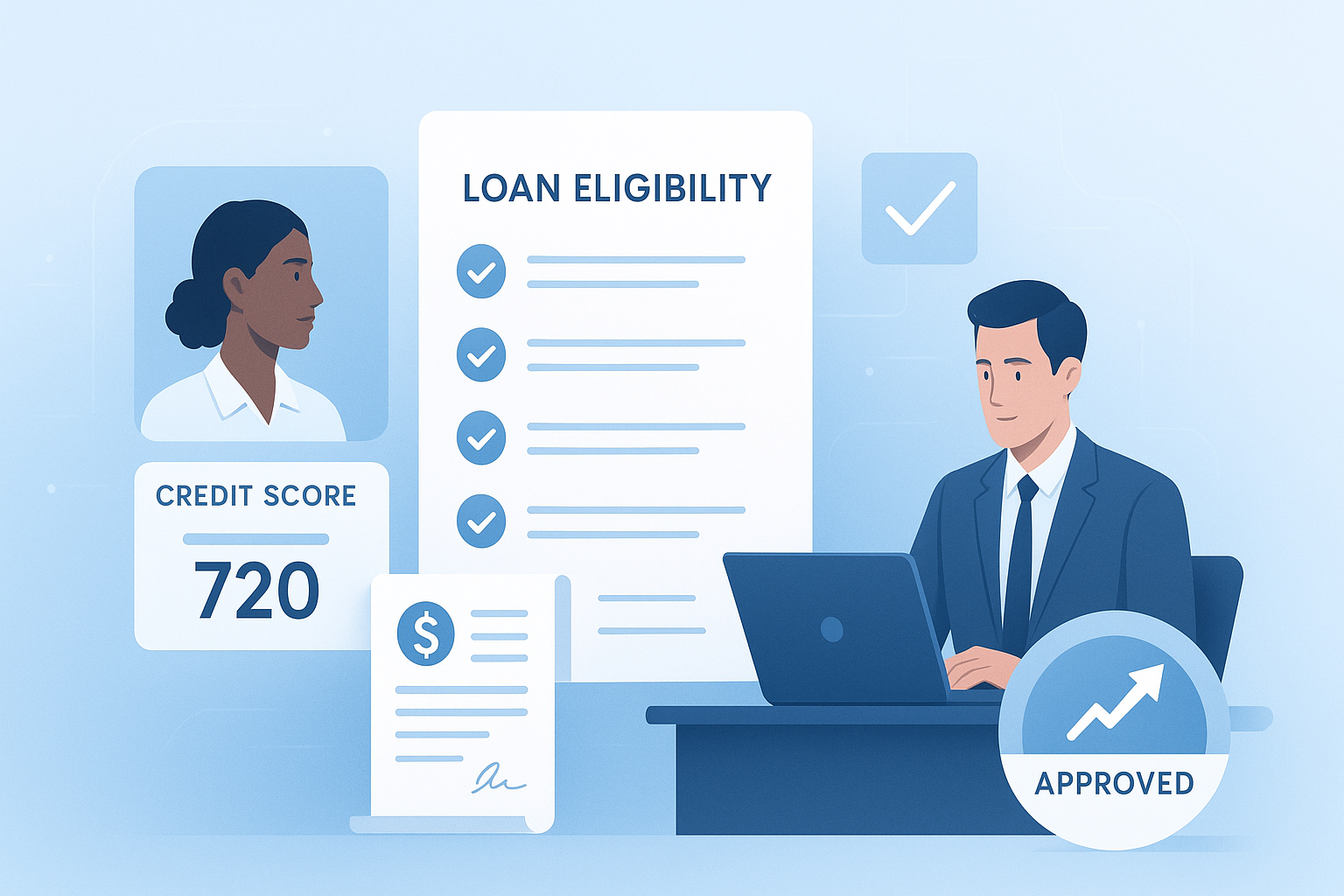

Ever applied for a loan and wondered why one lender offered a low rate while another rejected the application completely? In many cases, the difference comes down to one number: your credit score.
A credit score affects far more than approval. It can change your interest rate, your loan amount, your monthly payment, and even the type of loan you qualify for. A small difference in score can cost or save you thousands over time.
Let’s break this down clearly. In this guide, you’ll learn what a credit score is, how lenders use it, what score ranges usually mean, and what practical steps can improve your chances of getting approved.
What is a credit score?
A credit score is a number that helps lenders measure how risky it may be to lend you money. It is based on your credit history, which includes how you have handled borrowed money in the past.
The score gives lenders a quick way to assess whether you tend to pay on time, carry high balances, apply for too much credit, or manage debt responsibly.
Most credit scores fall within a set range, and higher scores generally suggest lower lending risk.
Why does a credit score matter for loan eligibility?
Here’s the problem. Many borrowers think credit scores only matter for getting approved. That is only part of the story.
Lenders use your score to decide:
- Whether to approve or deny your application
- How much money they are willing to lend
- What interest rate to charge
- What repayment period to offer
- Whether to require a co-signer or collateral
This means your credit score directly affects affordability. Even if two people borrow the same amount, the one with the stronger score may pay much less over the life of the loan.
If you want to estimate how rate changes affect monthly payments, using an EMI and loan calculator can make the difference easy to see.
How do lenders use credit scores?
Lenders rarely look at your score in isolation. They use it as part of a broader review.
Now comes the important part. A credit score is often the first filter. If your score falls below a lender’s minimum requirement, the application may be declined before other strengths are considered.
If your score passes that first check, the lender may then review:
- Your income
- Your employment history
- Your debt-to-income ratio
- Your existing loan obligations
- Your savings or assets
- Your repayment history
So yes, your score matters. But lenders also want to know whether your current financial situation supports the loan.
What credit score ranges usually mean
Different scoring models exist, but the basic pattern is similar. Higher scores usually lead to better loan terms.
| Credit Score Range | Typical Rating | What It Often Means for Borrowers |
|---|---|---|
| 300 to 579 | Poor | Higher chance of rejection, very high interest rates, stricter conditions |
| 580 to 669 | Fair | May qualify for some loans, but often with less favorable rates |
| 670 to 739 | Good | Generally acceptable for many lenders, better approval odds |
| 740 to 799 | Very Good | Stronger access to competitive rates and better loan options |
| 800 to 850 | Excellent | Best chance of low rates, high approval odds, and flexible terms |
These ranges are general. Each lender has its own rules, and some loan types are more flexible than others.
How does credit score affect different types of loans?
The answer depends on one thing: the kind of loan you want.
Some lenders are willing to accept lower scores for secured loans because there is collateral involved. Others are much stricter, especially for unsecured lending.
Personal loans
Personal loans often rely heavily on creditworthiness because they are usually unsecured. A low score can lead to rejection or very high interest rates.
Home loans and mortgages
Mortgage lenders review credit scores carefully because the loan amounts are large and repayment periods are long. Your score can affect both approval and long-term cost. If you are comparing home financing options, a mortgage calculator helps you test how different rates influence monthly payments.
Auto loans
Car loans may be easier to get than unsecured personal loans because the vehicle serves as collateral. Still, borrowers with poor scores often pay much more in interest.
Student loans
Government-backed student loans may not depend heavily on credit scores, but private student loans often do. A weaker score may require a co-signer.
Credit cards and lines of credit
These products are strongly tied to credit profile. Better scores often mean higher limits, lower rates, and stronger rewards.
Can you get a loan with a low credit score?
Yes, but it usually comes with trade-offs.
This is where many people struggle. They focus only on approval and ignore the total cost. A lender may say yes, but at an interest rate that makes the loan expensive and difficult to manage.
With a low credit score, you may still qualify by:
- Applying for a smaller loan amount
- Choosing a secured loan
- Adding a co-signer
- Making a larger down payment
- Showing stable income and low existing debt
Approval is possible, but the terms may not be ideal. That is why improving your score before applying can be worth the wait.
What else besides credit score affects loan approval?
Your score is important, but it is not the whole decision.
| Factor | Why It Matters |
|---|---|
| Income | Shows whether you have enough cash flow to repay the loan |
| Debt-to-income ratio | Helps lenders see how much of your income is already committed to debt |
| Employment stability | Suggests reliability and repayment capacity |
| Loan amount | Larger loans may require stronger credit and income |
| Down payment | Reduces lender risk, especially for mortgages and auto loans |
| Collateral | Secured assets can improve approval odds |
| Recent credit activity | Too many new applications can signal financial stress |
Here’s what experienced professionals do differently. They prepare the full picture, not just the score. A lender wants confidence that the loan will be repaid on time.
What factors influence your credit score?
Understanding how your score is built gives you more control over it.
While models vary, these factors usually matter most:
- Payment history: Whether you pay bills on time
- Credit utilization: How much of your available credit you are using
- Length of credit history: How long your accounts have been open
- Credit mix: The variety of credit types you manage
- New credit inquiries: How often you apply for new credit
Payment history and credit utilization often have the biggest impact. Missing payments or running up balances can lower your score quickly.
How does a better credit score save money?
This small detail changes everything. A stronger score does not just improve approval odds. It can reduce the amount you pay every month and the total interest over the life of the loan.
For example, imagine two borrowers taking the same loan amount for the same term. One receives a lower annual rate because of a stronger score. The monthly difference may seem manageable at first, but over years, the total extra cost can be substantial.
If you want to compare repayment cost over time, a loan amortization calculator can help you see how much goes toward interest versus principal.
What is a good credit score for a loan?
There is no one answer for every lender, but in general:
- A score below 580 tends to limit options
- A score from 580 to 669 may qualify for some loans, but often at higher rates
- A score of 670 or above is commonly viewed as a stronger starting point
- A score above 740 usually gives access to better rates and terms
That said, lenders set different standards based on the loan type, market conditions, and your full financial profile.
How to improve your credit score before applying for a loan
If your score is lower than you want, do not rush into an application. A short delay can sometimes lead to much better loan terms.
Let’s look at practical steps that help.
- Pay every bill on time
Late payments can hurt your score significantly. Set reminders or auto-pay where possible.
- Lower your credit card balances
Try to use only a small portion of your available credit. High utilization can make lenders nervous.
- Check your credit report for errors
Incorrect late payments, duplicate accounts, or outdated balances can drag your score down.
- Avoid applying for too many new accounts
Multiple hard inquiries in a short period can lower your score and signal risk.
- Keep old accounts open if they help your history
A longer credit history can support your score, especially if those accounts are in good standing.
- Reduce existing debt
Paying down debt can improve both your score and your debt-to-income ratio.
- Build a realistic budget
Consistent financial habits matter. A budget planner can help you identify where your money goes and how much you can put toward debt reduction.
How long does it take to improve a credit score?
It depends on what is hurting the score.
If your main issue is high credit card balances, paying them down may help relatively quickly. If the problem is missed payments or defaults, repair usually takes longer because negative marks can remain on your credit report for years.
In most cases, meaningful improvement comes from consistency, not quick fixes.
Common mistakes that hurt loan eligibility
Many people damage their approval chances right before applying. Here are some of the biggest mistakes.
- Missing payments in the months leading up to the application
- Maxing out credit cards
- Applying with multiple lenders too aggressively
- Changing jobs without stable income documentation
- Taking on new debt before a major loan application
- Ignoring errors on a credit report
- Borrowing more than the budget can realistically support
These mistakes can lower your score, weaken your financial profile, or both.
How to prepare for a loan application
If you want the best chance of approval, prepare before you apply.
- Review your credit score and report
Know where you stand and fix any errors early.
- Calculate what you can afford
Do not rely on lender approval alone. Estimate a payment that fits your budget comfortably.
- Reduce short-term debt if possible
Lower balances can improve both credit utilization and debt-to-income ratio.
- Gather proof of income and financial records
Being prepared can speed up the process and improve lender confidence.
- Compare loan terms, not just approval odds
Interest rate, fees, term length, and monthly payment all matter.
Credit score and interest rate comparison
A simple comparison shows why credit score matters so much.
| Borrower Profile | Typical Loan Outcome | Likely Cost Impact |
|---|---|---|
| Excellent credit | Higher approval odds and lower rates | Lower monthly payment and less total interest |
| Good credit | Solid approval chances with competitive terms | Manageable total borrowing cost |
| Fair credit | Approval possible, but rates may be higher | Higher repayment cost over time |
| Poor credit | Limited lender options and stricter conditions | Much higher interest and fees |
If you are comparing loan offers, even a small rate change matters. For example, a 2 percent difference in annual interest can meaningfully increase the total amount repaid.
Should you wait to apply until your credit score improves?
Sometimes yes. Sometimes no.
If the loan is not urgent and your score is close to a better credit tier, waiting can be smart. A higher score may unlock a lower rate and better terms.
But if the loan is necessary now, focus on getting the safest terms you can manage. The goal is not just approval. The goal is a payment you can comfortably sustain.
What borrowers often misunderstand about credit scores
Let’s clear up a few common myths.
- Myth: A high income guarantees loan approval.
Reality: Income helps, but a weak credit profile can still create problems. - Myth: Checking your own score always hurts it.
Reality: Personal checks are usually soft inquiries and typically do not affect your score. - Myth: Closing old credit cards always helps.
Reality: It can reduce available credit and shorten average account age in some cases. - Myth: A denied application means you cannot borrow at all.
Reality: Another lender or a different loan type may still be possible.
Frequently Asked Questions
What is the minimum credit score needed for a loan?
There is no universal minimum. Some lenders approve borrowers with scores below 600, while others prefer 670 or higher. The requirement depends on the loan type and lender policy.
Can I get a personal loan with bad credit?
Yes, but the terms may be expensive. You may face higher interest rates, lower loan amounts, or added requirements like a co-signer.
Does checking my credit score lower it?
Usually no. Checking your own score is typically a soft inquiry and does not affect your credit score.
How much does a late payment hurt a credit score?
It can hurt a lot, especially if you previously had strong credit. The exact impact depends on your overall profile and how recent the late payment is.
Is a 700 credit score good for loan approval?
In many cases, yes. A 700 score is generally considered good and may qualify you for many loan products with reasonable terms.
Do all lenders use the same credit score?
No. Lenders may use different scoring models and may also weigh other factors differently during underwriting.
Can I improve my credit score in 30 days?
Some people can see short-term improvement by paying down high balances or correcting report errors. Bigger improvements usually take longer.
Why was I denied if my credit score seems decent?
A decent score does not guarantee approval. Income, debt-to-income ratio, loan amount, recent credit activity, and verification issues can all affect the decision.
Does paying off a loan improve credit score?
It can help over time, especially if it improves your debt profile and shows successful repayment history. The exact effect depends on your full credit mix.
What is more important: credit score or income?
Both matter. Credit score reflects past borrowing behavior, while income shows your current ability to repay. Lenders usually consider both together.
Final thoughts
Your credit score plays a major role in loan eligibility, but its real impact goes beyond approval. It affects the rate you receive, the total interest you pay, and how flexible your loan terms will be.
The good news is that credit scores are not fixed. With better payment habits, lower balances, and smart timing, you can improve your position before applying.
If you are planning to borrow soon, start by checking your score, reviewing your budget, and estimating the real cost of repayment. That preparation can help you borrow with more confidence and avoid expensive mistakes.