Ever look at a competitor’s rankings and wonder, “How are they getting so much authority so fast?” In many cases, the answer is hiding in their backlink profile.
A good backlink checker helps you see who links to a website, how strong those links are, which pages attract them, and where weak spots may be hurting performance. That matters because links still influence how search engines discover pages, evaluate trust, and compare sites in competitive search results.
This guide breaks down what a backlink checker does, which metrics matter, how to use one without getting lost in vanity numbers, and how marketers can turn link data into practical SEO wins in 2026. If you want faster link analysis, cleaner competitor research, and better outreach decisions, this is where to start.
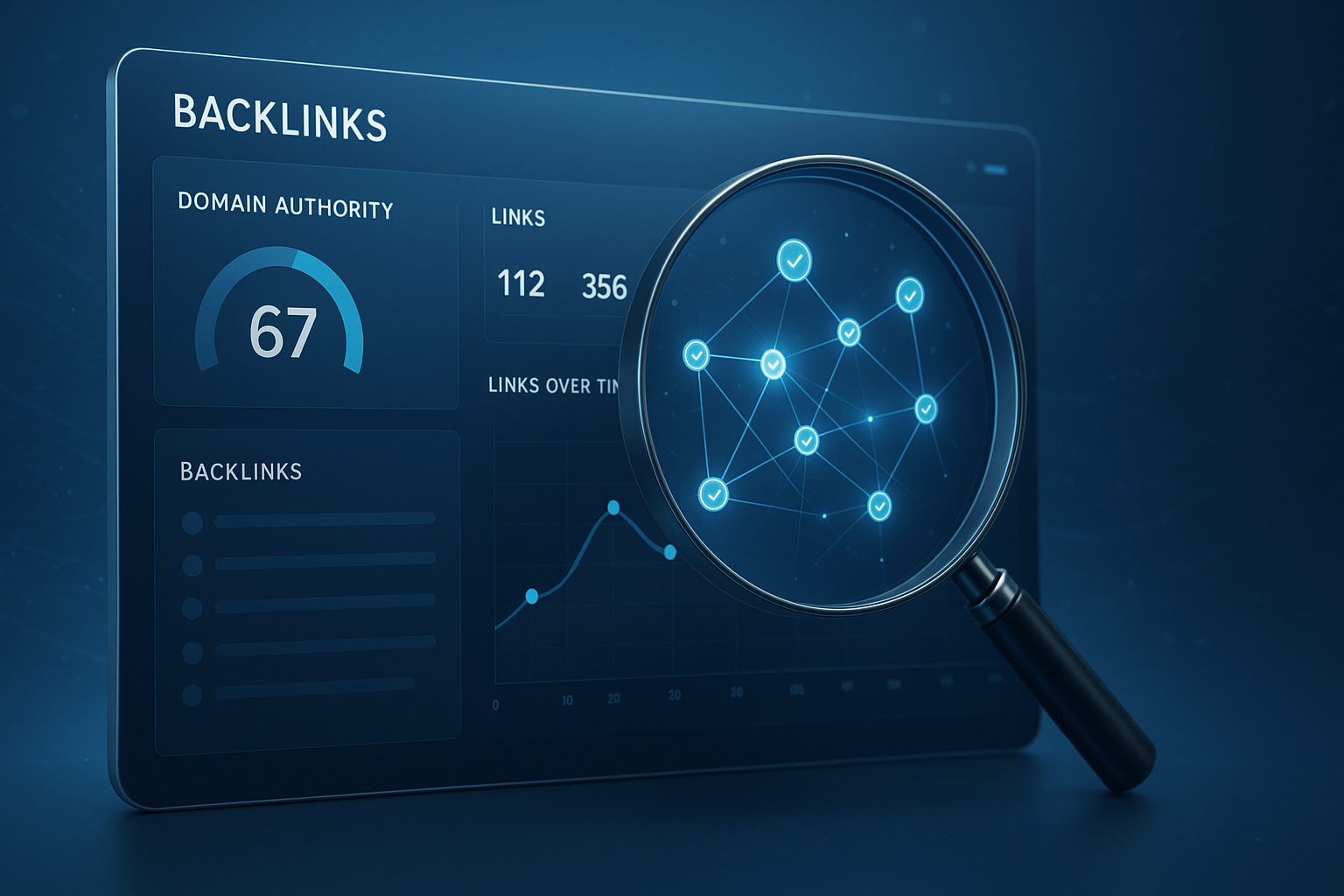
Suggested Image: Technology concept dashboard showing link authority, referring domains, anchor text, and competitor backlink trends
What is a backlink checker?
A backlink checker is a tool that shows the inbound links pointing to a website or page. It helps you review referring domains, anchor text, authority signals, follow vs nofollow links, linking pages, and the overall quality of a site’s link profile.
At a basic level, the tool answers a simple question: who is linking to this site? But useful backlink analysis goes further. It helps you spot whether those links are relevant, trustworthy, recent, and likely to support rankings.
For marketers, that makes a backlink checker useful for several jobs:
- Auditing your own domain
- Researching competitors
- Finding pages that earn links naturally
- Discovering outreach opportunities
- Monitoring harmful or spammy links
- Measuring SEO campaign progress
If you regularly review site performance, link data pairs well with technical checks such as page speed and crawlability. For example, after reviewing your backlink profile, you may also want to test page performance with an page speed checker to make sure strong links are not pointing to slow pages that frustrate users.
Why backlinks still matter for SEO
Backlinks still matter because they can act as credibility signals. Search engines use links to discover pages and understand how content is referenced across the web, although links are only one part of a much larger ranking system.
Here’s the problem. Many marketers either overvalue backlinks or ignore them completely. Both approaches cause trouble. A healthy SEO strategy uses links alongside content quality, technical SEO, search intent alignment, and user experience.
According to Google’s guidance on helpful, people-first content, strong rankings come from useful content designed for users. Links can reinforce that value, but they do not fix weak pages.
Here’s where a backlink checker becomes practical. It helps you answer questions like:
- Why is a competitor outranking us?
- Which pages on our site attract authority?
- Do we have enough referring domains in this topic area?
- Are low-quality links building up over time?
- Which content assets deserve more outreach support?
If you are improving search visibility as part of a larger optimization workflow, tools like an SEO tools collection can help you connect backlink findings with on-page and technical priorities.
What a backlink checker should show you
A useful backlink checker should do more than list links. It should organize the data so you can quickly tell which links are valuable, which trends matter, and where action is needed.
Core backlink metrics to review
- Total backlinks: The full number of inbound links detected
- Referring domains: The number of unique websites linking to you
- Link authority: A tool-specific estimate of the strength or trust of the linking domain or page
- Anchor text: The clickable text used in the link
- Follow vs nofollow: Whether the link may pass ranking signals
- Target page: The exact page on your site receiving the link
- New and lost links: Recently gained or removed backlinks
- Top linked pages: Content that attracts the most links
Which metrics matter most?
This small detail changes everything: referring domains usually matter more than raw backlink totals. One hundred links from one site rarely help as much as links from many credible, relevant domains.
| Metric | Why It Matters | Common Mistake |
|---|---|---|
| Total backlinks | Shows overall link volume | Assuming more always means better |
| Referring domains | Reveals diversity of link sources | Ignoring domain relevance |
| Anchor text | Shows topical context and over-optimization risks | Pushing exact-match anchors too aggressively |
| Link authority | Helps prioritize stronger sources | Treating third-party scores as official Google metrics |
| New and lost links | Shows momentum and declines | Checking too rarely to notice trends |
Suggested Screenshot: Backlink checker results displaying referring domains, authority score, anchor text, and top linked pages
How to use a backlink checker the right way
The best way to use a backlink checker is to move from broad review to focused action. Start with the domain-level picture, then drill into pages, links, and competitors.
- Enter your domain or exact URL. A domain view helps with overall authority analysis. A page-level view helps you understand why one blog post or landing page performs better than another.
- Review referring domains first. Look for relevant, trustworthy sites rather than chasing large backlink totals.
- Check your top linked pages. These pages often reveal what your audience or industry finds worth citing.
- Study anchor text patterns. Branded and natural anchors are generally healthier than heavy exact-match repetition.
- Identify lost links. A reclaimed link can be easier to win back than a completely new one.
- Compare against competitors. This reveals content gaps and outreach opportunities.
- Prioritize action. Focus first on links that can influence pages tied to revenue, leads, or strategic rankings.
If you are auditing a content-heavy site, it’s often useful to pair backlink review with an word counter. That helps you compare whether your most-linked pages also deliver the depth and clarity needed to hold rankings once users arrive.
How marketers use backlink data for competitor analysis
Competitor backlink research helps you find patterns that would be hard to guess otherwise. Instead of asking, “Where can we get links?” you ask, “Where do top-ranking pages in our niche consistently earn them?” That leads to better ideas.
Here’s what experienced professionals do differently. They don’t just export a list of backlinks and start emailing everyone. They segment competitor links by intent and type.
Useful competitor backlink categories
- Editorial mentions: Links earned because the content is genuinely useful
- Resource pages: Curated lists, tools, directories, and guides
- Guest contributions: Expert-written articles on relevant publications
- Data or research citations: Links referencing original stats, studies, or reports
- Partnership links: Associations, vendors, communities, sponsorships
- Broken competitor links: Dead pages you may be able to replace with better content
Let’s say a competitor’s “SEO checklist” page has links from agencies, software blogs, and educational resource pages. That tells you the topic has link potential. But if your version is thin, outdated, or poorly structured, outreach alone will not close the gap.
To improve content before outreach, many marketers also use an AI content detector during editing to catch stiff, low-trust text that may undermine credibility with editors, journalists, or link partners.
What makes a backlink high quality?
A high-quality backlink usually comes from a trusted, relevant page that makes sense for real readers. It appears naturally in context, points to useful content, and is not there just to manipulate rankings.
The answer depends on one thing: context. A lower-authority niche site can sometimes be more valuable than a famous but unrelated domain. Relevance often beats raw prestige.
Signs of a strong backlink
- The linking site covers a related topic
- The page has original content and real traffic potential
- The link is placed naturally within the main content
- The anchor text makes sense in context
- The linking page is indexed and crawlable
- The page is not overloaded with unrelated outbound links
- The link sends actual referral traffic or brand exposure
Signs of a weak or risky backlink
- Link farms or obvious paid networks
- Irrelevant foreign-language pages without context
- Spam-heavy directories with no editorial standards
- Sitewide footer links stuffed with keywords
- Pages built only to host outbound links
- Sudden bursts of unnatural exact-match anchor text
Google explains spam policies in detail in its Search spam policies documentation. That is worth reviewing if you are unsure whether a tactic crosses the line.
Backlink checker metrics vs Google reality
Third-party authority scores are useful shortcuts, but they are not Google metrics. A backlink checker estimates link strength using its own data and formulas, which means the numbers help with comparison, not certainty.
This is where many people struggle. They treat one score as the truth. In reality, tool scores are directional. They help you prioritize, sort, and compare domains, but they do not tell you exactly how Google values a page.
| Data Point | What It Tells You | How to Use It Safely |
|---|---|---|
| Authority score | Relative strength estimate | Use for comparison, not absolute judgment |
| Follow/nofollow | Potential ranking signal flow | Remember nofollow links can still bring visibility and traffic |
| Anchor text ratio | Pattern of how sites describe you | Watch for unnatural concentration |
| Lost links | Dropped mentions or removed pages | Investigate before rankings decline further |
For a better understanding of how search engines crawl and interpret links, see Google’s documentation on crawlable links.
Best ways to find new link opportunities
A backlink checker helps you find opportunities by showing who already links to similar content, which topics attract citations, and where your site is missing from important conversations in your niche.
Now comes the important part. Don’t chase every possible link. Focus on opportunities that align with your goals, audience, and content strengths.
Practical link opportunity methods
- Competitor gap analysis. Find domains linking to competitors but not to you.
- Top-page replication. Create better versions of content types that attract links in your niche.
- Broken link building. Replace dead resources with updated, relevant alternatives.
- Brand mention reclamation. Ask sites that mention your brand without linking to add the link.
- Original data assets. Publish stats, surveys, templates, calculators, or tools others can cite.
- Resource page outreach. Pitch useful pages to curated lists in your industry.
If you are creating original visuals for linkable assets, compressed images can improve load speed and sharing performance. A tool like the Image Compressor is useful before publishing reports, charts, or infographics.
Suggested Infographic: Six backlink opportunity sources: competitor gaps, broken links, resource pages, brand mentions, original data, and editorial outreach
Common backlink checker mistakes to avoid
Most backlink problems come from misreading the data, not from the data itself. A backlink checker is only helpful when you know which signals deserve action and which ones are just noise.
- Focusing only on total links: Link volume without quality can be misleading.
- Ignoring relevance: A strong but unrelated link is often less valuable than a smaller relevant one.
- Forgetting page-level analysis: Sometimes one URL has the authority problem, not the whole domain.
- Checking too infrequently: Lost links and spam spikes are easier to manage early.
- Overreacting to every nofollow link: Some nofollow placements still bring useful traffic and awareness.
- Assuming every low-score domain is bad: New, niche, and community sites may still be worthwhile.
- Building links to weak content: Outreach fails when the target page is not actually useful.
If your outreach pages include downloadable assets, keeping them streamlined matters. For content upgrades or reports, an PDF Compressor can help reduce file size so journalists, partners, and leads can access them more easily.
How to turn backlink analysis into an SEO action plan
The best backlink checker results lead to decisions, not spreadsheets. Once you have the data, you need a clear process for prioritizing pages, fixing issues, and building momentum over time.
A simple monthly workflow
- Audit your current profile. Review new links, lost links, anchor trends, and top linked pages.
- Compare 2 to 3 real competitors. Focus on the sites competing for the same keywords, not just big names.
- Identify pages worth supporting. Choose pages tied to leads, conversions, or strategic visibility.
- Improve those pages first. Add data, examples, visuals, citations, or clearer structure.
- Build an outreach list. Prioritize relevant domains already linking to similar content.
- Track results monthly. Look at link gains alongside rankings, impressions, and conversions.
When you’re refining outreach or updating linkable pages, better readability often improves both engagement and editorial acceptance. A quick pass through a grammar checker can help tighten language before promotion.
It also helps to verify that your SEO work supports a technically healthy site. Google’s Search Console documentation is essential for monitoring indexing, manual actions, and search performance alongside backlink trends.
Backlink checker vs broader SEO tools
A backlink checker focuses on inbound links, but SEO performance depends on more than link data. Marketers get better results when they combine backlink analysis with keyword research, on-page optimization, technical audits, and content quality review.
| Tool Type | Primary Use | Best Time to Use It |
|---|---|---|
| Backlink checker | Analyze inbound links and authority signals | Competitor research, audits, outreach planning |
| Keyword research tool | Find search demand and topic gaps | Content planning and prioritization |
| Technical SEO tool | Audit crawlability, speed, and site health | Before and during optimization work |
| Content optimization tool | Improve usefulness, structure, and relevance | Before outreach and ranking pushes |
Microsoft also provides helpful background on how search engines understand site structure and discovery through Bing Webmaster Guidelines, which is useful if you care about visibility beyond Google alone.
Frequently asked questions
How often should I use a backlink checker?
For most marketers, a monthly review is enough for ongoing SEO management. If you are in a competitive niche, running digital PR campaigns, or recovering from a ranking drop, weekly checks make more sense. The key is consistency. You want to notice lost links, sudden anchor text shifts, and competitor gains before they become bigger problems.
Can a backlink checker improve rankings by itself?
No. A backlink checker does not improve rankings on its own. It gives you the information needed to make smarter SEO decisions. Rankings improve when you act on that data by building better content, reclaiming lost links, cleaning up obvious issues, and earning relevant mentions from trustworthy sites.
Are nofollow backlinks useless?
No. Nofollow links may not pass the same ranking signals as follow links, but they can still have value. They can drive referral traffic, increase brand visibility, attract future editorial links, and help search engines discover content. A natural backlink profile usually includes a mix of follow and nofollow links.
What is more important: backlinks or referring domains?
In most cases, referring domains are more useful than total backlink count. Ten relevant websites linking once each often says more about trust and reach than one website linking fifty times. That said, quality, relevance, page context, and the strength of the target page still matter. No single metric tells the whole story.
How do I know if a backlink is bad?
Look for signs such as irrelevant topics, thin or spammy pages, unnatural keyword-heavy anchor text, pages with massive outbound link lists, and domains that exist mainly to manipulate search results. Not every low-authority site is harmful, though. Review links carefully before assuming they are dangerous, and avoid rushing into cleanup actions without evidence.
Should small businesses care about backlink checkers?
Yes, especially in local and niche markets. Small businesses often compete against larger brands with stronger authority, so understanding who links to competitors can reveal realistic opportunities. A backlink checker helps identify local directories, association pages, regional publications, partnerships, and content formats that can strengthen visibility without requiring a huge budget.
Do I need paid tools if I already have free backlink data?
Not always. Free tools are often enough for basic checks, simple competitor reviews, and spotting obvious trends. Paid platforms become more useful when you need larger databases, historical tracking, alerts, advanced filtering, or team workflows. Many marketers start free, then upgrade only when the SEO program becomes more complex.
What should I do after finding competitor backlinks?
First, sort them by relevance and type. Then decide whether the opportunity fits your content and goals. You may need to improve an existing page, create a stronger asset, reclaim an unlinked mention, or pitch a resource page. The smart move is not copying every competitor link. It is understanding why those links were earned in the first place.
Conclusion
A backlink checker is one of the fastest ways to understand link authority, uncover competitor advantages, and find practical SEO opportunities. The real value is not in the size of the backlink list. It is in knowing which links matter, which pages deserve support, and where your strategy needs work.
Start with your referring domains, top linked pages, anchor text patterns, and lost links. Then compare that data against real search competitors, not just industry giants. That approach gives you a cleaner, more useful roadmap.
As a next step, pair backlink analysis with broader site improvements using tools like the page speed checker, grammar checker, Image Compressor, and the wider SEO tools collection. Better links work best when they point to better pages.