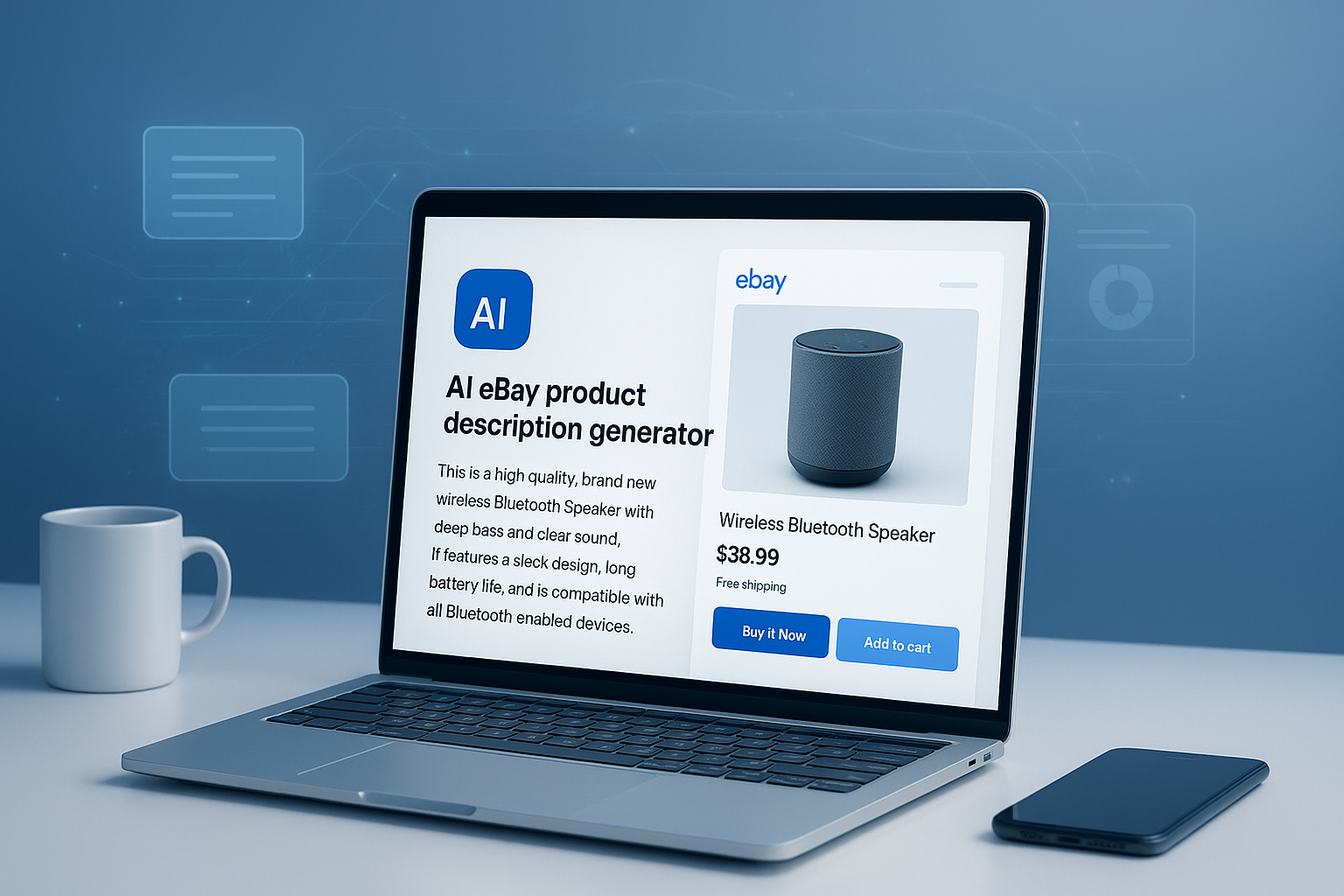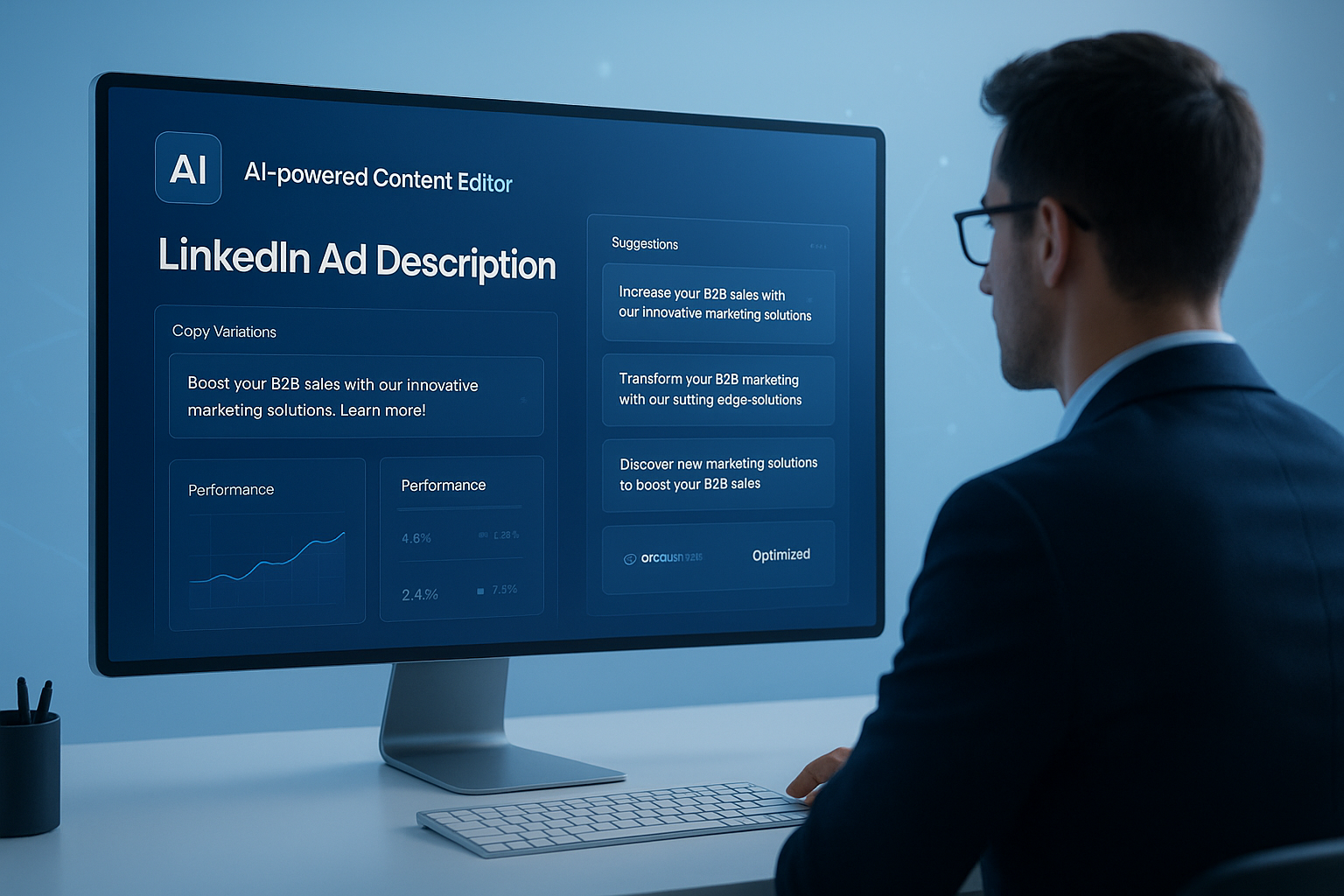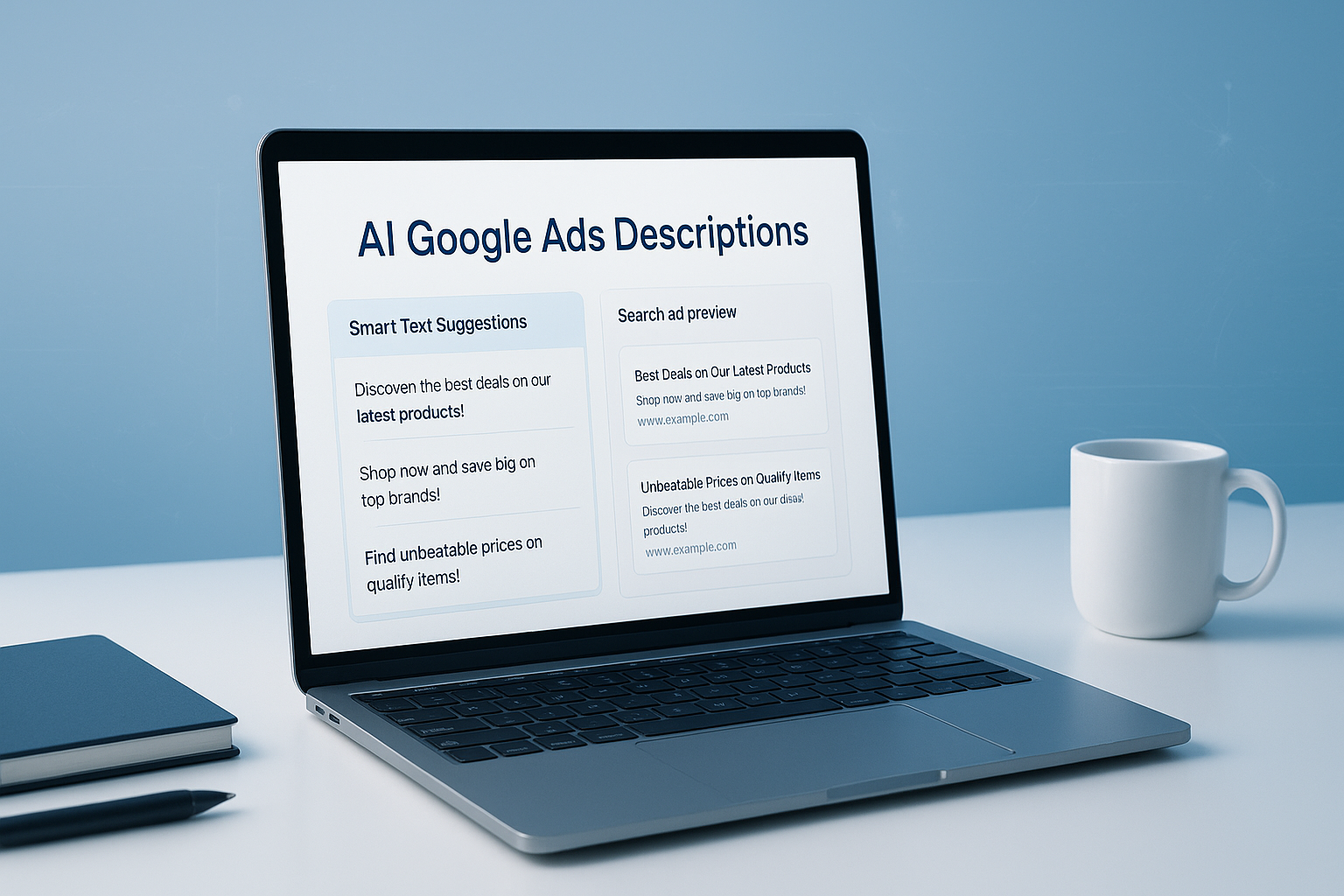
Writing dozens or hundreds of product pages by hand sounds manageable until your catalog starts growing. Then the real problems show up: inconsistent tone, missing details, slow publishing, and copy that does little to persuade a buyer. That’s exactly why more businesses are turning to AI product descriptions.
Used well, AI can speed up content production, improve consistency, and help teams turn raw product data into clear, useful sales copy. Used poorly, it creates generic text that sounds the same on every page.
This guide explains how to generate better AI product descriptions, what inputs matter most, where AI helps, where it falls short, and how to turn quick drafts into ecommerce copy that actually converts.
Suggested Image: Modern illustration of an ecommerce team using AI to create product listings
What are AI product descriptions?
AI product descriptions are product page texts created with artificial intelligence using inputs such as product name, category, features, audience, tone, and intended use. The goal is to produce faster first drafts that businesses can refine for clarity, SEO, and conversions.
At a basic level, an AI system takes structured details and turns them into natural language. Instead of starting from a blank page, a marketer or store owner starts with a draft. If you regularly create category pages, ad copy, or supporting metadata, tools like an AI meta description generator can also help maintain consistency across the rest of the customer journey.
Strong AI-generated descriptions usually include:
- What the product is
- Who it is for
- Key features
- Real customer benefits
- Relevant keywords
- A clear buying reason
The important part is this: AI should support your merchandising process, not replace product knowledge.
Why businesses are using AI product descriptions in 2026
Businesses use AI product descriptions because they reduce content bottlenecks, especially for large inventories. They also help standardize voice across teams, improve publishing speed, and make it easier to test different messaging at scale.
Here’s the problem. Many ecommerce teams are still stuck between two bad options: slow manual writing or thin, repetitive manufacturer copy. AI offers a third option, but only if there is a clear workflow behind it.
Here’s why adoption keeps growing:
- Speed: Drafts can be created in minutes instead of hours
- Consistency: Brand tone can be applied across many SKUs
- Scalability: Large catalogs become easier to manage
- Localization support: Teams can adapt copy for different audiences
- Testing: Multiple versions can be created for conversion experiments
Google’s guidance has consistently focused on content quality rather than whether content was assisted by AI. What matters is usefulness, originality, and satisfying user needs, as outlined in Google’s helpful content guidance.
That small detail changes everything. Businesses do not win by publishing AI-written text faster. They win by publishing better product content faster.
How AI product descriptions work
AI description tools work by analyzing the information you provide and predicting how that information should be expressed in natural language. The output quality depends heavily on the quality and completeness of the input.
Most workflows follow this pattern:
- Enter product details
- Choose tone or style
- Add SEO keywords or category context
- Generate one or more drafts
- Edit for accuracy, brand fit, and readability
- Publish and monitor performance
For teams that also publish guides, landing pages, or campaign copy, an AI paragraph generator can help build supporting content around product launches without restarting the writing process from scratch.
What inputs produce better results?
This is where many people struggle. They expect great output from weak prompts. AI can only work with what it’s given.
- Product title
- Category and subcategory
- Materials, dimensions, size, or weight
- Primary use case
- Target customer
- Key benefits
- Brand voice
- Important keywords
- Shipping, care, or compatibility details
If your data is messy, your descriptions will be messy too. Even basic cleanup matters. For example, stores managing image-heavy product catalogs may also use an Image Compressor to speed up page load times, which supports the full product page experience, not just the copy.
What makes a good AI product description?
A good AI product description is specific, accurate, easy to scan, and focused on the buyer’s decision. It should explain features in plain language and connect them to practical benefits without sounding vague or overhyped.
Many weak descriptions list specifications but never answer the buyer’s real question: “Why should I choose this?” Good copy bridges that gap.
| Weak Description | Strong Description |
|---|---|
| Generic and repetitive | Specific to the product and use case |
| Overuses adjectives | Uses concrete details and benefits |
| Reads like filler | Helps the customer evaluate the item |
| Ignores SEO structure | Includes relevant search terms naturally |
| No clear audience | Speaks to a likely buyer or use case |
The best descriptions often include:
- A clear opening sentence
- One or two standout benefits
- Scannable formatting
- Trust-building details
- Natural keyword placement
- A tone that matches the brand and product category
For readability, it also helps to keep line length and structure clean. If you’re cleaning product specs or rewriting rough manufacturer text before feeding it into AI, a text case converter can save time during preprocessing.
Benefits of using AI for ecommerce product copy
AI product descriptions can improve efficiency across merchandising, SEO, and content operations. The biggest benefit is not just faster writing. It is the ability to create a repeatable process for producing better listings across a growing catalog.
Let’s break this down.
1. Faster catalog expansion
When stores add new products, content often becomes the bottleneck. AI helps teams launch product pages more quickly, especially when there are many similar items with different sizes, colors, features, or variants.
2. Better consistency across listings
Buyers notice when one page feels polished and another feels rushed. AI can help standardize structure, tone, and detail level, particularly for businesses working with large inventories or multiple content contributors.
3. Easier keyword integration
Description drafts can be tailored around category terms, product modifiers, and transactional intent. For broader on-page optimization, many teams also rely on tools like an keyword density checker to make sure search terms are present without becoming unnatural.
4. Better support for testing
AI makes it easier to generate multiple variations for a single product. That allows teams to test benefit-led openings, different calls to action, or alternate tones for distinct customer segments.
5. Lower strain on small teams
Not every business has a full content department. AI can help solo operators and lean marketing teams create decent first drafts quickly, then spend their time on quality review instead of repetitive writing.
Where AI product descriptions fall short
AI is useful, but it is not reliable enough to publish blindly. It can invent details, flatten brand voice, miss customer objections, and produce copy that feels polished but says very little.
Now comes the important part. Many businesses assume the biggest risk is duplicate content. In practice, the bigger risks are inaccuracy and generic messaging.
Common limitations include:
- Hallucinated details: AI may state features that were never provided
- Weak differentiation: Similar products may end up sounding identical
- Thin benefit language: Copy may describe features without explaining why they matter
- Brand mismatch: The tone may feel too casual, too formal, or too generic
- Compliance risk: Regulated industries need human review of claims
For advertising and claims, businesses should be especially careful. The FTC advertising and marketing guidance is a good reference point for truthful, non-deceptive product messaging.
How to generate AI product descriptions that actually convert
To generate AI product descriptions that convert, start with accurate product data, give the AI customer context, ask for benefits instead of filler, and always edit the draft before publishing. A fast draft is only useful if it helps the buyer make a decision.
Here’s what experienced professionals do differently.
- Define the buyer first. A description for a busy parent should not sound like one for a technical enthusiast.
- Lead with the product’s main value. Put the strongest benefit near the top.
- Use features to support benefits. Don’t stop at “stainless steel” or “lightweight.” Explain what that means in practice.
- Add specifics. Size, fit, compatibility, material, care instructions, and performance details matter.
- Keep the language concrete. Vague phrases like “high quality” and “best-in-class” rarely persuade anyone.
- Format for scanning. Use short paragraphs and bullets where helpful.
- Review for trust. Remove unsupported claims, exaggeration, and generic phrases.
Example of a weak prompt vs a strong prompt
| Prompt Type | Example |
|---|---|
| Weak | Write a product description for a water bottle. |
| Strong | Write a 120-word ecommerce product description for a 32 oz stainless steel insulated water bottle for commuters and gym users. Highlight leak resistance, temperature retention, easy-carry handle, and cup-holder-friendly design. Tone should be clear, modern, and practical. Include the keyword “insulated water bottle” naturally once. |
Suggested Screenshot: Example prompt and output for an AI product description generator
Best practices for SEO-friendly AI product descriptions
SEO-friendly AI product descriptions help search engines understand the page while giving shoppers the information they need. The right approach uses keywords naturally, avoids duplication, and supports the full product page with useful context.
Search engines have become better at evaluating page usefulness, page experience, and content depth. Google also documents the basics of titles, snippets, and on-page clarity in its SEO Starter Guide.
Use these practices:
- Include the primary product term naturally near the beginning
- Add semantic variations where they fit
- Avoid copying manufacturer descriptions word for word
- Write unique copy for key products and high-value categories
- Support descriptions with clear titles, specs, and structured layout
- Match copy to search intent, not just keyword volume
Should every product description be completely unique?
The answer depends on one thing: the value of the page. For flagship products, major categories, and high-traffic listings, uniqueness matters a lot. For long-tail variants, consistent templating may be acceptable if the page still helps the user and includes meaningful product-specific details.
If you’re publishing product assets as downloadable documents, cleaning and preparing files matters too. A PDF to JPG tool can help transform spec sheets into image-friendly product assets for ecommerce pages or marketplace listings.
A practical workflow for teams and online stores
The most effective AI product description workflow combines automation with human review. AI handles the first draft. Your team handles strategy, validation, and final polish.
Here is a practical workflow businesses can use in 2026:
- Collect structured product data. Make sure titles, specs, features, use cases, and audience information are complete.
- Create prompt templates by category. Apparel, electronics, beauty, home goods, and B2B products need different language.
- Generate first drafts in batches. Group similar products to keep tone and structure aligned.
- Edit high-impact sections first. Focus on opening lines, benefit statements, and trust details.
- Run a quality check. Look for accuracy, repetition, missing specs, and keyword misuse.
- Publish with media optimization. Fast-loading imagery and clean formatting improve the page experience.
- Measure performance. Track impressions, clicks, conversion rate, bounce behavior, and return-related feedback.
Teams handling product images and screenshots often also optimize supporting graphics before upload. A PNG to WebP converter is useful when reducing image size while preserving visual quality on product pages.
Human editing matters more than most people think
Human review is what turns AI output into trustworthy sales copy. Without editing, descriptions often sound acceptable at a glance but fail to answer real purchase questions or reflect the actual product experience.
Here’s what to review before publishing:
- Accuracy of specs and claims
- Clarity of the first two sentences
- Specificity of benefits
- Tone and brand fit
- Readability on mobile
- Overuse of repeated phrases
- Missing information that affects buying decisions
If your team works from rough notes, supplier sheets, or imported data, it can help to clean drafts before final approval. Even simple formatting improvements make review easier and faster.
AI product descriptions for different business types
AI product descriptions are not one-size-fits-all. The right structure, tone, and level of detail depend on what you sell and how your buyers evaluate products.
Retail ecommerce
Retail brands usually benefit from short, scannable descriptions with strong benefit language, material details, and clear use cases. Emotional appeal matters, but specifics still drive trust.
B2B and industrial products
B2B buyers often need compatibility details, standards, dimensions, technical specs, and business use cases. Fluffy copy performs poorly here. Precision matters more than clever language.
Marketplaces
Marketplace listings usually need tighter formatting and stronger front-loaded information. Character limits, bullet patterns, and policy rules often shape the final output.
Custom or handmade products
Products with a story behind them need more than specs. AI can help draft a structure, but human input is essential to preserve authenticity and uniqueness.
When product pages also connect to larger content campaigns, using an AI title generator can help create supporting blog or landing page headlines around seasonal promotions, gift guides, or category launches.
How to measure whether your AI-generated copy is working
The success of AI product descriptions should be measured by business results, not by how fast the draft was written. Strong product copy helps users understand the item, compare options, and feel confident enough to buy.
Track these metrics:
| Metric | What It Can Tell You |
|---|---|
| Organic clicks | Whether search visibility and snippet appeal are improving |
| Conversion rate | Whether the description helps buyers take action |
| Add-to-cart rate | Whether core messaging is persuasive enough |
| Bounce or exit rate | Whether page content fails to match visitor expectations |
| Return reasons | Whether product details were unclear or misleading |
| Support questions | What the description failed to explain before purchase |
For measurement and experimentation, product teams may also benefit from official guidance on performance and experimentation best practices from sources like web.dev and page quality references from MDN Web Docs.
Common mistakes to avoid
Most problems with AI product descriptions are process problems, not tool problems. Businesses get weak results when they skip context, publish unedited drafts, or chase keywords at the expense of clarity.
- Using prompts that are too vague
- Publishing copy without checking specs
- Overloading descriptions with repeated keywords
- Relying on generic adjectives instead of evidence
- Using the same template for every category
- Ignoring customer objections and FAQs
- Forgetting that mobile readers scan first
If product descriptions repeatedly mention dimensions, weights, or unit changes, using clean conversion tools in your workflow reduces inconsistency and confusion between suppliers, warehouses, and storefront content.
Frequently asked questions
Can AI product descriptions hurt SEO?
They can if they are thin, repetitive, inaccurate, or copied too closely from other sources. AI itself is not the problem. Low-value content is. If your descriptions are useful, specific, and reviewed by a human, they can support SEO rather than harm it. Focus on unique product insights, accurate details, and language that helps a buyer make a decision.
Are AI-generated product descriptions good enough to publish without editing?
Usually not. Even strong tools can miss context, invent details, or write copy that feels generic. Human editing is still necessary for factual accuracy, brand voice, compliance, readability, and conversion quality. For low-priority products, edits may be light. For high-value listings, a careful final review should always be part of the process.
How long should an AI product description be?
The ideal length depends on the product and the buyer’s decision process. A simple consumer item might only need 75 to 150 words plus bullet points. A technical or expensive product may need more context, specifications, and compatibility details. The better question is whether the description answers buyer questions clearly without adding filler.
What should I include in a prompt for better AI product descriptions?
Include the product name, category, audience, top features, real benefits, brand tone, desired length, and any keywords that must be used naturally. It also helps to tell the AI what to avoid, such as hype, repetition, or unsupported claims. The more specific your prompt, the more usable the draft will be.
Can AI help with large ecommerce catalogs?
Yes, that is one of the strongest use cases. AI can speed up draft creation for hundreds or thousands of listings, especially when products share structure but differ in attributes. The best results come from category-based prompt templates, structured product data, and a review process that prioritizes important pages first.
How do I make AI-generated copy sound less generic?
Give the tool better source material. Add actual customer use cases, product limitations, technical specs, sensory details, and brand voice rules. Then edit the output to remove empty phrases and replace them with specifics. Generic input almost always creates generic output. Better prompts and better editing produce more distinctive copy.
Is it safe to use AI for regulated products?
Only with careful human oversight. Products in health, finance, legal, safety, supplements, or children’s categories require extra caution because misleading language can create compliance problems. AI can assist with drafting, but subject matter review is essential. Claims should be checked against current regulations and internal approval standards before publishing.
What’s the best next step for a business starting with AI product descriptions?
Start with one product category, not your whole catalog. Build a prompt template, generate a small batch, edit the output carefully, and compare results against your existing copy. Track conversion and engagement metrics before expanding. A simple pilot will show where AI saves time, where human review is most needed, and what workflow fits your team.
Final thoughts
AI product descriptions work best when businesses treat them as a smart drafting system, not an autopilot publishing tool. The real advantage is speed with structure: faster writing, more consistent listings, and more time to focus on accuracy, differentiation, and conversions.
If you want better results, start with cleaner product data, stronger prompts, and a simple review checklist. That will improve quality more than switching tools over and over.
As a next step, refine the broader product page experience too. Helpful related tools include the AI meta description generator for search snippets, Image Compressor for faster-loading visuals, keyword density checker for on-page optimization, and PNG to WebP converter for more efficient product imagery.