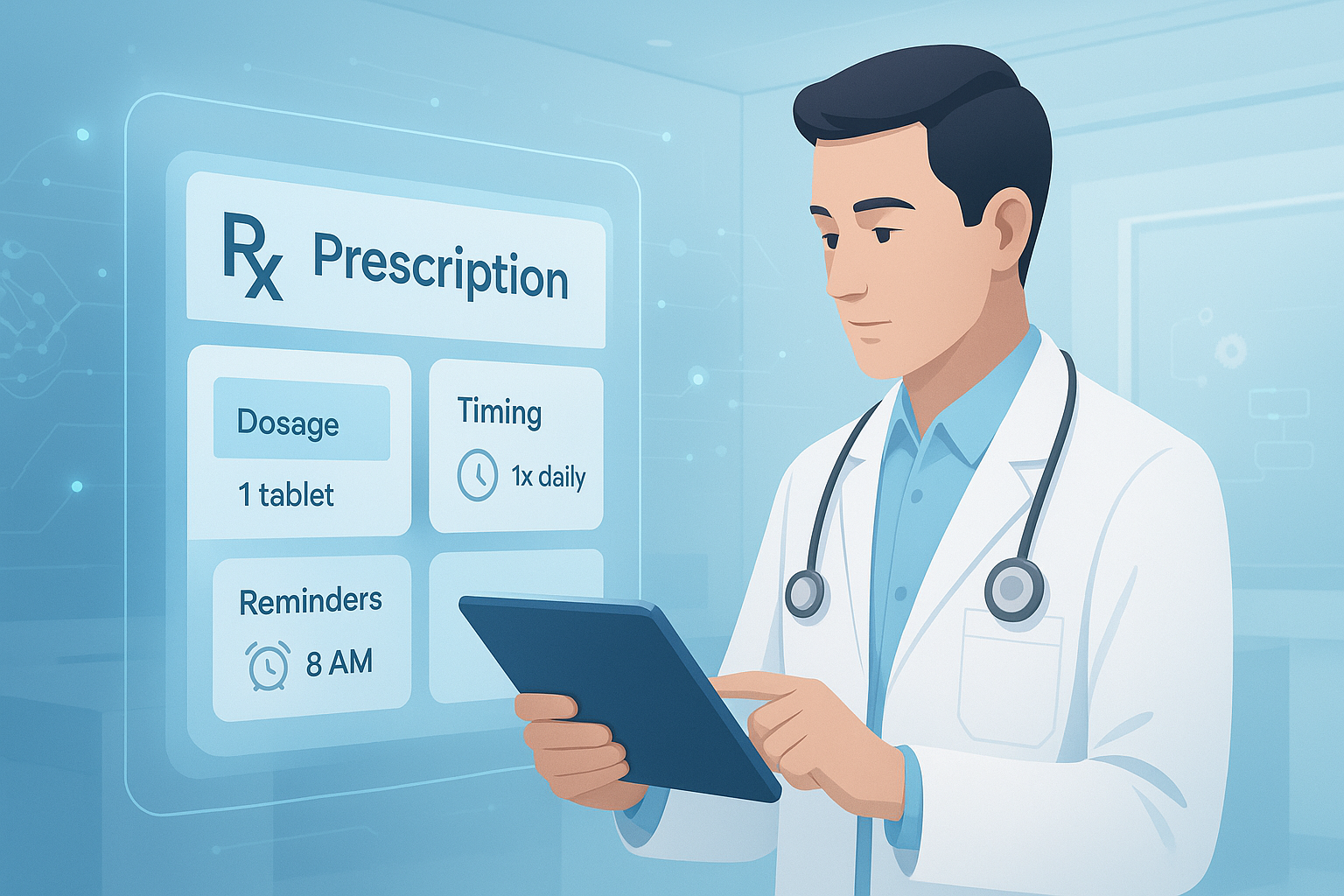

Have you ever watched a patient nod through instructions, then call back later completely unsure what to do next? That gap between what clinicians say and what patients actually understand is where care often breaks down.
AI patient education content is gaining attention because it helps healthcare teams create clearer, faster, and more consistent materials without starting from scratch every time. Used well, it can reduce confusion, support informed decisions, and save staff hours.
But this only works if the content is accurate, readable, and genuinely useful. In this guide, you’ll learn what AI patient education content is, where it helps most, where the risks are, and how healthcare teams can use it responsibly in 2026 and beyond.
Suggested Image: Professional photo of a clinician reviewing digital patient education materials with a patient
What is AI patient education content?
AI patient education content is health information created, adapted, or simplified with the help of artificial intelligence tools. It can include discharge instructions, condition explainers, pre-visit guidance, medication education, aftercare checklists, and multilingual patient handouts.
The core idea is simple. Instead of writing every resource manually, a healthcare team uses AI to produce a strong first draft, then reviews and approves it for clinical accuracy, reading level, and patient safety.
- It speeds up content creation
- It improves consistency across materials
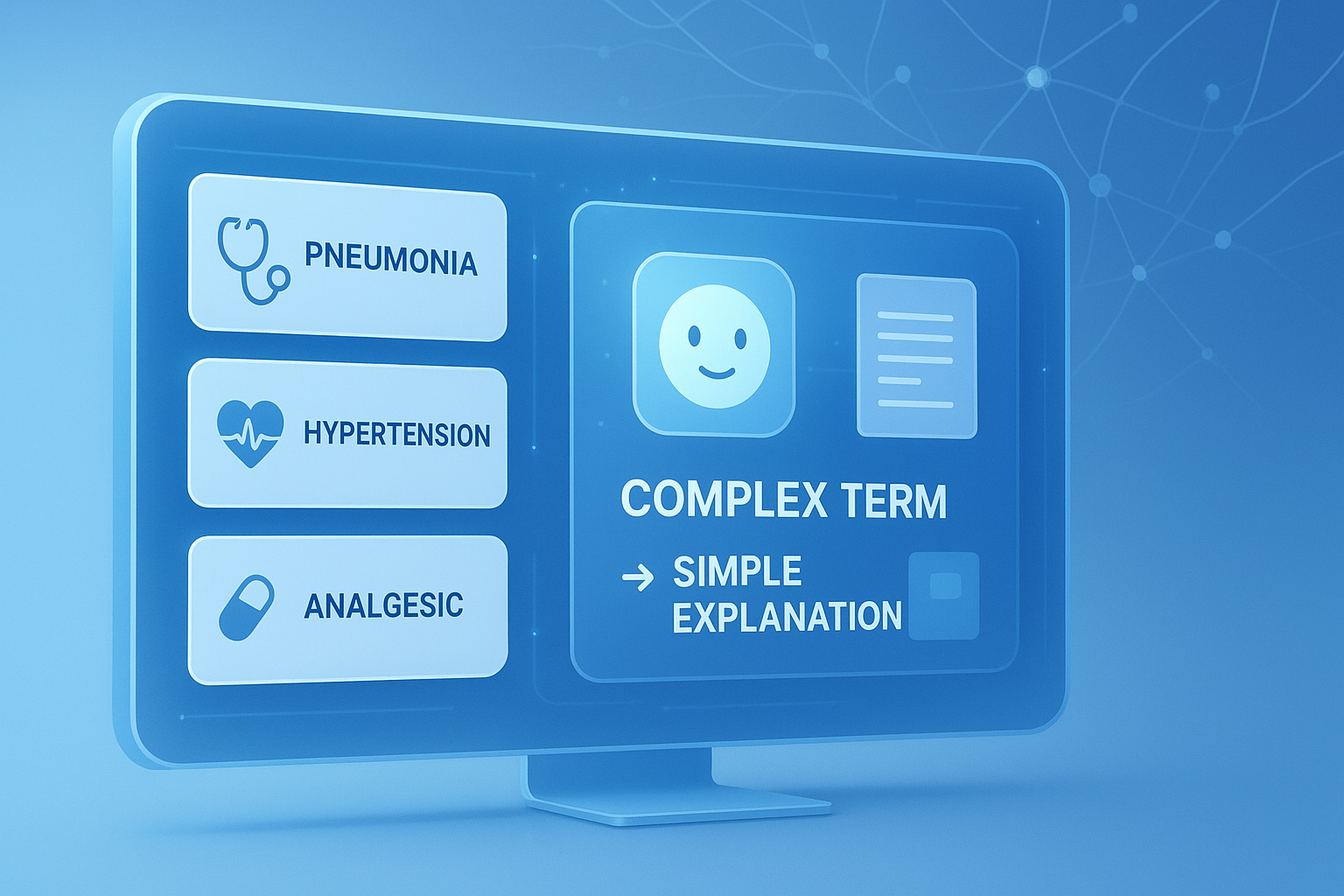
- It can simplify complex medical language
- It supports translation and personalization
- It still requires human review before use
Teams working on patient-facing materials often need clean formatting and plain-language polishing. For draft cleanup and readability support, tools like the AI Paragraph Rewriter can help reshape dense text into simpler language before final clinical review.
Why healthcare organizations are using AI for patient education
Healthcare teams are under pressure to communicate more clearly while managing limited time. AI helps by reducing repetitive writing work so clinicians, educators, and operations teams can focus on review, accuracy, and patient needs.
Here’s the problem. Most patient education resources are hard to keep current. New workflows, new medications, new policies, and new documentation standards create constant updates. Manual production alone often can’t keep up.
- Large health systems need consistent messaging across departments
- Smaller practices may not have a dedicated patient education writer
- Care teams need faster turnaround for updated instructions
- Patients increasingly expect digital, mobile-friendly information
- Multilingual communication is essential in many communities
Trusted organizations continue to emphasize patient understanding and health literacy. The CDC health literacy guidance and the NIH clear communication resources both support the need for plain, actionable health information.
This is also where content workflows matter. Teams repurposing one source into handouts, emails, portal messages, and summaries may benefit from support tools such as the AI Text Summarizer to turn longer policy or clinical copy into shorter patient-ready versions.
Where AI patient education content works best
AI works best when the content follows established clinical guidance and needs to be made clearer, shorter, or more accessible. It is especially useful for standard education materials that repeat across patients with small variations.
Common use cases
- Procedure preparation instructions
- Post-visit and discharge education
- Medication adherence reminders
- Chronic disease self-management guides
- Preventive care explanations
- Lab test preparation handouts
- Frequently asked questions for common conditions
- Portal messages and follow-up communication
For example, a clinic can use AI to draft a plain-language handout explaining blood pressure monitoring at home, including when to call the office, how to sit correctly, and what numbers matter. The clinician then checks the thresholds, wording, and brand-specific workflow before publishing.
Suggested Infographic: Flowchart showing how clinical guidance becomes AI-assisted patient education content after human review
What good AI patient education content should include
Effective patient education content should be easy to understand, clinically accurate, and immediately useful. Patients should know what the issue is, what they need to do, what warning signs to watch for, and where to get more help.
Now comes the important part. Clear writing is not enough on its own. Strong patient education also needs structure.
- Plain language: Use familiar words instead of medical jargon where possible
- Actionable steps: Tell patients exactly what to do next
- Logical order: Start with the most urgent or practical information
- Safety instructions: Include red flags, emergency symptoms, and escalation guidance
- Inclusive tone: Avoid blame, shame, or assumptions
- Readable formatting: Use short sections, bullets, and white space
- Language access: Support translation and cultural relevance
The FDA drug safety information is a useful reminder that patient-facing medication content must be especially careful about directions, side effects, and warning signs.
AI vs manual writing for patient education
AI is faster than manual writing, but human experts are better at judgment, nuance, and patient safety. The strongest approach is usually a hybrid model where AI handles drafting and clinicians handle verification and final approval.
| Factor | AI-Assisted Content | Fully Manual Content |
|---|---|---|
| Speed | Very fast first drafts | Slower production |
| Consistency | Strong with templates and prompts | Varies by writer |
| Clinical judgment | Limited without oversight | High when written by experts |
| Personalization | Scales well with guardrails | More time-intensive |
| Risk of error | Higher if unreviewed | Lower with skilled process |
| Cost per draft | Often lower at scale | Usually higher |
Experienced teams do not treat AI as an author of record. They treat it as a production assistant.
The biggest risks and limitations
AI patient education content can save time, but it also introduces real risks. The most serious problems are factual errors, unsafe omissions, bias, oversimplification, and content that sounds clear while being clinically wrong.
This is where many people struggle. If a draft looks polished, teams may trust it too quickly.
- Incorrect medical facts or invented details
- Missing contraindications or warning signs
- Reading level that is still too high for patients
- Generic advice that ignores care setting or patient history
- Bias in tone, assumptions, or examples
- Privacy concerns if sensitive data is entered into the wrong system
- Outdated guidance if prompts or source references are old
The World Health Organization digital health resources and the HHS HIPAA guidance are helpful starting points when building safer workflows around digital health content.
If your team frequently shares educational PDFs, the PDF to Text Converter can help extract and review legacy content before updating it with current clinical review.
How to create AI patient education content responsibly
The safest workflow is simple: start with trusted source material, use AI to draft or simplify, then require human review before anything reaches patients. AI should support the process, not replace clinical responsibility.
- Choose a narrow use case first. Start with common handouts like aftercare instructions or appointment prep.
- Work from approved sources. Base drafts on your organization’s existing materials, clinical pathways, and evidence-based references.
- Use structured prompts. Ask for plain language, bullet points, a target reading level, and a section for warning signs.
- Review for clinical accuracy. A qualified clinician should confirm every medical statement.
- Check readability. Make sure patients can act on the information without needing a medical dictionary.
- Verify legal and privacy requirements. Confirm your process fits internal policy and external rules.
- Test with real users. Ask staff or patients where confusion remains.
- Version and update regularly. Keep a review date and owner for each published resource.
For teams refining draft language, the AI Sentence Rewriter can help simplify single lines that still feel too technical after the first pass.
Best practices for prompts, review, and governance
Good results depend less on the tool itself and more on the system around it. Strong prompts, approval rules, and content governance make the difference between useful content and risky content.
Prompting best practices
- Specify the audience, such as adults, caregivers, or teens
- Set a reading target, such as plain language for general public use
- Ask for short paragraphs and bullet points
- Require a section called “When to call your doctor”
- Tell the model to avoid unsupported claims
- Request neutral, non-alarmist language
- Ask it to define medical terms in simple words
Review best practices
- Use a clinician reviewer for medical accuracy
- Use a content editor for readability and tone
- Use compliance review when legal or regulatory issues apply
- Keep a review log for accountability
- Retest materials after major workflow or guideline changes
Governance essentials
- Document approved use cases
- Set rules for entering patient data into AI systems
- Maintain version control
- Assign an owner to each content type
- Define escalation rules for complex clinical topics
Healthcare teams also benefit from consistent documents and naming conventions. If you’re cleaning scanned or image-based source materials before editing, the Image to Text Converter can speed up the preparation stage.
Examples of effective AI-assisted patient education content
The best examples are practical, specific, and safe. They don’t try to impress patients with medical vocabulary. They help people understand what to do, why it matters, and when to seek help.
Example 1: Colonoscopy prep instructions
A GI clinic uses AI to turn a detailed nurse protocol into a mobile-friendly patient checklist. The result includes what to stop eating, when to start the prep, what to expect, and what symptoms require a call.
Example 2: Type 2 diabetes follow-up handout
An endocrinology practice creates a plain-language sheet explaining A1C, daily habits, foot care, and when to contact the care team. AI helps reduce jargon, while a diabetes educator confirms that the advice matches the clinic’s standards.
Example 3: Pediatric fever guidance for caregivers
A pediatric office uses AI to produce age-appropriate, caregiver-focused instructions with dosing reminders, hydration tips, and fever red flags. The final version is reviewed by the physician and translated into multiple languages.
Suggested Screenshot: Sample patient handout with sections for symptoms, treatment steps, red flags, and follow-up instructions
How to measure whether your patient education content is actually working
Clearer content should lead to better understanding, fewer repeat questions, and smoother follow-up. If you don’t measure outcomes, you won’t know whether AI is helping or just creating more text.
Here’s what experienced professionals do differently. They track patient comprehension and workflow impact, not just publishing volume.
| Metric | Why It Matters | How to Measure |
|---|---|---|
| Patient comprehension | Shows whether patients understand key actions | Teach-back, surveys, follow-up calls |
| Call-back volume | Reveals confusion after visits | Track related support calls before and after rollout |
| Content production time | Measures efficiency gains | Compare hours spent by team |
| Revision rate | Shows how much cleanup drafts require | Log changes per piece |
| Portal engagement | Indicates whether patients open and use materials | Open rates, clicks, downloads |
If you need to create shorter versions for emails, SMS reminders, or portal summaries, the Word Counter can help teams keep content concise and channel-appropriate.
Common mistakes healthcare teams should avoid
Most failures with AI patient education content come from process mistakes, not from the idea itself. The tool is rarely the main problem. Weak review, unclear prompts, and poor governance usually are.
- Publishing AI output without clinical review
- Using vague prompts that produce generic advice
- Ignoring health literacy and readability
- Forgetting to include emergency warning signs
- Failing to adapt content for local workflows
- Mixing organizational policy with general internet guidance
- Using public tools without checking privacy rules
- Letting old materials stay live without scheduled updates
Simple formatting also matters. Patient education should be easy to scan on a phone, printed page, or portal. If teams are compressing supporting visuals for patient packets or web pages, the Image Compressor can help reduce large file sizes without making materials harder to load.
Can AI patient education content help with SEO and AI search visibility?
Yes, but only indirectly. Patient education content can support search visibility when it answers real patient questions clearly, uses accurate language, and reflects trustworthy medical review. Search engines and AI assistants favor content that is helpful, structured, and credible.
The answer depends on one thing: whether the content is genuinely useful. Thin, generic AI copy rarely performs well in search over time. Clear, reviewed, patient-centered content has a better chance.
- Use question-based headings that match patient concerns
- Answer key questions early and directly
- Include steps, lists, and warning signs
- Show evidence of medical review where appropriate
- Keep content current with regular updates
- Use plain language patients actually search for
For search quality guidance, the Google Search Central documentation is a reliable reference. If you publish patient resources online, pairing content clarity with clean structure improves discoverability in both traditional search and AI-powered answer engines.
Frequently asked questions
Is AI patient education content safe to use in healthcare?
It can be safe when it is used within a controlled workflow. AI should draft, simplify, or adapt content, but a qualified human reviewer should verify medical accuracy before anything reaches patients. The biggest safety issue is unreviewed output that sounds trustworthy while containing errors or omissions. A review process, approved source material, and privacy rules are essential.
Who should review AI-generated patient education materials?
At minimum, a clinician with subject expertise should review the content for accuracy and safety. Depending on the setting, a health educator, compliance professional, or communications editor may also be involved. The best review process separates medical validation from readability editing. That way, the final material is both correct and understandable.
Can AI adjust content for different reading levels?
Yes, and this is one of its most useful strengths. AI can simplify wording, shorten sentences, define complex terms, and restructure information into bullet points. Still, automatic simplification is not always enough. Teams should test whether the final version is easy for their real patient population to understand and act on.
Does AI patient education content replace medical writers or educators?
No. It changes their workflow more than it replaces their role. AI can speed up drafting and reduce repetitive tasks, but experienced professionals are still needed for strategy, clinical interpretation, quality control, tone, compliance, and user testing. In strong organizations, AI makes experts more efficient rather than unnecessary.
What types of patient content should not rely heavily on AI?
High-risk topics need extra caution. Examples include oncology treatment decisions, emergency care instructions, medication dosing, mental health crisis guidance, and highly individualized post-operative plans. AI may still assist with formatting or simplification, but the clinical substance should come directly from trusted, expert-reviewed sources and close oversight.
How can healthcare teams protect patient privacy when using AI tools?
Start by setting strict rules about what data can be entered into any AI system. Avoid sharing protected health information unless the tool is approved for that use and covered by the right legal and security agreements. Teams should work with compliance, legal, and IT before adopting workflows that involve sensitive data.
Is AI-generated patient education content good for multilingual communication?
It can help accelerate first-pass translation and localization, especially for high-volume materials. However, medical nuance, cultural context, and regional language differences still require human review. For important clinical communication, professional translation or bilingual clinical review remains the safer standard, especially for instructions involving medications, symptoms, or urgent next steps.
What is the best first step for a practice that wants to start?
Begin with one low-risk, high-volume content type, such as standard pre-visit instructions or a common follow-up handout. Build a simple workflow using approved source material, a clear prompt template, clinical review, and a version-control process. Starting small makes it easier to measure value and catch problems early.
Conclusion
AI patient education content can improve healthcare communication when it is used with discipline. It helps teams move faster, simplify language, and keep routine materials more consistent. But speed is not the goal on its own. Better patient understanding is.
If you’re considering this approach, start with a narrow use case, use trusted source material, and require human clinical review every time. That one decision will prevent most of the common problems.
As a practical next step, review one existing handout and see how it could be simplified, shortened, or reformatted for real patient use. Tools like the AI Paragraph Generator, AI Text Summarizer, Word Counter, and PDF to Text Converter can support that workflow while your team keeps the final judgment where it belongs: with qualified people.