Ever stared at 20 pages of class notes the night before an exam and wondered where to even begin? That’s exactly where an AI study notes summarizer can help. Instead of rereading everything line by line, you can turn long chapters, lecture notes, and handouts into shorter, clearer revision material.
Here’s why this matters. Most students don’t struggle because they’re lazy. They struggle because the material is too scattered, too long, or too messy to review quickly. A good summarizer helps you find the key ideas faster, cut repetition, and focus on what’s likely to matter in revision.
In this guide, you’ll learn how an AI study notes summarizer works, when to use it, where it helps most, what mistakes to avoid, and how to turn summaries into better exam preparation. If you also work with scanned notes or PDFs, tools like an PDF tools collection can make your study files easier to manage before summarizing them.
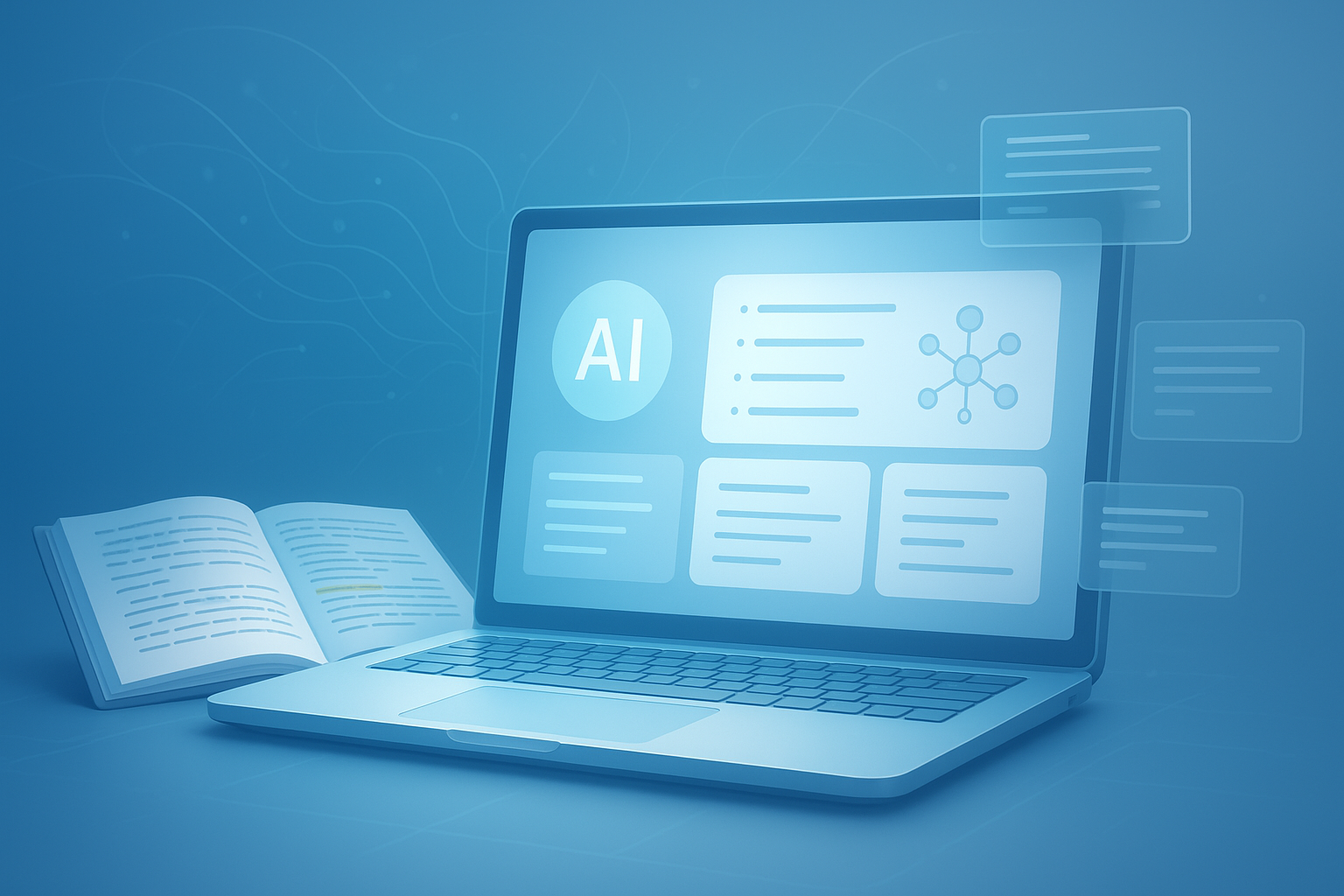
Suggested Image: Student using a laptop with AI-generated summarized notes beside textbook pages
What is an AI study notes summarizer?
An AI study notes summarizer is a tool that reads long study material and turns it into shorter, easier-to-review notes. It identifies main ideas, removes repeated information, and presents content in a more manageable format for revision.
It can be useful for:
- Lecture notes
- Textbook chapters
- Research articles
- PDF handouts
- Class transcripts
- Revision documents
The goal is not to replace learning. The goal is to reduce overload. Students still need to understand the subject, but AI can save time by shrinking large blocks of information into a cleaner first draft.
If your notes come from images or screenshots, a tool like Image to Text Converter can help extract the text before you summarize it.
How an AI study notes summarizer helps with faster exam revision
An AI study notes summarizer helps with exam revision by turning large amounts of material into key points that are faster to read, review, and memorize. This reduces time spent sorting through clutter and increases time spent actively studying.
Let’s break down why students use these tools.
1. It cuts down reading time
If a chapter is 4,000 words, you probably don’t need every sentence for revision. You need the concepts, definitions, processes, and examples that explain the topic clearly.
2. It highlights key information
Many students take notes that are too detailed. AI can help surface the most important themes, especially when your original notes repeat the same point in different wording.
3. It makes revision less overwhelming
Shorter notes feel easier to start. That small psychological shift matters. When the material looks manageable, students are more likely to review it consistently.
4. It supports different study formats
You can turn long notes into:
- Bullet point summaries
- Short concept explanations
- Topic outlines
- Flashcard prompts
- Quick revision sheets
5. It helps organize messy material
If your notes are scattered across files, copied slides, and lecture summaries, AI can help structure them into cleaner sections. For file cleanup, students often find tools like Word Counter useful for checking note length before and after summarization.
| Without Summarizing | With an AI Study Notes Summarizer |
|---|---|
| Long, dense revision material | Shorter, clearer study notes |
| Hard to identify key points | Main ideas surfaced quickly |
| More passive rereading | More time for active revision |
| Notes often stay unorganized | Content can be grouped by topic |
How these tools actually work
Most AI summarizers use language models to detect meaning, topic patterns, and importance across a block of text. They don’t “understand” information like a teacher does, but they can estimate what should be kept, shortened, or grouped together.
In simple terms, the process often looks like this:
- You paste in notes, upload a file, or import text.
- The tool analyzes the content and identifies important ideas.
- It removes repetition and compresses the text.
- It returns a shorter version in paragraph, outline, or bullet format.
- You review and edit the summary for accuracy.
Now comes the important part. AI summaries are only as good as the input. If your notes are incomplete, confusing, or missing context, the output may also be weak. That’s why editing still matters.
For students interested in the bigger picture of responsible AI use, UNESCO’s guidance on the ethics of artificial intelligence gives useful context on human oversight and responsible use.
When an AI study notes summarizer works best
An AI study notes summarizer is most useful when the original material is long, repetitive, or difficult to review under time pressure. It works best as a revision aid, not as a substitute for attending class or understanding the full topic.
Here are the strongest use cases.
Long textbook chapters
If a chapter contains background explanation, examples, and repeated definitions, AI can reduce it to the central points you need to revise.
Lecture notes with too much detail
Some students write down almost everything. Summarization helps separate core ideas from supporting details.
Research-heavy subjects
Subjects like history, biology, sociology, law, and psychology often involve large volumes of reading. A summarizer can create a lighter review version.
Last-stage revision
During the final days before an exam, shorter notes are often more useful than full material. You want reminders, not full-length lessons.
Study groups
When multiple students share notes, AI can turn mixed writing styles into a more consistent revision outline.
If you need to clean copied content before summarizing, Text Cleaner can help remove extra spaces and formatting clutter.
Where AI summarizers fall short
AI is fast, but it is not perfect. It can miss nuance, remove useful examples, oversimplify difficult topics, or present an inaccurate summary if the source material is unclear. This is where many people struggle.
Common limitations include:
- Missing context in technical subjects
- Oversimplifying definitions
- Dropping exceptions or edge cases
- Merging separate concepts too aggressively
- Presenting fluent but imperfect summaries
This matters even more in subjects with formulas, case law, scientific steps, or multi-part theories. For example, guidance from the U.S. Institute of Education Sciences on effective learning practices supports strategies like retrieval, review, and structured study, which AI can support but not replace.
Here’s the safer way to think about it: use AI to compress the material, then use your own judgment to verify it.
How to use an AI study notes summarizer effectively
The best results come from a simple process: prepare the notes, summarize in small sections, check accuracy, then turn the output into active revision material. Students who skip the checking step often trust weak summaries too quickly.
- Start with clean notes. Remove duplicate text, broken formatting, and unrelated content.
- Summarize by topic, not by entire subject. Smaller chunks usually produce better summaries.
- Choose the right output style. Bullet points work well for revision. Paragraphs are better for understanding flow.
- Check key terms. Verify dates, names, formulas, and definitions against your source.
- Add your own examples. This strengthens memory and understanding.
- Turn summaries into questions. This supports active recall.
- Revise from the final version. Don’t keep jumping back to the raw long notes unless needed.
If you want to compare the length of original and final notes, a quick Character Counter can help measure how much you reduced the material.
Suggested Infographic: Step-by-step workflow from long notes to final revision sheet
Best summary formats for different subjects
Not every subject should be summarized in the same way. The best format depends on whether you need definitions, processes, arguments, formulas, or comparisons. This small detail changes everything.
| Subject Type | Best Summary Format | Why It Works |
|---|---|---|
| History | Timelines and bullet points | Helps track events, causes, and outcomes |
| Biology | Process steps and definitions | Good for systems, functions, and terminology |
| Literature | Theme summaries and quote groupings | Makes analysis easier to recall |
| Law | Case briefs and issue-rule style notes | Keeps legal reasoning structured |
| Math or physics theory | Formula lists with conditions | Useful for quick memory checks |
| Psychology | Theory comparisons | Helps separate similar ideas |
If you are building structured study material from rough notes, a simple outline can later be refined using a Case Converter to standardize headings and formatting.
AI summaries vs manual note-making
AI summaries are faster. Manual note-making is often better for deep learning. The best approach for most students is a combination of both: use AI to shorten the material, then refine it yourself so the final notes actually make sense to you.
| Method | Main Advantage | Main Limitation |
|---|---|---|
| AI summarizer | Saves time and reduces overload | May miss nuance or accuracy |
| Manual note-making | Improves understanding during writing | Takes longer |
| Hybrid approach | Balances speed and learning | Still requires review and editing |
According to UNC Learning Center note-taking guidance, effective notes are organized, selective, and useful for review. AI can help with the “selective” part, but students still need to make the notes meaningful.
Practical study workflow students can use in 2026
A smart 2026 revision workflow uses AI for compression, then uses proven study methods for retention. The answer depends on one thing: whether you use the summary passively or actively.
Here’s a practical workflow:
- Collect your lecture notes, textbook excerpts, and handouts.
- Convert scanned pages into editable text if needed.
- Run each topic through an AI study notes summarizer.
- Edit the result for missing details and accuracy.
- Turn each summary into 5 to 10 self-test questions.
- Review those questions using active recall.
- Revisit difficult topics and expand only where needed.
For better revision planning, many students also use timeboxing or tracking methods. A simple Percentage Calculator can even help estimate course progress, such as how much of the syllabus you have already condensed and reviewed.
Evidence from the American Psychological Association’s memory and learning resources supports active strategies like self-testing and spaced practice. That means the summary itself is only step one.
Common mistakes students make
The biggest mistake is treating an AI summary as final truth. A close second is summarizing too much at once. Strong revision depends on clear source material, smaller sections, and personal review.
- Summarizing entire books in one go: Results are often too vague.
- Skipping fact checks: Definitions and dates can become distorted.
- Using only passive rereading: A short note is still passive if you don’t test yourself.
- Removing too much detail: Some subjects need nuance.
- Ignoring course objectives: Your exam may focus on specific frameworks or topics.
- Using messy inputs: Bad formatting leads to weaker summaries.
If you’re copying material from various sources into one study file, Remove Duplicate Lines can help clean repeated text before summarizing.
How to tell if a summary is actually good
A good summary is accurate, focused, and useful in revision. It should make the topic easier to recall without removing the meaning. If the summary feels polished but leaves you confused, it isn’t good enough.
Use this checklist:
- Does it keep the core idea of the original material?
- Are important definitions still correct?
- Does it remove repetition without deleting necessary context?
- Can you answer practice questions using the summary alone?
- Does it match what your teacher or textbook emphasized?
One effective test is this: read the summary, close it, and explain the topic in your own words. If you can’t, the summary may be too thin.
For writing cleaner self-test prompts after summarizing, you may also find Sentence Counter useful when turning long notes into short revision questions.
Privacy, accuracy, and academic use
Students should think about privacy before pasting personal or sensitive material into any AI tool. Notes that include private information, graded feedback, or unpublished research should be handled carefully.
Good practice includes:
- Avoid uploading confidential personal data
- Review a tool’s privacy policy before use
- Do not rely on summaries for citations without checking the source
- Follow your school’s academic integrity rules
For academic expectations around responsible use of sources and student work, institutions often point to policies like those explained by the U.S. Department of Education’s student privacy resources. You should also check your own school’s AI policy, since rules differ.
Frequently asked questions
Is an AI study notes summarizer good for all subjects?
It works well for many reading-heavy subjects, including history, biology, psychology, literature, and law. It is less reliable when the material depends heavily on formulas, diagrams, or fine distinctions unless you review the output carefully. For technical subjects, use it to shorten explanations, but always verify the details against your textbook, class notes, or teacher guidance.
Can AI summaries replace making my own notes?
No. They can save time, but they should not fully replace your own thinking. Writing or editing notes yourself helps with memory and understanding. The best approach is usually hybrid: let AI create a first summary, then rewrite parts in your own words, add examples, and turn the content into questions for active recall.
Are AI-generated study summaries accurate?
They can be helpful, but they are not guaranteed to be accurate. AI may overlook nuance, simplify too much, or phrase something confidently while being slightly wrong. That is why students should always check names, dates, definitions, formulas, and exceptions against the original material before relying on the summary for revision.
What is the best way to use summarized notes before an exam?
Use summarized notes as a review tool, not just as something to reread. Read the short notes, cover them, then try to explain the topic from memory. Turn each summary into possible exam questions, flashcards, or mini quizzes. This active use helps the information stick much more effectively than passive review alone.
Can I summarize PDF lecture notes and scanned pages?
Yes, but scanned pages often need text extraction first. If the PDF contains selectable text, summarizing is straightforward. If it is just an image scan, you may need OCR or an image-to-text step beforehand. Clean input usually leads to better output, so fixing formatting and removing duplicate text can improve the final summary significantly.
Do free AI study note summarizers work well enough?
Many free tools are good for basic summarization, especially for short or medium-length notes. Their limitations usually appear with long files, advanced formatting, or very technical content. Free options are often enough for first-pass revision. What matters more than price is whether the output is clear, accurate, and easy for you to review and edit.
Can teachers detect if I used AI to summarize notes?
If you are using AI privately to revise your own study material, that generally differs from submitting AI-generated work as your own assignment. Detection is not the main issue. Academic honesty is. If your school has an AI policy, follow it. For personal study use, AI summarization is usually acceptable, but graded submissions should meet your institution’s rules.
What should I do after generating a summary?
Review it immediately. Correct errors, add missing examples, and rewrite unclear points. Then turn the summary into an active study tool, such as flashcards, question prompts, or a one-page revision sheet. The summary should become the starting point for learning, not the final step. That is what makes it useful for exams.
Final thoughts
An AI study notes summarizer can make exam revision faster by shrinking long material into something clearer and easier to review. But speed only helps if the summary is accurate and you use it actively. The students who get the most value from these tools do one thing differently: they edit, verify, and study from the output instead of trusting it blindly.
Your next step is simple. Pick one chapter or lecture, summarize it in smaller sections, clean the result, and turn it into self-test questions. If your notes need prep work first, related tools like PDF Tools, Image to Text Converter, Text Cleaner, and Word Counter can help you build a smoother revision workflow.