

Have you ever asked an AI tool to write a blog post, only to get something that sounds polished but oddly empty? That’s the main reason many marketers struggle with AI for content writing. The tool is fast, but the output often feels generic, repetitive, or off-brand.
The good news is that AI can be extremely useful when you use it as a writing partner instead of a replacement for strategy. It can speed up research, drafting, editing, repurposing, and SEO optimization without flattening your message.
In this guide, you’ll learn how to use AI for content writing effectively in 2026, where it helps most, where human judgment still matters, and how to build a workflow that saves time while protecting quality.
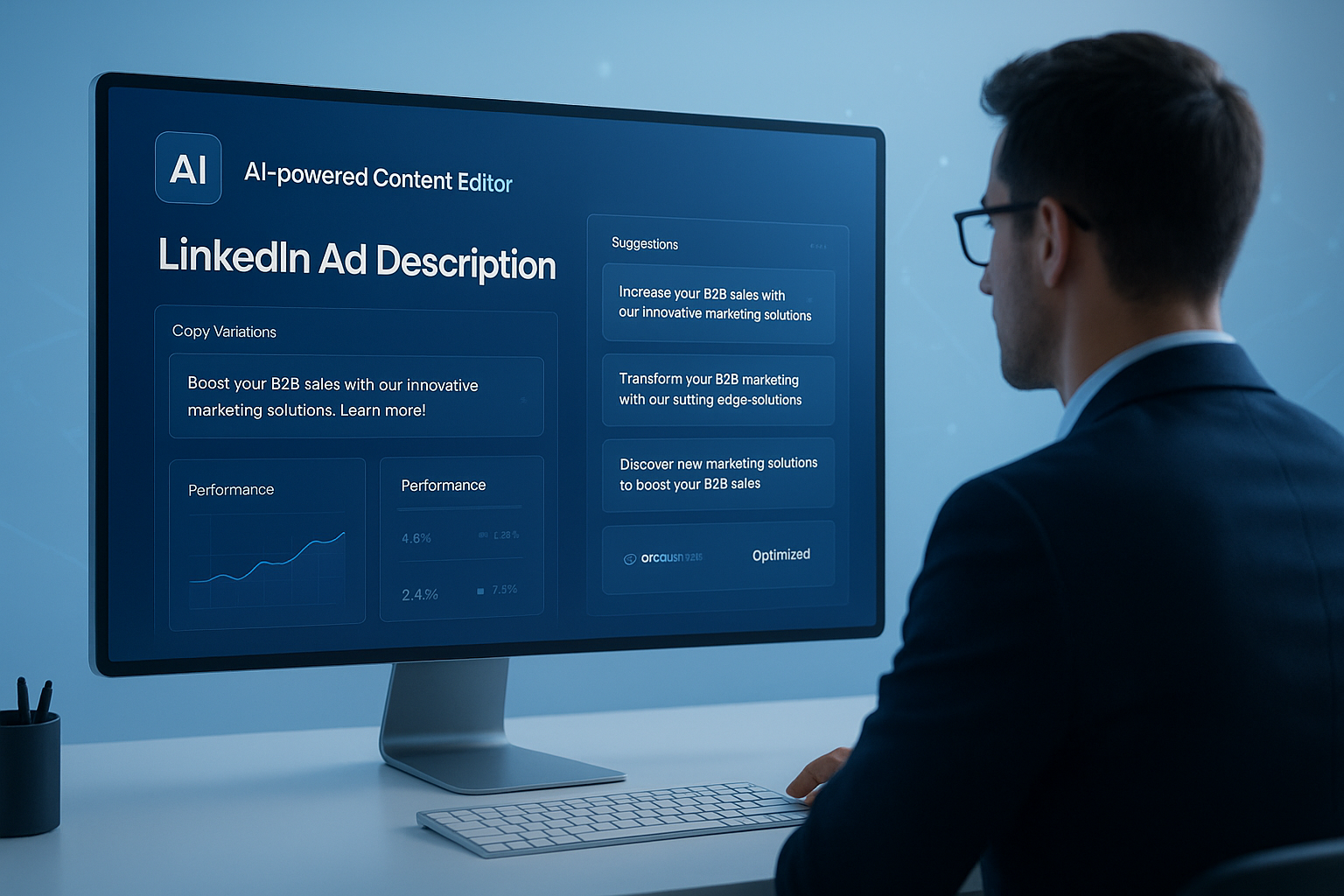
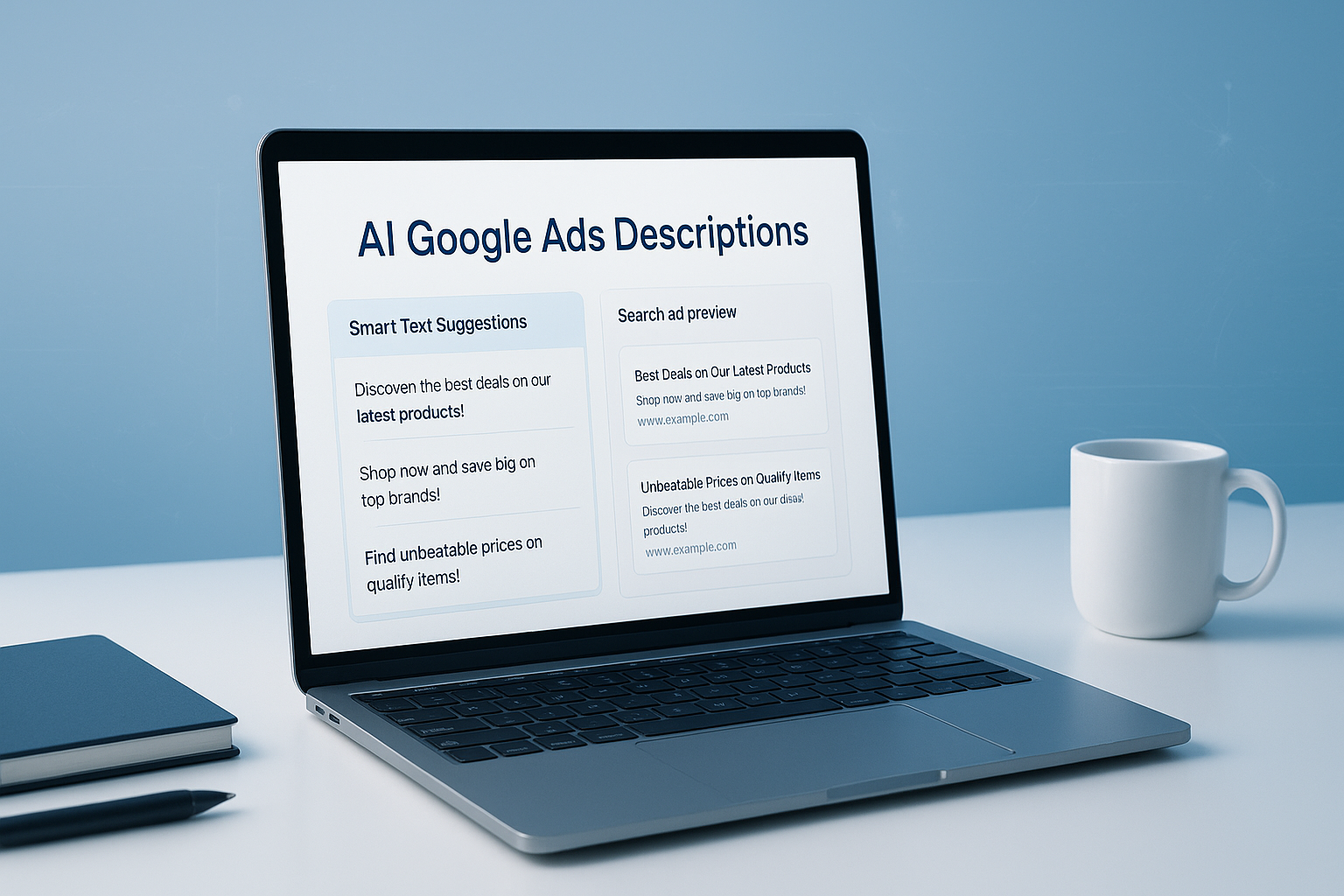
Suggested Image: Technology concept showing a marketer using AI tools for drafting, editing, and SEO planning
What does AI for content writing actually mean?
AI for content writing means using artificial intelligence tools to assist with planning, drafting, editing, optimizing, and repurposing written content. It does not automatically mean pushing a button and publishing whatever appears on the screen.
At its best, AI helps marketers move faster on tasks that usually eat up time:
- Generating content briefs
- Creating outlines
- Suggesting headlines
- Drafting first versions
- Rewriting unclear sections
- Improving readability
- Extracting key points from long source material
- Creating social posts, email copy, and FAQs from one article
That said, AI works best when paired with strong editorial judgment. If your process is weak, AI simply helps you produce weak content faster. If you need to check reading complexity before publishing, a simple word counter tool can also help you keep article length and structure under control.
Why marketers use AI for content writing
Most marketers are not looking for a robot author. They want a faster workflow, fewer bottlenecks, and more room to focus on strategy. That’s where AI becomes practical.
Here’s what AI can improve when used correctly:
- Speed: Drafts, summaries, and variations can be created in minutes
- Consistency: Brand messaging becomes easier to scale across channels
- Idea generation: AI can help uncover angles, questions, and content gaps
- SEO support: It can surface semantic topics and organize content around search intent
- Repurposing: One blog post can become emails, captions, ad copy, and FAQs
Google has made it clear that content quality matters more than whether AI was used to help produce it. What matters is whether the content is helpful, original, and created for people first, according to Google’s helpful content guidance.
This is where many teams get it wrong. They ask AI to write entire articles without guidance, then wonder why rankings and engagement stay flat.
What AI is good at and where it still falls short
AI is strong at pattern recognition, language prediction, and fast content generation. It is weaker at judgment, originality, lived experience, brand nuance, and fact reliability. Knowing that difference changes everything.
| Best uses of AI | Tasks that still need a human |
|---|---|
| Outlines and content briefs | Editorial direction and positioning |
| Headline and intro variations | Brand voice and emotional nuance |
| Summaries and simplification | Fact checking and source validation |
| Meta descriptions and FAQs | Original insights and expert opinion |
| Repurposing content for channels | Final approval and legal or sensitive review |
A smart workflow combines both. AI accelerates the mechanics. Humans shape the meaning.
How to use AI for content writing effectively
The simplest answer is this: start with a clear goal, give the AI strong context, and never publish the first draft untouched. Effective use of AI for content writing is less about the tool and more about the process behind it.
- Start with search intent. Know whether the piece should inform, compare, persuade, or convert.
- Define the audience. A blog for marketers should not sound like one written for software engineers or students.
- Build a clear prompt. Include the topic, audience, tone, purpose, desired structure, and any sources or constraints.
- Ask for an outline first. This helps you catch weak angles before wasting time on a full draft.
- Use AI section by section. You’ll get better results than asking for a 2,000-word article in one shot.
- Edit heavily. Add examples, brand voice, original insights, and stronger transitions.
- Verify facts. Check claims against trusted documentation before publishing.
- Optimize for readability and SEO. Tighten headings, simplify wording, and make the article easier to scan.
If you’re preparing source notes from documents before prompting an AI model, a PDF to Text tool can speed up the process of extracting usable material from reports, presentations, or whitepapers.
How to write better AI prompts
Weak prompts create weak content. In most cases, poor output is not the model’s fault. It’s a briefing problem. Experienced marketers treat prompts like mini creative briefs.
What a strong prompt should include
- The target audience
- The main goal of the content
- The primary keyword and related topics
- The desired tone and reading level
- The required structure or headings
- Examples of what to avoid
- Any brand rules, facts, or offers to include
Example of a weak prompt
Write a blog post about AI writing.
Example of a better prompt
Write an informational blog post for marketers explaining how to use AI for content writing effectively. Keep the tone clear, practical, and trustworthy. Cover benefits, limitations, workflow steps, prompt writing, SEO best practices, editing tips, common mistakes, and FAQs. Use short paragraphs and include actionable examples. Avoid hype and vague claims.
This small detail changes everything. Better prompts lead to stronger outlines, cleaner sections, and fewer rewrites.
For long prompts, especially when collaborating across teams, a text diff checker can help compare prompt versions and spot subtle changes that affect output quality.
A practical workflow marketers can use
If you want consistent results, you need a repeatable workflow. Random prompting usually creates random quality. A simple editorial system works better than chasing the newest AI feature.
Step 1: Collect source material
Gather product notes, customer questions, search data, internal documentation, sales call insights, and trustworthy external references. AI performs better when it has context anchored in reality.
Step 2: Identify the content angle
Decide what the article should do. Should it answer a beginner question, compare tools, solve a problem, or support a landing page? This prevents broad, unfocused drafts.
Step 3: Generate an outline
Use AI to produce 2 or 3 possible structures. Then combine the strongest sections into a final outline. This often saves more time than drafting immediately.
Step 4: Draft section by section
Ask the tool to write each section with clear instructions. This gives you better control over depth, style, and accuracy.
Step 5: Add human expertise
Now comes the important part. Insert examples from your own campaigns, customer objections, internal lessons, and point-of-view commentary. That’s what makes the article useful and different.
Step 6: Edit for SEO and readability
Check title structure, heading clarity, topical completeness, semantic relevance, and flow. Google’s broader quality guidance in Google’s SEO Starter Guide is still worth reviewing here.
Step 7: Repurpose the final piece
Turn the article into email snippets, LinkedIn posts, ad variations, webinar talking points, and customer support macros. A single well-edited piece can fuel multiple channels.
If you need to reuse visual assets from the blog across campaigns, an image resizer tool can help prepare graphics for social, email, and blog layouts without creating mismatched dimensions.
How to keep AI-written content from sounding generic
Most AI-assisted content sounds generic for one reason: it reflects the average of what already exists. To avoid that, you need to add specifics that a model cannot invent responsibly.
Here’s what experienced professionals do differently:
- Add real examples from campaigns or client work
- Include internal terminology your audience actually uses
- Reference customer pain points from calls, emails, and surveys
- Use a point of view instead of neutral filler
- Replace broad claims with exact observations
- Cut stock phrases and repeated patterns
For example, instead of saying, “AI improves efficiency,” say, “Our team used AI to create five article outlines in 30 minutes, then chose one to refine based on sales objections we already knew were hurting conversions.”
That sentence feels more credible because it includes context, action, and consequence.
Using AI for SEO content without hurting rankings
AI can support SEO content well, but it should not be the entire SEO strategy. Search engines reward helpful, accurate, people-first content. They do not reward empty volume.
To use AI for content writing in an SEO-friendly way:
- Start with a clear primary keyword and related subtopics
- Cover the search intent completely
- Use headings that reflect real questions readers ask
- Add definitions, lists, comparisons, and FAQs
- Include unique information or insights
- Fact-check claims and examples
- Improve internal linking and on-page structure
Google also recommends being transparent about expertise and focusing on trust signals, especially when content could influence decisions. See Google’s self-assessment questions for helpful content for a useful review checklist.
If you’re cleaning up URLs or campaign parameters before publishing, a URL encoder and decoder can be unexpectedly useful during technical SEO and link preparation.
Best AI use cases across the content lifecycle
AI is most valuable when it supports multiple stages of content production, not just drafting. That’s where marketers get measurable efficiency gains.
| Content stage | How AI helps |
|---|---|
| Research | Summarizes notes, extracts themes, clusters questions |
| Planning | Builds outlines, briefs, topic angles, and headline options |
| Drafting | Creates first drafts, rewrites sections, expands bullet points |
| Editing | Simplifies language, improves flow, suggests stronger transitions |
| SEO | Finds missing subtopics, drafts metadata, suggests FAQs |
| Repurposing | Turns articles into emails, captions, scripts, and summaries |
Suggested Infographic: AI-assisted content workflow from research to repurposing
Common mistakes to avoid
AI can save time, but it can also create expensive mistakes if you use it carelessly. Most problems come from overtrusting the draft and underinvesting in review.
- Publishing raw output: First drafts often contain weak claims, repetition, and generic phrasing
- Skipping fact checks: AI can produce confident but inaccurate statements
- Ignoring brand voice: Content becomes interchangeable and forgettable
- Using vague prompts: The output lacks purpose and structure
- Chasing volume over quality: More pages do not automatically mean more traffic
- Forgetting legal or compliance review: High-risk industries need extra oversight
- Stuffing keywords after the fact: This hurts readability and rarely helps rankings
When graphics are part of your article workflow, image performance matters too. Large visuals can slow down pages, so using an image compressor is a practical step before publishing content-heavy posts.
How to fact-check AI content safely
You should treat AI output as a draft, not as a source. That means every factual claim, quote, number, and recommendation needs review before publication.
A reliable fact-checking process looks like this:
- Highlight all factual claims in the draft
- Check each claim against a primary or authoritative source
- Replace vague phrasing with exact wording where needed
- Remove unsupported statistics if no trustworthy source exists
- Verify product details, pricing, dates, and feature descriptions manually
For digital marketing topics, good sources often include vendor documentation and standards bodies. For web-related guidance, both MDN Web Docs and W3C remain reliable references.
If your workflow includes collecting notes from screenshots or scanned files, an image to text tool can help convert visual source material into searchable text before review.
Can AI replace human writers?
No, not in the way many people assume. AI can replace parts of the writing process, especially repetitive production tasks. It cannot reliably replace strategic thinking, editorial judgment, audience empathy, and brand-sensitive decision-making.
Here’s the practical view:
- AI can draft quickly
- Humans decide what should be said
- AI can reorganize information
- Humans determine what matters most
- AI can imitate tone patterns
- Humans create trust through specificity and experience
The best teams are not choosing between AI and writers. They are redesigning workflows so each does what it does best.
How to measure whether AI-assisted content is working
You should judge AI content by outcomes, not novelty. Faster output means nothing if traffic, engagement, or conversions drop.
Track a mix of production and performance metrics:
- Time to first draft
- Total editing time
- Cost per article
- Organic impressions and clicks
- Average engagement time
- Conversion rate from content
- Ranking spread across related keywords
- Content refresh speed
This is where many people struggle. They measure content volume but ignore usefulness. A shorter article that answers the right question well often outperforms a longer article built from generic AI output.
If you’re reporting character counts for titles, social copy, or metadata, a character counter can help keep every asset within platform limits.
Frequently asked questions
Is AI for content writing good for beginners?
Yes, as long as beginners use it as a support tool rather than a shortcut to publishing. AI can help new marketers generate outlines, understand structure, and move past blank-page syndrome. The risk is assuming the draft is already good enough. Beginners should focus on editing, fact-checking, and learning why certain content decisions work, not just copying the output into a CMS.
Can AI-written content rank on Google?
Yes, AI-assisted content can rank if it is useful, accurate, original, and aligned with search intent. Google focuses on content quality, not whether AI helped create it. Poorly edited content that lacks expertise or repeats generic information is unlikely to perform well. Strong rankings usually come from content that combines AI efficiency with human insight, topical depth, and trustworthy sourcing.
What type of content is best suited for AI assistance?
AI works especially well for informational blog posts, article outlines, FAQs, product descriptions, social captions, email drafts, summaries, and content repurposing. It is also useful for rewriting clunky paragraphs and simplifying complex material. It is less reliable for high-stakes legal, medical, financial, or compliance-heavy writing unless a qualified human thoroughly reviews the output.
How do I keep AI content in my brand voice?
Give the tool specific voice guidance before drafting. Share examples of your preferred tone, phrases to avoid, audience expectations, and the level of formality you want. Then edit the result to include your brand’s vocabulary, opinions, and customer context. Voice is rarely solved by prompting alone. It gets stronger when your team adds real examples, positioning, and consistent editorial review.
Do I need to disclose that I used AI for writing?
The answer depends on your industry, audience expectations, and internal policy. In many marketing contexts, disclosure is not required if AI was simply part of the production process and the final content was reviewed by a human. But if the content involves sensitive decisions, regulated fields, or synthetic media concerns, transparency may be appropriate. Always follow legal, ethical, and brand-specific guidance.
What’s the biggest mistake marketers make with AI writing tools?
The biggest mistake is treating AI output as finished content. That usually leads to bland copy, factual errors, and weak performance. Other common mistakes include poor prompts, no source validation, and overproducing low-value pages. The most effective teams use AI to speed up the early stages, then invest real effort in shaping a better final result.
How much does AI for content writing usually cost?
Costs vary widely. Some tools offer free plans or limited credits, while advanced platforms can cost anywhere from a modest monthly subscription to enterprise-level pricing. The more important cost question is total workflow efficiency. A cheaper tool that creates messy drafts may cost more in editing time. Evaluate price alongside quality, accuracy, collaboration features, and integration with your existing content process.
What should I check before publishing AI-assisted content?
Review the article for factual accuracy, brand voice, search intent coverage, readability, keyword placement, internal links, formatting, and duplicate phrasing. Make sure every section adds value and that no unsupported claims remain. It also helps to confirm metadata, image optimization, and mobile readability. Publish only after a human editor checks whether the content sounds credible and genuinely helpful.
Final thoughts
Using AI for content writing effectively is not about letting software take over. It’s about building a smarter workflow. AI can help you research faster, draft sooner, and repurpose more efficiently, but the strongest content still depends on human judgment, experience, and editorial care.
If you want better results, start small. Use AI for outlines, briefs, section drafts, and rewrites. Then tighten every piece with real examples, accurate sources, and clear brand voice. That’s the difference between content that merely exists and content that earns attention.
As a practical next step, review your current workflow and identify one stage to improve first. You might use a word counter tool for tighter drafts, a PDF to Text tool for research extraction, an image compressor for page performance, and a character counter for titles and meta descriptions. Small process improvements usually create the biggest long-term gains.