
Want to know your loan eligibility before you apply? That’s smart. Many borrowers only find out they don’t qualify after a hard credit check, a rejected application, or an offer with a higher interest rate than expected.
Here’s the problem. Lenders don’t approve loans based on one number. They look at your income, credit history, monthly debt, job stability, and even the documents you submit. A small issue in one area can change the outcome.
This guide explains loan eligibility in plain English. You’ll learn what lenders check, how different loans are assessed, what can hurt your chances, and practical ways to improve your profile before applying in 2026. If you want to estimate repayments while comparing options, a loan calculator can help you see the monthly impact before you move forward.
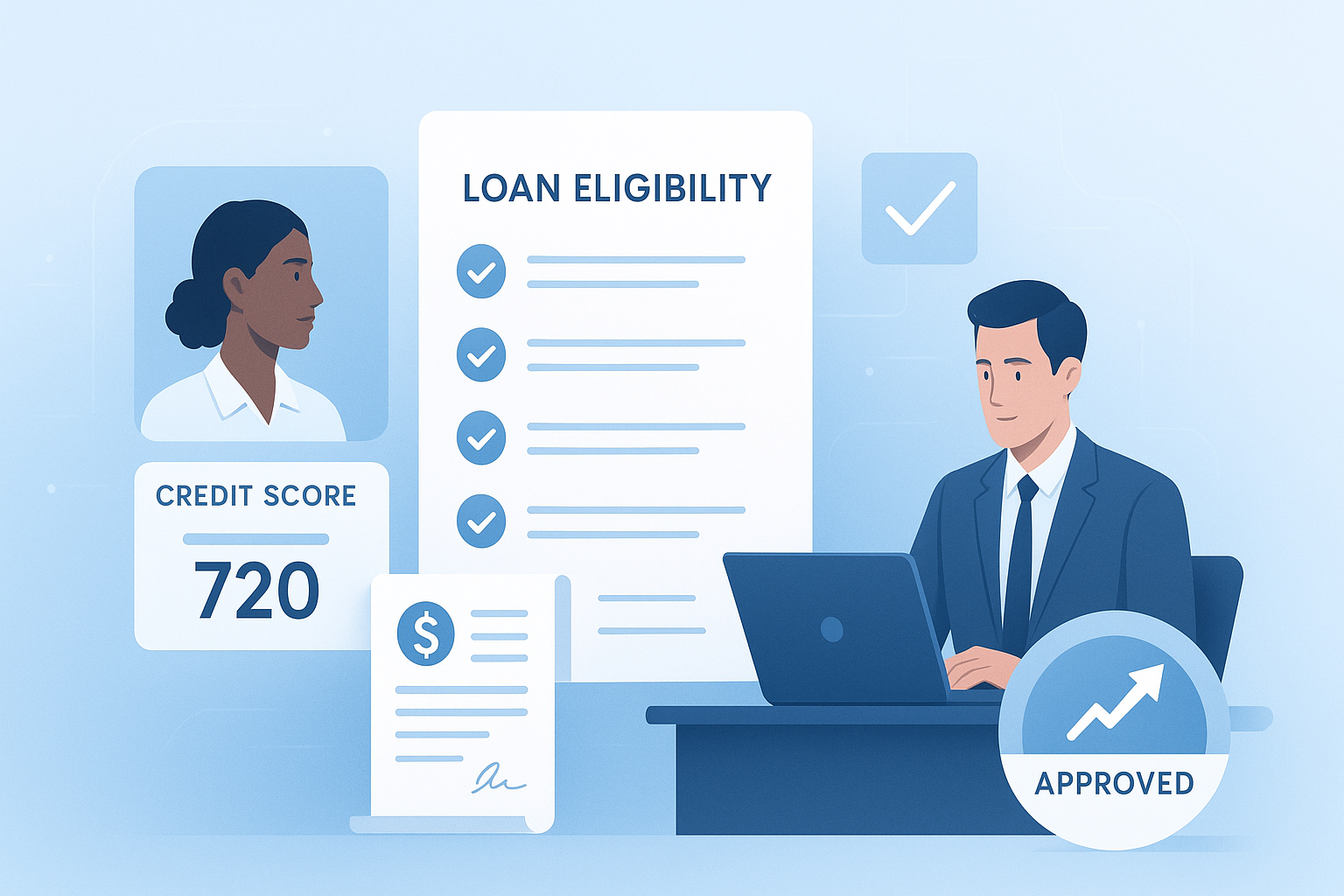
Suggested Image: Finance illustration showing a lender reviewing income, credit score, debt, and documents
What is loan eligibility?
Loan eligibility is a lender’s decision about whether you qualify for a loan based on your financial profile and the lender’s rules. It affects both approval and loan terms, including the amount you can borrow, the interest rate, and the repayment period.
In simple terms, lenders want to answer two questions:
- Can you repay the loan on time?
- How risky is it to lend you money?
To do that, they review factors such as:
- Your income
- Your credit score and credit history
- Your debt-to-income ratio
- Your employment status
- Your age and residency status
- Your savings, assets, or collateral in some cases
- The purpose and size of the loan
Most lenders also follow consumer protection and underwriting standards. If you want to understand your rights as a borrower, the Consumer Financial Protection Bureau loan resources are a useful starting point.
Why lenders check loan eligibility before approval
Lenders assess loan eligibility to reduce default risk and to match borrowers with suitable loan products. This protects both the lender and the borrower from taking on debt that may be difficult to manage.
Let’s break this down. A loan is not just about whether you need money. It’s about whether the payments fit comfortably within your budget after accounting for rent, groceries, utilities, insurance, and existing debt.
That’s why pre-approval checks often focus on affordability. Some lenders use automated underwriting systems. Others add manual reviews, especially for large loans like mortgages or business loans.
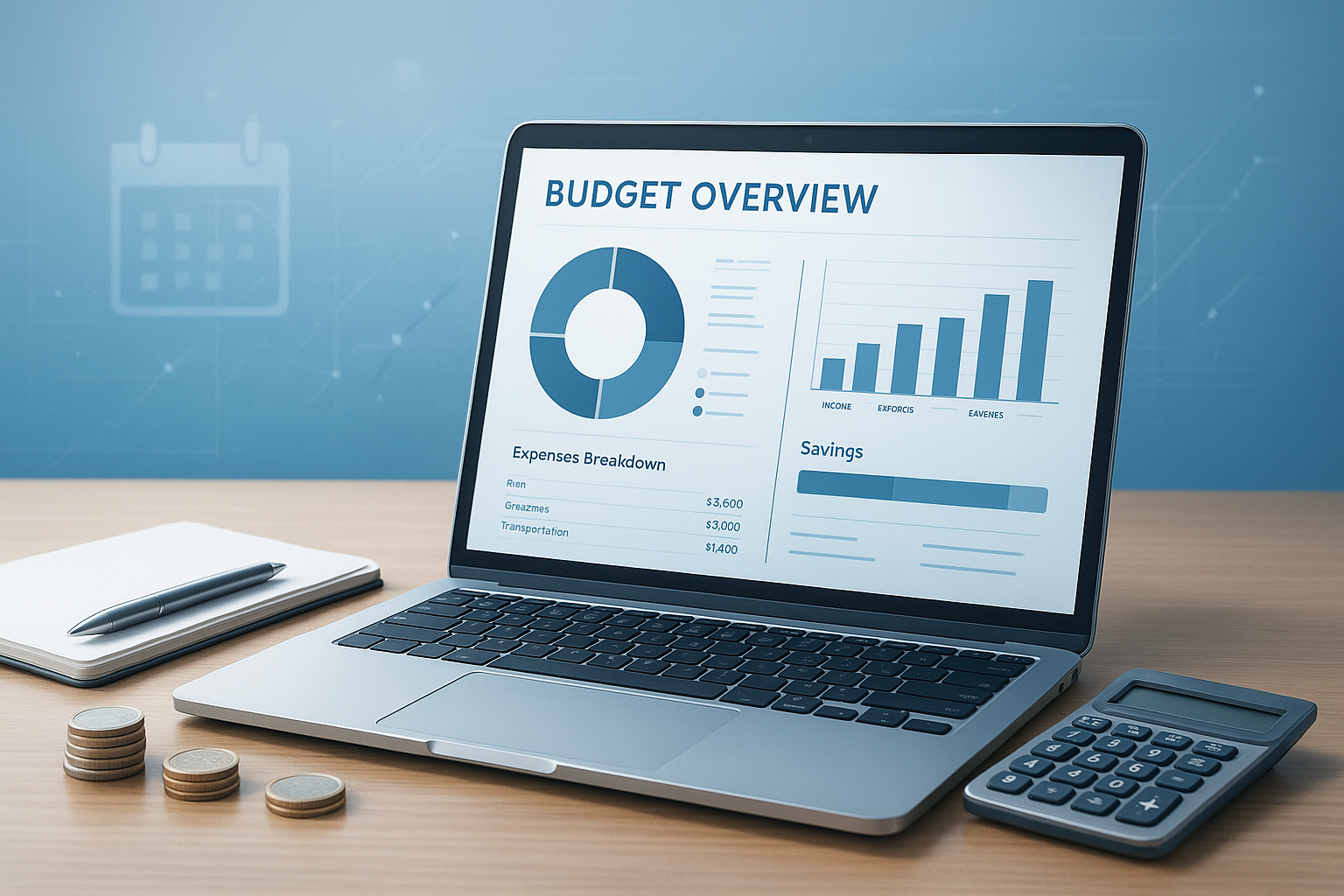
If you’re building a personal borrowing plan, a budget calculator can help you estimate how much room you truly have before adding a new monthly payment.
The main factors that affect loan eligibility
The biggest loan eligibility factors are income, credit score, debt obligations, employment history, and documentation. A strong result in one area can help, but serious weaknesses in another may still lead to denial or stricter terms.
1. Income and repayment capacity
Your income helps lenders decide whether you can afford the monthly payment. In most cases, stable and predictable income matters more than just a high number.
Lenders may consider:
- Salary or wages
- Self-employment income
- Freelance or contract earnings
- Rental income
- Pension or retirement income
- Government benefits, where allowed
- Other verifiable income sources
For self-employed applicants, consistency matters. A lender may average your income over one or two years rather than relying on a single good month. If your pay varies, documenting it clearly becomes even more important.
2. Credit score and credit history
Your credit score gives lenders a quick picture of how you’ve handled debt in the past. A higher score often improves your loan eligibility and may qualify you for lower rates.
What lenders usually review:
- Payment history
- Credit utilization
- Length of credit history
- Recent credit inquiries
- Types of credit accounts
- Collections, defaults, bankruptcies, or late payments
This small detail changes everything. A decent income may not be enough if your report shows repeated missed payments. To learn how lenders use credit data, see the Experian explanation of credit score factors.
3. Debt-to-income ratio
Your debt-to-income ratio, often called DTI, compares your monthly debt payments to your gross monthly income. It’s one of the clearest measures of affordability.
The basic formula is:
DTI = total monthly debt payments ÷ gross monthly income × 100
Example:
- Monthly income: $4,000
- Car loan: $350
- Credit card minimums: $150
- Student loan: $200
- Total debt payments: $700
- DTI: 17.5%
In general, a lower DTI improves your chances. If you want to work out percentages quickly while checking affordability scenarios, a percentage calculator can make the math faster.
4. Employment status and job stability
Lenders prefer borrowers with reliable employment or stable business income. Frequent job changes don’t automatically disqualify you, but unexplained gaps can make underwriting harder.
Lenders may ask:
- How long have you been with your current employer?
- Are you full-time, part-time, temporary, or self-employed?
- Has your income been stable over time?
- Are there recent breaks in employment?
Now comes the important part. Stability often matters more for larger, longer-term loans than for smaller personal loans.
5. Loan amount, term, and purpose
The amount you want to borrow also affects loan eligibility. A borrower may qualify for a smaller loan but not for a larger one, even with the same credit profile.
Lenders look at:
- Requested amount
- Repayment term
- Monthly payment size
- Whether the loan is secured or unsecured
- Why you need the funds
For example, a five-year loan may have lower monthly payments than a two-year loan, but total interest can be higher. To compare total repayment costs, many borrowers also check a interest rate calculator before choosing a term.
6. Age, residency, and legal requirements
Most lenders require borrowers to meet basic legal conditions before they even review the financial details.
- Minimum age requirement
- Valid ID
- Proof of address
- Residency or citizenship status, depending on the lender
- Bank account in some cases
These checks are simple, but missing one required item can delay or block approval.
7. Collateral for secured loans
For secured loans, the asset matters too. A car loan depends partly on the vehicle. A mortgage depends heavily on the property. In these cases, loan eligibility includes both the borrower and the asset being financed.
Lenders may review:
- Asset value
- Condition
- Ownership records
- Insurance requirements
- Loan-to-value ratio
Common loan eligibility requirements by loan type
Loan eligibility requirements vary by product. Personal loans usually focus on credit, income, and debt. Mortgages involve stricter affordability checks, while auto loans also consider the car’s value and condition.
| Loan Type | Main Eligibility Focus | Typical Extra Considerations |
|---|---|---|
| Personal loan | Credit score, income, DTI | Employment history, recent inquiries |
| Mortgage | Income, DTI, credit, down payment | Property appraisal, cash reserves |
| Auto loan | Income, credit, monthly affordability | Vehicle age, mileage, loan-to-value |
| Student loan | Enrollment and financial profile | Co-signer, school eligibility |
| Business loan | Business revenue, owner credit, cash flow | Time in business, business plan, collateral |
If you’re comparing a major home loan, the CFPB home buying guidance explains the affordability side in a very practical way.
What documents do lenders usually ask for?
Most lenders require documents that prove your identity, income, address, and existing financial obligations. The exact list depends on the loan type and how strict the underwriting process is.
Here’s what experienced borrowers prepare before applying:
- Government-issued photo ID
- Proof of address
- Recent pay stubs
- Bank statements
- Tax returns, especially for self-employed applicants
- Employment verification
- Details of current loans and credit cards
- Proof of assets or savings if required
For a mortgage or business loan, lenders may request more paperwork. If you need to organize scanned files neatly before submission, a PDF Merger can help combine documents into one file.
Suggested Screenshot: Example checklist of loan application documents arranged in a single PDF
How lenders calculate affordability
Affordability is the lender’s estimate of whether your income can comfortably cover a new loan payment after your current expenses and debts. It goes beyond credit score and often decides the final approved loan amount.
Some lenders use a simple formula. Others review your bank statements and spending patterns in more detail. They may look at:
- Gross income
- Net income
- Fixed monthly debts
- Housing costs
- Childcare or dependent expenses
- Variable expenses such as food and transport
- Emergency savings
This is where many people struggle. They focus only on whether they can technically make the payment, not whether the payment leaves enough room for real life.
A useful approach is to compare loan options over time. If you are evaluating long-term borrowing against future financial goals, a savings calculator can show what you might give up by taking on a larger monthly payment.
How to improve your loan eligibility before applying
You can improve loan eligibility by reducing debt, increasing verifiable income, correcting credit report errors, choosing a smaller loan amount, and preparing complete documents. Even a few weeks of preparation can make a noticeable difference.
- Check your credit report early. Look for reporting errors, identity issues, or accounts marked late by mistake. Under U.S. law, you can access credit reports through the official AnnualCreditReport.com service.
- Lower your credit utilization. Paying down revolving balances can improve your credit profile and reduce DTI at the same time.
- Avoid multiple new applications. Too many credit checks in a short period may worry lenders.
- Pay bills on time. Payment history is one of the strongest trust signals in lending.
- Reduce existing monthly obligations. Even one paid-off card or loan can improve affordability calculations.
- Stabilize your income records. If you’re self-employed, keep clean statements and tax filings.
- Consider a co-applicant or co-signer if appropriate. This can help, but it also creates shared responsibility.
- Borrow only what you need. A lower requested amount is easier to approve.
Common mistakes that hurt loan eligibility
Many rejected applications are caused by avoidable mistakes. The most common ones include applying for too much, hiding debts, submitting incomplete documents, or assuming a high income automatically guarantees approval.
- Applying without checking your credit first
- Ignoring your debt-to-income ratio
- Changing jobs right before a major loan application
- Making large unexplained bank deposits
- Missing small bill payments that damage your credit history
- Using all available credit limits
- Comparing only interest rates and not total loan cost
- Accepting a loan term that makes total repayment far more expensive
If you’re comparing offers from multiple lenders, it helps to calculate the monthly and lifetime cost side by side. For future value comparisons and long-term interest impact, a Compound Interest Calculator can add useful perspective.
Loan eligibility vs loan approval: what’s the difference?
Loan eligibility means you appear to meet the lender’s basic criteria. Loan approval means the lender has reviewed your application and decided to offer the loan, subject to its final terms and conditions.
| Term | What It Means | Why It Matters |
|---|---|---|
| Eligibility | You likely meet basic lender requirements | Useful for screening options before applying |
| Prequalification | Estimate based on limited information | May not involve a hard credit check |
| Approval | Formal decision after underwriting review | Determines final amount, rate, and conditions |
The answer depends on one thing: how thoroughly the lender has verified your information. A marketing message saying you are “likely eligible” is not the same as a real underwriting decision.
Can you get a loan with bad credit or low income?
Yes, but loan eligibility becomes tighter. You may still qualify through a smaller loan amount, a secured loan, a co-signer, stronger recent payment history, or proof that your income is stable even if it is modest.
Here’s what lenders may do when risk is higher:
- Offer a lower borrowing limit
- Charge a higher interest rate
- Require collateral
- Ask for a larger down payment
- Request extra income documentation
- Require a co-applicant
Be careful here. A loan you qualify for is not always a loan you can comfortably afford. The Federal Trade Commission regularly warns consumers about deceptive financing offers and predatory lending practices.
Best practices before you apply for any loan
The best loan applicants prepare before they submit anything. They check affordability, gather documents, compare lenders, and apply only when their profile is as strong as possible.
- Review your income, debts, and monthly budget.
- Estimate a safe monthly payment range.
- Check your credit and dispute errors if needed.
- Compare loan types, rates, and fees.
- Prepare supporting documents in advance.
- Apply to lenders that match your profile.
- Read all terms, especially penalties, variable rates, and total repayment cost.
If you’re organizing numbers from different offers, simple formatting tools can also save time. For example, a CSV to Excel tool can help if you export lender quotes or budget data into a spreadsheet for comparison.
Frequently asked questions about loan eligibility
How much credit score do I need for good loan eligibility?
There isn’t one universal minimum because each lender sets its own standards. In general, higher scores improve your chances of approval and better rates. But lenders also look at income, debt, and payment history. A person with a moderate score and low debt may be viewed more favorably than someone with a strong score but high monthly obligations. The type of loan matters too. Mortgages, auto loans, and personal loans all use different risk thresholds.
Does checking loan eligibility hurt my credit score?
It depends on the type of check. Many lenders offer prequalification using a soft credit inquiry, which usually does not affect your score. A formal loan application often triggers a hard inquiry, which may have a small temporary impact. Before submitting an application, check whether the lender is doing a soft pull or hard pull. This matters most if you plan to compare several lenders in a short period.
Can self-employed people qualify as easily as salaried employees?
They can qualify, but the process is often more document-heavy. Lenders usually want to see stable, verifiable income over time, which may include tax returns, profit and loss statements, and bank records. The challenge is not self-employment itself. It is proving consistency. If your income fluctuates, keeping clean financial records and separating business and personal finances can improve how lenders view your application.
Do savings help with loan eligibility?
Yes, in some cases. Savings can show financial stability, improve lender confidence, and act as reserves if your income changes. They matter more with larger loans like mortgages, where lenders may want to see that you can still pay during emergencies. Savings may also support your application if your income is variable or if you are borrowing near the top of what your budget can handle. Still, savings do not replace poor credit or excessive debt.
What is the fastest way to improve loan eligibility?
The quickest improvements usually come from paying down credit card balances, reducing small debts, correcting credit report errors, and avoiding new applications. These steps can lower your debt-to-income ratio and improve your overall credit profile. The effect is often stronger when your current utilization is high. If you have more time, building on-time payment history over several months gives lenders more confidence than any short-term fix.
Can I be eligible for a loan and still get denied?
Yes. Eligibility tools and prequalification systems are only early indicators. Final approval depends on full underwriting, document checks, and sometimes extra conditions such as asset verification or appraisal results. You may seem eligible based on basic information but get denied after the lender reviews bank statements, identifies unstable income, or finds discrepancies in your application. That’s why it’s important to treat prequalification as a useful estimate, not a guarantee.
Does requesting a longer loan term improve eligibility?
Sometimes it does, because a longer term can lower the monthly payment and improve affordability calculations. But it also increases total interest paid over the life of the loan. Lenders may approve a longer-term loan more easily if the monthly payment fits your budget, yet that does not always make it the better choice. Always compare both monthly cost and total repayment before deciding.
Should I apply with a co-signer or co-borrower?
A co-signer or co-borrower can improve loan eligibility when their income, credit profile, or both strengthen the application. This can help with approval or help secure better rates. But it also creates serious shared responsibility. If the loan is not paid, both parties may be affected. This option works best when both people fully understand the risk, the repayment plan, and how the arrangement will be managed from the start.
Final thoughts on loan eligibility
Understanding loan eligibility before you apply can save you money, protect your credit, and help you choose the right borrowing amount. The main factors lenders review are income, credit history, debt, job stability, and documentation. If one area is weak, improving it before applying can change the result.
Your next step is simple: review your monthly budget, estimate a safe payment, and gather your financial documents before submitting any application. To keep the process practical, you can use a loan calculator for repayments, a budget calculator for affordability, a percentage calculator for DTI math, and a PDF Merger to organize your paperwork.