
Ever feel like your paycheck disappears before the month is over? That usually is not a math problem. It is a planning problem.
Many budgets fail because they are too strict, too vague, or built around ideal spending instead of real life. A monthly budget that works needs to fit your actual bills, habits, and goals.
This guide shows you how to create a monthly budget that works without making your life miserable. You will learn a simple step-by-step method, how to choose the right budgeting style, what mistakes to avoid, and how to adjust your plan when real life gets messy.
What is a monthly budget, and why does it matter?
A monthly budget is a plan for where your money will go before you spend it. It helps you cover bills, control daily spending, build savings, and avoid relying on debt when something unexpected happens.
At its core, a budget gives every dollar a purpose. That does not mean every month will be perfect. It means you are making decisions on purpose instead of reacting after the money is gone.
If you are trying to estimate spending changes or compare number scenarios, a simple percentage calculator can help you quickly spot how much a bill increased or how much of your income goes to one category.
For readers who want a broader financial foundation, guidance from the Consumer Financial Protection Bureau budgeting resources can also help explain the basics.
Why most monthly budgets fail
Most people do not fail at budgeting because they lack discipline. They fail because the budget was unrealistic from the start. That small detail changes everything.
Here are the most common reasons budgets break down:
- They ignore irregular expenses like car repairs, annual subscriptions, and gifts.
- They underestimate food, transport, and small daily purchases.
- They do not leave room for fun, which leads to overspending later.
- They rely on rough guesses instead of real numbers.
- They are never reviewed after the first month.
This is where many people struggle. They create a budget once, then treat it like a fixed contract. A working budget is not rigid. It is adjustable.
Suggested Infographic: Top 5 Reasons Budgets Fail
How to create a monthly budget that works
The simplest way to build a useful budget is to start with your take-home pay, list essential expenses, estimate variable costs honestly, and assign the rest to savings, debt payoff, or flexible spending. The goal is clarity, not perfection.
1. Start with your real monthly income
Use the amount that actually lands in your bank account after taxes, retirement contributions, and other deductions. If your income changes each month, use the average of the last 3 to 6 months, or use your lowest normal month to stay conservative.
- Salary employees: use monthly take-home pay
- Freelancers or gig workers: use average net income
- Side hustlers: include only dependable extra income
If your income is inconsistent, it helps to compare changes month by month. A quick average calculator can make that easier when you are setting a realistic baseline.
2. List fixed expenses first
Fixed expenses are the bills that usually stay the same each month. These are your non-negotiables.
- Rent or mortgage
- Insurance
- Loan payments
- Phone bill
- Internet
- Childcare
- Subscriptions you truly use
Pull these numbers from your bank and card statements, not memory. Real data beats guesswork every time.
3. Estimate variable expenses honestly
Now comes the important part. Variable spending is where most budgets quietly fall apart.
- Groceries
- Gas or transportation
- Dining out
- Personal care
- Entertainment
- Household items
- Pet costs
Look back at the last two or three months. If food spending was $420, $510, and $470, do not budget $300 just because it sounds responsible. Budget for reality first. Improve later.
To make category math faster, a monthly expense calculator can help you total recurring and variable costs before you lock in your numbers.
4. Include sinking funds for non-monthly expenses
This is what separates budgets that work from budgets that collapse. Sinking funds are small monthly amounts you set aside for future costs.
- Car maintenance
- Holiday gifts
- School expenses
- Annual insurance premiums
- Home repairs
- Medical costs
- Travel
For example, if you expect to spend $600 on holiday gifts in December, save $50 a month starting in January. That turns a stressful bill into a manageable plan.
5. Choose a savings goal before the month begins
If savings only gets whatever is left over, it usually gets nothing. Decide upfront how much goes to your emergency fund, retirement, or short-term goals.
A good starting order is:
- Emergency fund
- High-interest debt payoff
- Retirement contributions
- Specific savings goals
If you want to estimate how your savings could grow over time, try a compound interest calculator. It is a practical way to see why consistent monthly saving matters.
6. Give every dollar a job
Once you subtract expenses, savings, and debt payments from your income, the remaining amount should also have a purpose. That could be extra debt payoff, extra savings, or a guilt-free personal spending category.
This approach is often called zero-based budgeting. It does not mean you spend everything. It means every dollar is assigned somewhere, including savings.
7. Build in a buffer
Here is what experienced professionals do differently. They leave room for mistakes, price changes, and random life events.
Even a small monthly buffer helps. Try setting aside 3% to 5% of take-home pay if possible. If that feels too high, start with a fixed amount like $50 or $100.
A simple monthly budget example
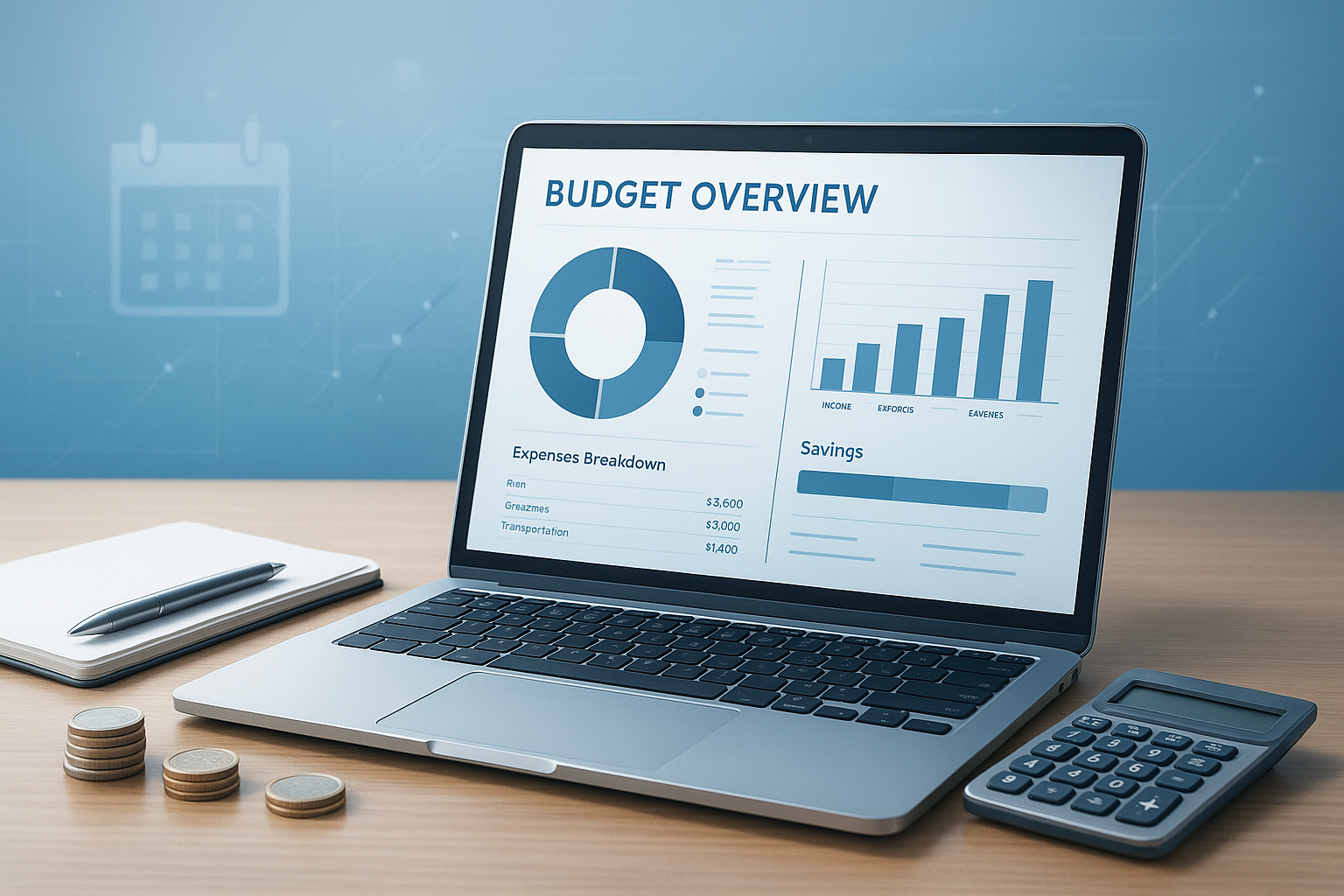
A working budget should be easy to understand at a glance. The example below shows how one person might divide a $3,500 monthly take-home income.
| Category | Amount |
|---|---|
| Rent | $1,100 |
| Utilities and internet | $220 |
| Groceries | $450 |
| Transportation | $250 |
| Insurance | $180 |
| Debt payments | $300 |
| Emergency savings | $300 |
| Sinking funds | $200 |
| Dining out and fun | $200 |
| Personal and household | $150 |
| Buffer | $150 |
This example will not match your life exactly, and that is the point. A useful budget is personal. You are building your version, not copying someone else’s.
Suggested Image: Sample Monthly Budget Breakdown Pie Chart
Which budgeting method works best?
The best budgeting method is the one you will actually use. Some people need detailed categories. Others do better with a simpler structure that is easier to maintain every month.
| Method | Best For | How It Works |
|---|---|---|
| 50/30/20 budget | Beginners | 50% needs, 30% wants, 20% savings and debt goals |
| Zero-based budget | People who want control | Assign every dollar a role each month |
| Pay-yourself-first | Busy earners focused on saving | Move savings first, spend the rest within limits |
| Cash envelope method | Overspenders in a few categories | Use cash limits for things like food or entertainment |
If you want a fast way to test the 50/30/20 approach, use a 50/30/20 budget calculator to see how your income fits that framework before choosing a more detailed system.
For another reliable overview of budgeting methods, Investopedia’s budget guide explains common approaches and financial terms clearly.
How much should go to each category?
There is no single perfect percentage for everyone. Your rent, family size, debt load, and income level all affect the right answer. Still, a range can help you spot problems early.
- Housing: ideally 25% to 35% of take-home pay
- Utilities: 5% to 10%
- Food: 10% to 15%
- Transportation: 10% to 15%
- Savings: at least 10% if possible
- Debt repayment: depends on your balances and interest rates
- Personal spending: whatever fits after essentials and goals
If one category is extremely high, the answer is not always to cut lattes or skip takeout. Sometimes the bigger issue is housing cost, car cost, or income instability.
A debt-to-income calculator is especially helpful if you are trying to understand whether debt payments are eating too much of your monthly cash flow.
How to budget with irregular income
When your income changes each month, your budget should be built around your lowest reliable income level. That protects essentials first and stops you from overcommitting during a good month.
Here is a practical system:
- Calculate your lowest average monthly income from recent months.
- Cover essentials first: housing, utilities, food, transport, insurance.
- Set minimum debt payments.
- Fund a small emergency buffer.
- Use extra-income months for catch-up savings, debt payoff, or future bills.
This method works well for freelancers, commission-based workers, seasonal workers, and small business owners. It reduces stress because your core budget is based on the floor, not the ceiling.
If you regularly compare different income months, a profit calculator can also help side hustlers and self-employed readers estimate what is truly available after expenses.
How to cut expenses without making your budget miserable
The best cuts are the ones you barely notice. Extreme budgeting usually leads to burnout. Smart budgeting removes waste, not every small pleasure.
Here are practical ways to reduce spending:
- Cancel subscriptions you have not used in 30 days.
- Negotiate internet, insurance, or phone bills.
- Plan meals around what you already have.
- Set a weekly limit for eating out.
- Use a waiting period for nonessential purchases.
- Shop insurance and service providers once a year.
- Lower big fixed costs when possible, especially housing or car payments.
The Federal Trade Commission also offers useful consumer guidance on recurring charges and subscriptions through its FTC consumer advice resources.
Common monthly budgeting mistakes to avoid
Most budgeting mistakes are small at first. But repeated every month, they quietly wreck your plan. Here is what to watch for.
- Budgeting before reviewing old statements
- Forgetting annual or quarterly expenses
- Setting savings goals with no fixed transfer date
- Ignoring cash withdrawals or small card purchases
- Making your entertainment budget unrealistically low
- Not budgeting for emergencies at all
- Never adjusting after income or bills change
Here is the problem. A budget does not fail only when you overspend. It also fails when it is impossible to follow in normal life.
Suggested Screenshot: Monthly Budget Review Checklist
How to track your budget during the month
A budget only works if you compare the plan to what you actually spend. That does not need to take hours. A 10-minute weekly check-in is enough for most people.
Try this routine:
- Check account balances once a week.
- Review category spending.
- Flag any category that is close to the limit.
- Move money from a lower-priority category if needed.
- Write one note about what changed this week.
This creates a feedback loop. Over time, your estimates become far more accurate.
If you like clear printable summaries or want to keep records organized, tools that help manage files can be useful too. For example, a PDF merger can help combine statements, budget sheets, and monthly notes into one archive for easier review.
What to do when your budget stops working
If your budget keeps breaking, do not throw it out immediately. First, identify whether the problem is income, spending, debt, or a category that was never realistic in the first place.
Ask yourself:
- Did I underestimate groceries, gas, or childcare?
- Did a fixed bill increase?
- Am I carrying too much debt?
- Did I forget seasonal costs?
- Am I trying to save too aggressively right now?
Then make one adjustment at a time. Do not redesign the whole budget after one difficult month. Usually one or two category changes solve the issue.
If your debt payments are a major pressure point, review payoff options carefully and cross-check guidance from the IRS payments information if tax debt is part of the problem.
Best practices for a monthly budget that lasts
Long-term budgeting success comes from consistency, not perfection. A few simple habits make a huge difference month after month.
- Budget before the month starts
- Base your numbers on past spending
- Automate savings where possible
- Keep a category for fun
- Review your plan weekly
- Adjust after major life changes
- Use simple tools you will actually stick with
If you are building a more complete money system, a savings calculator can help connect your monthly budget to larger financial goals like emergency savings, travel, or a house down payment.
Frequently asked questions
1. What is the easiest way to start a monthly budget?
The easiest way is to begin with last month’s bank and credit card statements. Add up your income, fixed bills, and common spending categories like groceries and transportation. Then decide how much you want to save. This gives you a realistic first draft based on actual behavior, not guesses. Keep it simple at first. You can always add more categories later if you need more control.
2. How do I make a budget if my income changes every month?
Use your lowest dependable monthly income as the base for your budget. Cover essential costs first, then minimum debt payments, then savings. In higher-income months, put extra money toward emergency savings, future bills, or debt reduction. This approach prevents overspending during slow months and creates more stability over time. It is one of the safest ways to budget with freelance, seasonal, or commission-based income.
3. What is the 50/30/20 rule for budgeting?
The 50/30/20 rule is a simple budget framework. It suggests using 50% of your income for needs, 30% for wants, and 20% for savings or debt payoff. It works well for beginners because it is easy to remember and quick to apply. The downside is that it may not fit people with high housing costs, large debt payments, or irregular income. Treat it as a guideline, not a law.
4. How much money should I save each month?
A common starting point is 10% to 20% of take-home pay, but the right amount depends on your bills, debts, and goals. If that feels impossible, start smaller. Even saving a modest amount every month builds momentum. The key is consistency. Build an emergency fund first if you do not have one. After that, focus on retirement and goal-based savings like travel, a car, or a home deposit.
5. Should I include fun spending in my monthly budget?
Yes. A budget without room for enjoyment usually does not last. If you cut all personal spending, you are more likely to overspend later out of frustration. Include a realistic amount for dining out, hobbies, or entertainment. This makes your budget more sustainable and easier to follow. A working budget should support your life, not punish you for having one.
6. What are sinking funds in a budget?
Sinking funds are small amounts you save each month for expenses that do not happen monthly. Examples include holiday gifts, car repairs, school supplies, annual subscriptions, or travel. Instead of being surprised by a large bill later, you prepare for it gradually. This makes your monthly budget more stable and reduces the chances of using credit cards for predictable expenses.
7. How often should I review my monthly budget?
Review it once before the month begins, then check it weekly. Weekly reviews help you catch problems early, especially in categories like groceries, fuel, or eating out. At the end of the month, compare your plan to what actually happened. That review is what improves next month’s budget. Without it, the same errors often repeat. Short, regular check-ins work better than long, infrequent ones.
8. Why does my budget look good on paper but fail in real life?
This usually happens when the numbers are too optimistic. Common examples include underestimating groceries, forgetting non-monthly bills, or setting savings goals that are too aggressive. Sometimes the issue is not discipline at all. It is simply that the plan does not match reality. A budget needs to reflect how you actually spend now, then improve gradually. Start realistic first, then optimize.
9. Is it better to budget weekly or monthly?
Monthly budgeting works best for rent, utilities, debt payments, and overall planning because most bills follow a monthly cycle. Weekly budgeting is helpful for categories that change fast, such as groceries or entertainment. Many people do best using both: a monthly budget for the big picture and a weekly spending check for day-to-day control. That combination gives structure without making the system too complicated.
10. Can budgeting help me get out of debt faster?
Yes, because budgeting shows exactly how much money can go toward debt every month without missing essentials. It also helps reduce waste in other categories so you can free up extra cash. Once you know your true monthly surplus, you can decide whether to use a snowball or avalanche payoff method. A clear budget turns debt repayment from a vague goal into a concrete monthly action plan.
Final thoughts
A monthly budget that works is not the strictest one. It is the one you can follow in real life, adjust when needed, and trust when money gets tight.
Start simple. Use your real income. Plan for irregular expenses. Leave room for fun. Review your numbers every week. Then improve one category at a time.
If you want to make the process easier, start with practical tools like a 50/30/20 budget calculator, a compound interest calculator, or a savings calculator to turn your monthly budget into a plan you can actually use.