
How much house can you afford? It sounds like a simple number, but this is where many buyers get tripped up. A lender may approve you for one amount, your monthly budget may support another, and your long-term financial goals may point to something lower.
That gap matters. Buying too much house can leave you stressed every month. Buying with a clear budget gives you room for emergencies, savings, and real life. Before you start touring listings, it helps to know your limit.
In this guide, you’ll learn how to calculate a realistic home budget, what costs buyers often miss, how mortgage lenders look at affordability, and how to set a number that works for your income instead of against it.
What does “how much house can you afford” actually mean?
It means finding a home price that fits your income, debt, down payment, and monthly expenses without putting pressure on the rest of your finances. In simple terms, an affordable house is one you can comfortably pay for after accounting for the full monthly cost of ownership.
Many buyers focus only on the mortgage payment. Here’s the problem. Your real housing cost is larger than principal and interest. It usually includes:
- Property taxes
- Homeowners insurance
- Private mortgage insurance if your down payment is under 20%
- HOA fees if the property has them
- Utilities and maintenance
- Repairs and emergency costs
If you want to estimate monthly borrowing costs quickly, a loan calculator can help you test different home prices, interest rates, and loan terms before speaking to a lender.
Suggested Infographic: Monthly Homeownership Costs Breakdown
How do lenders decide how much house you can afford?
Lenders usually look at your income, monthly debt, credit profile, down payment, and debt-to-income ratio. They want to know whether you can manage the new mortgage payment along with your current obligations.
The most common measure is your debt-to-income ratio, often called DTI. According to the Consumer Financial Protection Bureau’s explanation of debt-to-income ratio, DTI compares your monthly debt payments to your gross monthly income.
Two DTI numbers matter most
- Front-end ratio: The percentage of income spent on housing costs alone
- Back-end ratio: The percentage of income spent on housing plus all other debts
A common rule of thumb is the 28/36 rule:
- No more than 28% of gross monthly income on housing
- No more than 36% of gross monthly income on total debt
That rule is useful, but it is not perfect. Some buyers need a lower ratio because of childcare, irregular income, or aggressive savings goals. Others may qualify for more based on strong credit and cash reserves.
| Factor | Why It Affects Affordability |
|---|---|
| Gross monthly income | Sets the upper limit for what lenders may approve |
| Existing debt | Reduces the amount available for a mortgage payment |
| Credit score | Can influence your mortgage rate and monthly payment |
| Down payment | Changes loan size and may reduce insurance costs |
| Property taxes and insurance | Can add hundreds of dollars to the monthly payment |
To keep your income and percentage estimates accurate, a percentage calculator is useful when checking housing ratio limits against your monthly pay.
How can you calculate your home buying budget yourself?
You can estimate your budget by starting with monthly income, subtracting debt payments, setting a safe housing limit, then working backward to a purchase price. This gives you a more realistic number than relying on lender approval alone.
- Calculate your gross monthly income. Include salary, reliable bonuses, and consistent side income.
- Add up monthly debt payments. Include car loans, student loans, credit cards, and personal loans.
- Set a housing target. Many buyers start around 25% to 28% of gross income, but your comfort level matters more.
- Estimate non-mortgage housing costs. Include taxes, insurance, HOA fees, and mortgage insurance if needed.
- Use the remaining amount for principal and interest. That helps you estimate the loan amount you can support.
- Subtract your down payment from your target purchase price calculation.
Now comes the important part. Do not skip your own spending habits. If you save heavily for retirement, support family members, or have variable income, you may want a lower monthly target.
If you need help checking income patterns over time, a average calculator can help smooth out fluctuating earnings and give you a more realistic monthly baseline.
What monthly payment is usually considered affordable?
For many households, an affordable monthly housing payment falls between 25% and 28% of gross monthly income. But affordability is personal. A family with high daycare costs may need to stay lower, while a debt-free household may have more flexibility.
Here’s a simple way to think about it:
- Conservative budget: 20% to 25% of gross income
- Moderate budget: 25% to 28% of gross income
- Stretch budget: 29% to 31% or more, which may increase financial stress
Take someone earning $7,000 per month before taxes:
- 25% housing target = $1,750 per month
- 28% housing target = $1,960 per month
That payment should usually include:
- Principal
- Interest
- Taxes
- Insurance
- Any HOA dues
- PMI if required
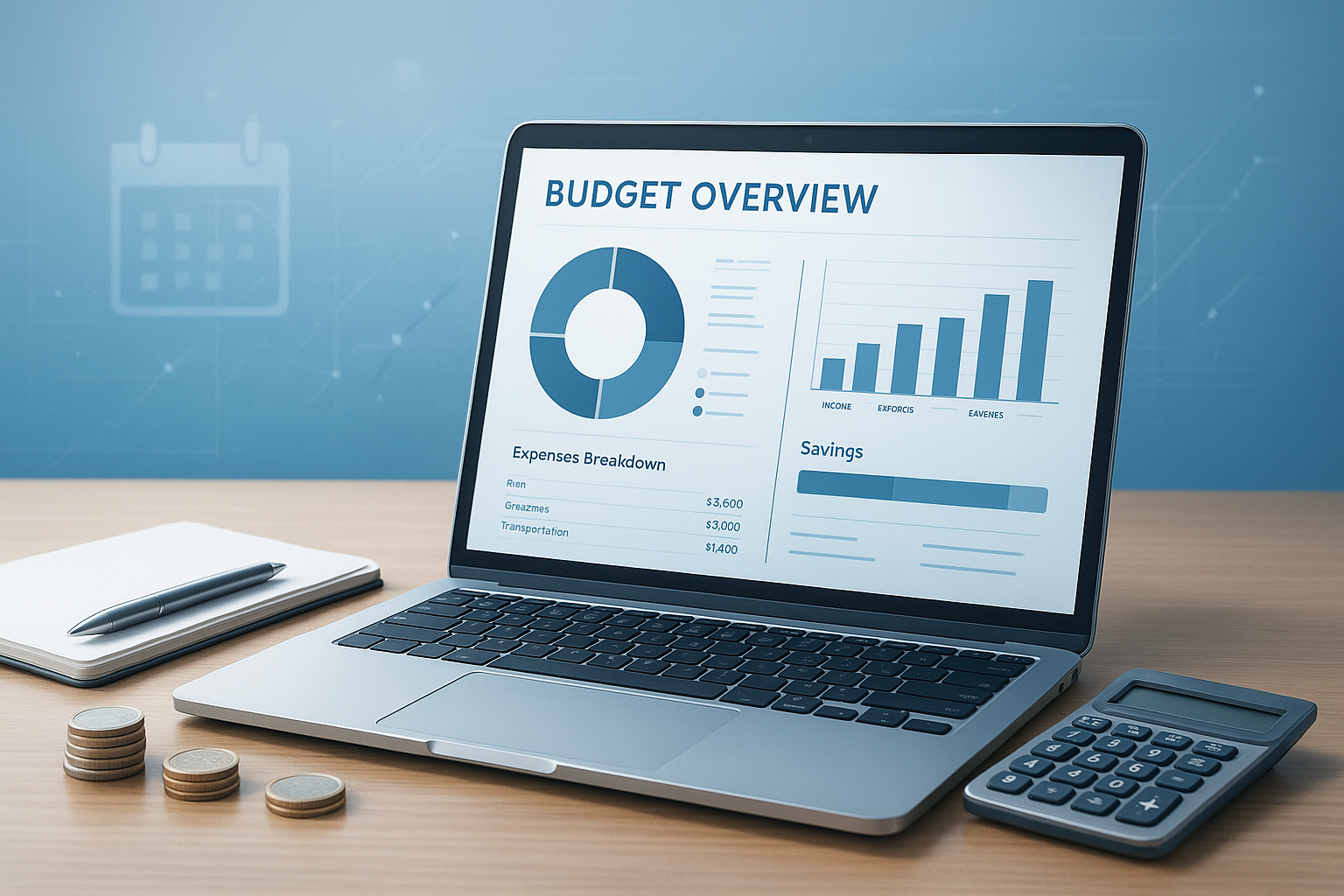
Suggested Screenshot: Affordability Budget Example Using Monthly Payment Inputs
What costs do buyers forget when setting a home budget?
Many first-time buyers underestimate the full cost of owning a home. The purchase price gets most of the attention, but the hidden or irregular costs often decide whether a budget feels comfortable six months later.
These are the expenses people commonly miss:
- Closing costs: Often 2% to 5% of the purchase price
- Moving expenses: Trucks, supplies, cleaners, and setup costs
- Immediate repairs: Paint, locks, appliances, flooring, plumbing fixes
- Maintenance: Lawn care, HVAC service, gutters, pest control
- Emergency fund needs: Roof leaks, water heaters, electrical issues
- Utility changes: A larger home can mean higher monthly bills
According to HUD’s home buying resources, buyers should prepare for expenses beyond the mortgage itself, especially during the first year of ownership.
If you want to estimate a percentage-based closing cost range, a percentage increase calculator can help compare how added fees affect your overall cash needed.
How does your down payment change what house you can afford?
Your down payment affects affordability in two ways: it reduces the amount you need to borrow, and it may lower extra costs such as private mortgage insurance. A larger down payment can improve both your monthly payment and your loan options.
Let’s break this down. If two buyers purchase similar homes but one puts down 20% and the other puts down 5%, the buyer with the larger down payment will usually:
- Borrow less
- Pay less interest over time
- Avoid PMI in many cases
- Have lower monthly payments
- Start with more home equity
That said, emptying your savings for a bigger down payment can backfire. You still need cash for closing costs, repairs, and emergencies. The best down payment is not always the largest one you can gather. It is the one that keeps your finances stable after move-in.
| Down Payment | Typical Impact |
|---|---|
| 3% to 5% | Lower upfront cash, higher loan amount, PMI often required |
| 10% | Moderate balance between cash retained and monthly payment |
| 20% or more | Lower payment, less interest, PMI often avoided |
If you’re comparing savings targets over several months, an savings calculator can help you map out how quickly you can reach your down payment goal.
How do mortgage rates affect affordability?
Mortgage rates directly affect your monthly payment. Even a small rate increase can reduce the home price you can comfortably afford. This small detail changes everything because buyers often focus on list price while underestimating the impact of interest.
For example, a higher rate means more of your monthly payment goes toward interest instead of principal. That can reduce your maximum buying budget by tens of thousands of dollars.
Here’s what experienced buyers do differently:
- Compare affordability at more than one interest rate
- Leave margin in the budget for rate changes before locking
- Watch total monthly payment, not just purchase price
- Understand that taxes and insurance can rise too
You can review current rate patterns and mortgage basics through the Investopedia guide to mortgage rates for additional context.
If you are comparing budget scenarios across different terms or rates, a mortgage calculator is one of the most useful tools to test affordability before making offers.
Should you spend the maximum a lender approves?
No, not automatically. The amount a lender approves is a lending limit, not a comfort limit. Your real budget should leave room for savings, emergencies, home maintenance, and normal life expenses.
This is where many people struggle. Getting approved for a higher number can create a false sense of safety. But lenders do not always know:
- How much you spend on childcare
- Whether your income changes month to month
- Your retirement savings goals
- Your travel or family support obligations
- How comfortable you are with financial risk
A safer approach is to set your own cap first, then compare it with lender preapproval. If the lender says you can borrow more, treat that as extra room, not a target.
To organize debt and payment comparisons side by side, a calculator tools hub can help you explore related budgeting and payment tools in one place.
How can first-time buyers set a realistic house budget?
First-time buyers should use a budget that includes the full monthly payment, an emergency cushion, and expected ownership costs after closing. The goal is not just getting the keys. The goal is keeping the home comfortably.
- Review your last 3 to 6 months of spending.
- Set a monthly payment ceiling before house hunting.
- Keep cash reserves after closing.
- Estimate maintenance at 1% to 2% of home value yearly as a rough planning guide.
- Plan for utility changes and moving costs.
- Test the payment against real life, not ideal life.
The answer depends on one thing: whether the payment still feels manageable when something goes wrong. A realistic budget survives a surprise car repair, a medical bill, or a temporary income dip.
If you’re reviewing household cash flow and need to total many monthly expenses quickly, a simple addition calculator can speed up the process when building your affordability worksheet.
Rent vs buy: how do you know if buying is the better move?
Buying is usually the better move when you can afford the full cost of ownership, plan to stay put for several years, and have enough savings for both upfront costs and emergencies. Renting may be smarter if flexibility or cash preservation matters more right now.
| Question | Buying May Fit Better | Renting May Fit Better |
|---|---|---|
| How long will you stay? | 5+ years or longer | Unsure or short-term move likely |
| Do you have savings? | Enough for down payment, closing, and reserves | Limited savings or no emergency fund |
| Can you handle repairs? | Yes, financially and practically | Prefer landlord responsibility |
| Is your income stable? | Reliable and predictable | Variable, uncertain, or changing |
Suggested Infographic: Rent vs Buy Decision Checklist
Common mistakes that make buyers overestimate affordability
Most affordability mistakes come from using incomplete numbers. Buyers often calculate based on principal and interest only, or assume their approved amount is safe by default. Those shortcuts can lead to serious monthly stress.
- Ignoring property taxes and insurance
- Forgetting HOA dues
- Using net income in one step and gross income in another
- Not planning for maintenance or repairs
- Spending the full preapproval amount
- Making a down payment so large that cash reserves disappear
- Not comparing payments at different interest rates
- Skipping future life changes like children, commuting, or job shifts
For official guidance on shopping for a mortgage and understanding loan estimates, the CFPB home buying guide is one of the most practical resources available.
Frequently asked questions
1. What salary do I need to afford a house?
There is no single salary requirement because the answer depends on debt, down payment, interest rate, taxes, and insurance. A better method is to estimate how much of your gross monthly income can safely go to housing. Many people start around 25% to 28%. From there, subtract debt payments and include all housing costs, not just the loan. Two people with the same salary can afford very different homes depending on their financial obligations.
2. Is the 28/36 rule still a good guideline?
Yes, it is still a useful starting point, especially for first-time buyers who need a simple framework. The idea is to spend no more than 28% of gross income on housing and no more than 36% on total debt. But it is not a universal rule. If you have high childcare costs, unstable income, or aggressive savings goals, you may need a lower ratio. Use it as a guide, not a guarantee.
3. How much should I put down on a house?
The right down payment depends on your goals and cash reserves. A larger down payment lowers the amount you borrow and may help you avoid private mortgage insurance. But using all your savings to reach 20% is not always wise. You also need money for closing costs, moving, repairs, and emergencies. Many buyers choose a moderate down payment that keeps their monthly payment reasonable while preserving some financial flexibility.
4. Can I buy a house with debt?
Yes, many buyers purchase homes while carrying student loans, car loans, or credit card balances. What matters is how those debts affect your debt-to-income ratio and monthly cash flow. A manageable level of debt may still allow you to qualify and buy comfortably. The issue starts when your debt payments leave too little room for housing, savings, and basic expenses. Before buying, calculate your total monthly obligations and stress-test your budget honestly.
5. Should I include utilities when deciding how much house I can afford?
Yes, even though lenders may not include utilities in standard mortgage qualification, you should include them in your personal affordability plan. Utility bills can change significantly when you move from a small rental to a larger home. Heating, cooling, water, internet, trash, and electricity all affect your real monthly cost. If you ignore these expenses, a mortgage that looks affordable on paper may feel tight after move-in.
6. Is it better to buy at the top of my budget or stay below it?
Staying below your maximum budget is usually the safer choice. That gives you more room for unexpected repairs, tax increases, insurance changes, or personal expenses. Buying at the top of your price range often leaves little flexibility. A house should support your life, not consume it. If a lower-priced home allows you to save, travel, invest, or sleep better at night, that is often the smarter financial move.
7. How do interest rates affect how much house I can afford?
Interest rates change your monthly mortgage payment, which directly affects affordability. When rates rise, the same monthly budget supports a smaller loan amount. That means your target purchase price may need to come down unless you increase your down payment. Even a small rate change can make a noticeable difference over 15 or 30 years. Always compare more than one rate scenario before deciding what price range is truly manageable.
8. What’s the difference between being prequalified and preapproved?
Prequalification is usually a quick estimate based on self-reported financial information. Preapproval is a more detailed review that often includes documentation such as income, assets, and credit history. Preapproval generally carries more weight with sellers because it shows a lender has reviewed your finances more closely. Even so, neither number should replace your own affordability analysis. Just because you can get approved does not mean you should spend that amount.
9. How much emergency savings should I have after buying a house?
There is no perfect number, but keeping several months of essential expenses in reserve is a strong starting point. Homeowners face risks renters do not, including appliance failures, roof leaks, plumbing problems, and insurance deductibles. If your savings will be nearly empty after closing, your house budget may be too high. A solid emergency fund can make homeownership far less stressful, especially during your first year in the property.
10. Are online house affordability calculators accurate?
They are useful for estimates, not final decisions. A good calculator can help you model payments, rates, terms, and budget ranges quickly. But results are only as accurate as the numbers you enter. Many calculators also miss local tax differences, HOA fees, insurance variations, or your personal spending habits. Use calculators to narrow your range, then compare that estimate with your actual monthly budget and lender information before moving forward.
What is the smartest way to decide how much house you can afford?
The smartest answer is simple: choose the home price that fits your real monthly life, not the biggest number a lender offers. A house is affordable when you can make the payment, handle normal maintenance, keep savings intact, and still live without constant money pressure.
Start with your income. Add your existing debt. Estimate taxes, insurance, and every ownership cost you can think of. Then test a few price ranges before you shop. If you want to make the math easier, use tools like a loan calculator, mortgage calculator, or savings calculator to compare scenarios and set a limit you can trust.
A calm budget beats a stressful dream home every time.