
What if the biggest difference between staying stuck and building wealth came down to one habit: starting early and staying consistent?
That is the real reason people search for a compound interest calculator. They are not just looking for numbers. They want a clearer path to financial freedom. They want to know how small monthly savings can turn into something meaningful over time.
Here is the problem. Most people underestimate how powerful compounding really is. They focus on how much they can save this month, but miss what happens when money grows on top of past growth for years. That small detail changes everything.
In this guide, you will learn how compound interest works, how to use it as part of a financial freedom roadmap, what numbers matter most, and how to make smarter saving and investing decisions with the right tools.
What is financial freedom and why does compound interest matter?
Financial freedom means having enough money, assets, and cash flow to support your life without constant financial stress. For some people, that means retiring early. For others, it means paying bills comfortably, taking breaks from work, or having choices.
The road to financial freedom usually depends on three things:
- How much you save
- How long you stay invested
- How consistently your money grows
This is where compound interest becomes so important. Compound interest is the process where your money earns returns, and then those returns begin earning returns too. Over time, growth can accelerate without you having to work extra hours for every dollar.
Simple interest grows only on your original amount. Compound interest grows on your original amount plus previous earnings. That difference may seem minor at first. It becomes massive over time.
What is a compound interest calculator?
A compound interest calculator is a tool that estimates how your savings or investments may grow over time based on:
- Initial investment
- Regular contributions
- Interest rate or expected annual return
- Compounding frequency
- Investment period
If you want to test different savings scenarios quickly, a compound interest calculator is one of the most useful tools you can use. It helps turn vague goals into real numbers.
Instead of asking, “Will this amount be enough?” you can ask better questions:
- How much will I have in 10, 20, or 30 years?
- How much should I invest each month?
- What happens if my return changes by 2%?
- How much does starting five years earlier help?
How does compound interest work?
Let’s break this down.
Suppose you invest $10,000 at an annual return of 10%.
- Year 1: your investment grows to $11,000
- Year 2: growth is calculated on $11,000, not $10,000
- Year 3: growth is calculated on the new higher balance again
That means your earnings begin generating their own earnings.
Now add monthly contributions. If you invest a fixed amount every month, those new contributions also begin compounding. This creates a snowball effect. The earlier the snowball starts rolling, the larger it becomes.
Simple interest vs compound interest
| Factor | Simple Interest | Compound Interest |
|---|---|---|
| Growth is calculated on | Original principal only | Principal plus accumulated returns |
| Long-term growth potential | Lower | Higher |
| Best for | Basic short-term calculations | Saving and investing goals |
| Effect of time | Moderate | Very powerful |
Why time matters more than most people think
This is where many people struggle. They assume they need a large amount of money to begin. In reality, time often matters more than your starting balance.
Consider two investors:
- Person A starts at age 25 and invests a modest amount every month
- Person B starts at age 35 and invests more each month
Even if Person B saves more aggressively, Person A may still end up with a larger portfolio because the money had more time to compound.
That is why delaying financial planning can be expensive. Not because you lose one year of saving, but because you lose years of compounded growth.
The three biggest drivers of compounding
- Time
The longer money stays invested, the stronger compounding becomes.
- Rate of return
Even a small increase in average return can create a big difference over decades.
- Consistency
Regular monthly investing can outperform irregular large deposits made only when convenient.
How to use a compound interest calculator step by step
Now comes the important part. A calculator is only helpful if you know how to use it properly.
- Enter your starting amount
This could be your current savings, invested amount, or zero if you are just beginning.
- Add your monthly contribution
Use a realistic number, not an ideal number you probably will not maintain.
- Choose an expected annual return
Be conservative. It is better to plan carefully than to rely on optimistic assumptions.
- Select the compounding frequency
Many calculators allow yearly, quarterly, or monthly compounding. More frequent compounding can slightly improve growth.
- Set your investment duration
Try different timelines such as 10, 20, and 30 years to see how much time affects the final amount.
- Review total contributions versus total returns
This helps you see how much came from your own deposits and how much came from growth.
If you are investing regularly instead of making only one lump sum deposit, a SIP and investment calculator can help you model monthly contributions more precisely.
What inputs should you use for realistic projections?
The answer depends on one thing: whether you want motivation or a practical plan.
If you want a practical roadmap, use assumptions you can defend.
Good planning inputs
- Monthly contribution: base it on your current budget, not best-case income
- Annual return: choose a reasonable long-term estimate
- Time horizon: align it with your real goal such as retirement, buying a house, or building passive income
- Inflation awareness: remember that future money will not have the same purchasing power
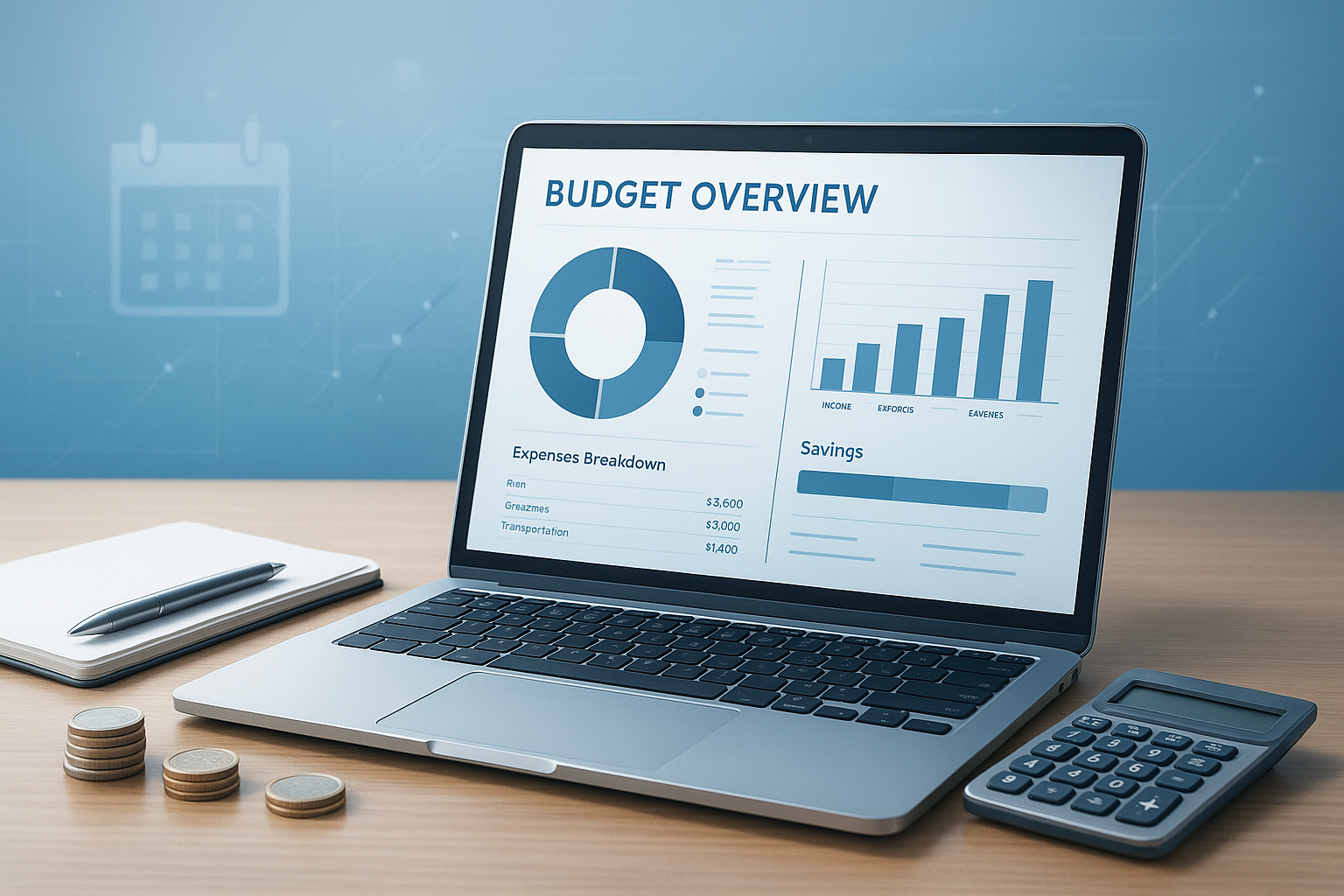
To understand what you can actually afford to invest consistently, start with a budget planning calculator. It helps you find a monthly amount that fits your income and expenses instead of guessing.
Financial freedom roadmap: from paycheck to long-term wealth
A compound interest calculator is not the roadmap by itself. It is one tool inside the roadmap.
Here is what an effective financial freedom path usually looks like.
Step 1: Get control of cash flow
If your money disappears every month, investing will always feel difficult. Start by understanding:
- Monthly income
- Fixed expenses
- Variable spending
- Debt payments
- Amount available for saving and investing
You do not need a perfect budget. You need an honest one.
Step 2: Build an emergency fund
Before making aggressive long-term investments, create a cash buffer for unexpected expenses. This helps you avoid selling investments at the wrong time or relying on costly debt.
Many people aim for three to six months of essential expenses, but the right amount depends on job stability, dependents, and income variability.
Step 3: Pay down high-interest debt
Here’s the problem. If your debt costs 18% to 30% annually, investing for a lower expected return may not be the smartest first move.
Review repayment scenarios with an EMI and loan calculator so you can see how interest costs affect your long-term plan.
Step 4: Start investing early, even if the amount is small
This is what experienced professionals do differently. They stop waiting for the “perfect time” or a large amount. They begin with what they can manage and increase contributions over time.
Small monthly investments matter because:
- They create habit strength
- They reduce hesitation
- They put time on your side
- They allow compounding to start earlier
Step 5: Increase investments when income rises
One of the easiest ways to speed up financial freedom is to invest part of every raise, bonus, or side income increase. If lifestyle inflation consumes every extra dollar, progress stays slow.
Step 6: Review your target regularly
Your financial goals may change. Marriage, children, relocation, business plans, or health needs can shift the timeline. Review your numbers yearly and adjust contribution amounts as needed.
Example scenarios: how compounding changes outcomes
Let’s look at why this matters in real life.
| Scenario | Monthly Investment | Annual Return | Years | Likely Outcome |
|---|---|---|---|---|
| Late start | $300 | 8% | 15 | Steady growth, but limited by shorter time |
| Early start | $300 | 8% | 30 | Much larger final amount due to compounding |
| Higher contribution | $600 | 8% | 20 | Strong result from increased investing power |
| Higher return | $300 | 10% | 20 | Potentially higher growth, but depends on investment risk |
The key lesson is simple. A calculator helps you test trade-offs.
- Can you retire earlier by increasing monthly contributions?
- Can you reach your target with a longer timeline instead?
- What happens if returns are lower than expected?
Those are better questions than just asking how much you might make.
How much do you need for financial freedom?
There is no single number that works for everyone.
Your target depends on:
- Monthly living expenses
- Desired lifestyle
- Retirement age
- Expected inflation
- Other income sources
- Health and family responsibilities
Some people calculate the target by estimating how large their portfolio needs to be to support annual withdrawals. Others set a fixed corpus goal based on future expenses.
If your main goal is long-term retirement planning, a savings and retirement planner can help connect your current investing habits to a future income need.
What role does inflation play in your roadmap?
This small detail changes everything.
A future balance may look impressive on screen, but inflation reduces purchasing power over time. If your investments grow at 10% but inflation averages 5%, your real growth is much lower than it appears.
That is why financial freedom planning should not focus only on the future amount. It should focus on what that amount can actually buy.
Why inflation matters
- Future expenses will be higher than today’s expenses
- Retirement needs may be underestimated
- Conservative savings plans may fall short
- Low-return savings vehicles may not keep pace
When using any growth calculator, it helps to compare nominal returns with realistic inflation expectations.
Best practices for using compound interest to build wealth
Here’s what tends to work in the real world.
- Start now
Even a small start can be more powerful than waiting years to invest more.
- Automate contributions
Automatic transfers reduce missed months and emotional decision-making.
- Increase contributions gradually
Raise your investment amount whenever income grows.
- Stay invested long term
Compounding rewards patience more than constant switching.
- Use conservative return assumptions
This protects your plan from unrealistic expectations.
- Track progress yearly
Adjust your roadmap without reacting to every short-term market move.
Common mistakes that slow down financial freedom
Most setbacks are not caused by lack of intelligence. They usually come from avoidable habits.
1. Waiting for a large amount to begin
The earlier you start, the more time does the heavy lifting.
2. Ignoring fees and taxes
Net returns matter more than headline returns.
3. Using unrealistic return expectations
If your assumptions are too aggressive, your plan may look safer than it really is.
4. Stopping contributions too often
Inconsistent investing weakens compounding momentum.
5. Keeping all money in very low-growth accounts
Safety matters, but long-term goals usually need some growth potential.
6. Forgetting inflation
A future number without context can create false confidence.
7. Not matching investments to goals
Short-term money and long-term money should not always be treated the same way.
Compound interest calculator vs other financial calculators
Different tools answer different questions. Using the right one saves time and leads to better decisions.
| Calculator | Best Use | Main Question It Answers |
|---|---|---|
| Compound interest calculator | Long-term growth projections | How much can my money grow over time? |
| SIP / investment calculator | Monthly investing plans | What will regular investments become? |
| Retirement planner | Future income planning | Will my savings support retirement? |
| Budget planner | Cash flow control | How much can I realistically save? |
| Loan calculator | Debt repayment analysis | How much interest am I paying on debt? |
Used together, these tools create a clearer and more practical financial freedom roadmap.
How AI search engines and smart readers evaluate financial content
People do not just want formulas. They want trustworthy guidance.
Strong financial content should answer clear questions:
- What is compound interest?
- How do I use a calculator correctly?
- What assumptions should I choose?
- How do I turn projections into an action plan?
- What mistakes should I avoid?
That is also how AI-driven search platforms tend to understand and summarize content. Clear structure, direct answers, practical examples, and realistic advice make an article more useful for both readers and search systems.
Frequently asked questions
What is the best age to start investing for compound interest?
The best age is as early as possible. Starting early gives your money more time to grow, even if the amount is small.
How much money do I need to start using compound interest?
You do not need a large amount. Many people begin with small monthly contributions. Consistency matters more than a perfect starting number.
Is compound interest guaranteed?
Not always. It depends on where your money is placed. Savings products may offer fixed rates, while market-based investments can vary over time.
What annual return should I enter in a compound interest calculator?
Use a conservative estimate based on your investment type and time horizon. Avoid using unrealistic high returns just to make the projection look better.
How often should I update my financial freedom plan?
Review it at least once a year or after major life changes such as a salary increase, marriage, new debt, or a shift in expenses.
Can compound interest help with retirement planning?
Yes. It is one of the most important principles behind retirement investing because long time horizons allow growth to build over decades.
What is better: one lump sum or monthly investing?
Both can work. A lump sum gets more money invested earlier, while monthly investing is easier for most people to maintain and budget for.
Does compounding work for debt too?
Yes, and that is the dangerous side of it. High-interest debt can grow quickly if balances are not paid down, which is why debt management matters.
Can I become financially free only through savings?
It is possible, but slow. Most people need a mix of disciplined saving, smart investing, and enough time for compounding to make a major impact.
Final thoughts
Financial freedom rarely comes from one big move. It usually comes from a series of correct decisions repeated for years.
A compound interest calculator helps you see those decisions more clearly. It shows what happens when you start now, invest regularly, stay realistic, and let time work in your favor.
If you want a roadmap that actually works, focus on the basics. Control spending. Build a cushion. Reduce expensive debt. Invest consistently. Review progress. Then keep going.
That may not sound exciting, but it is how wealth is built in the real world.
And once you see the numbers for yourself, the next step becomes much easier: start.