
Many teams are publishing more content than ever, yet far too much of it still feels vague, repetitive, or risky to trust. That’s the real challenge with AI: speed is easy, but clarity and credibility are not.
AI writing best practices help marketers turn raw AI output into content people actually want to read and search engines can confidently surface. Used well, AI can speed up drafting, research organization, and content updates. Used poorly, it can introduce errors, flatten brand voice, and weaken trust.
This guide breaks down what experienced marketers do differently. You’ll learn how to brief AI well, edit for quality, protect accuracy, improve SEO, and create content that works for readers, Google, and AI-powered search tools in 2026 and beyond.
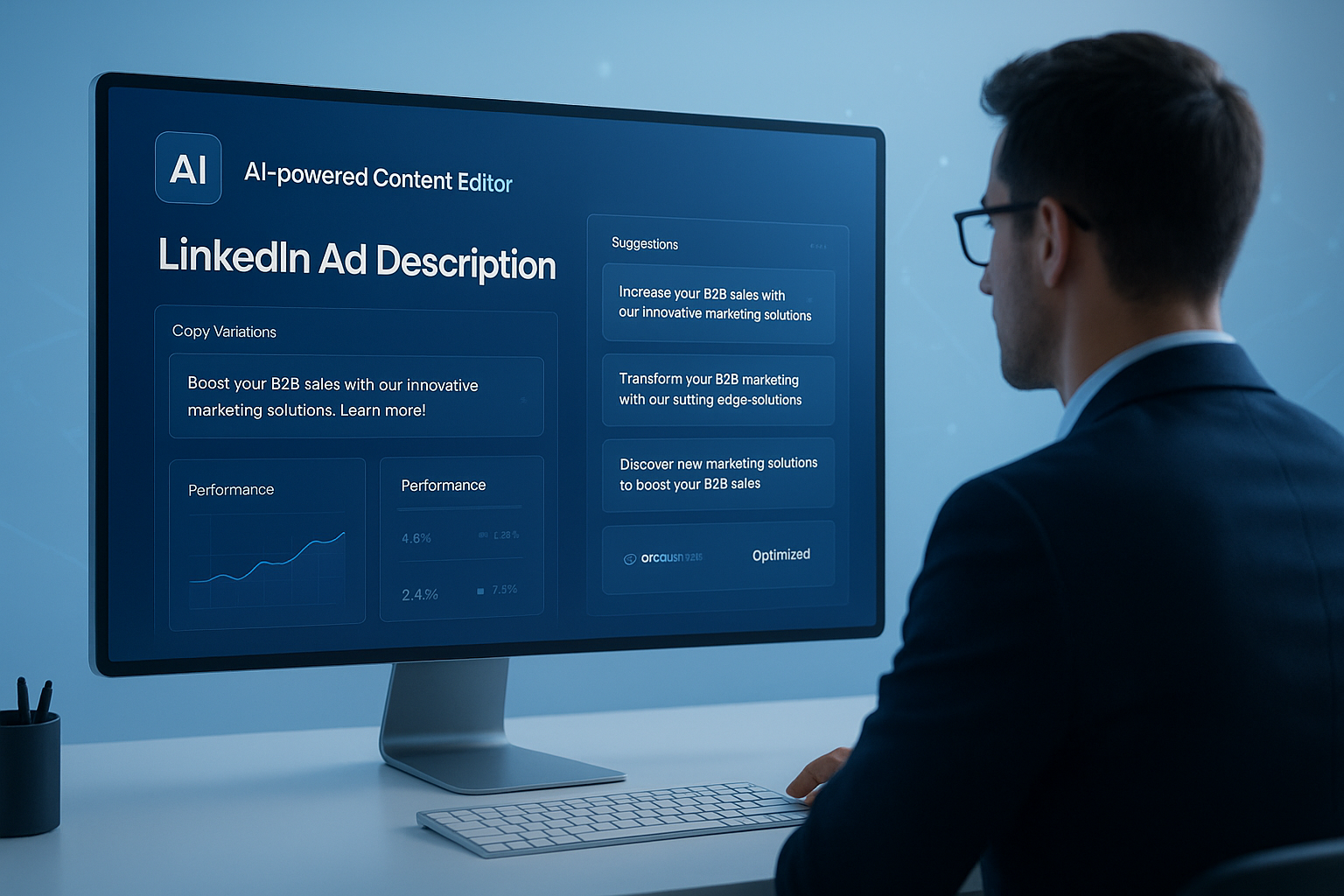
Suggested Image: Technology concept showing human editor refining AI-generated content on a laptop dashboard
What are AI writing best practices?
AI writing best practices are the methods used to create useful, accurate, readable content with AI while keeping human oversight in control. The goal is not to let AI “write everything.” The goal is to use AI to accelerate work without sacrificing quality, originality, or trust.
At a practical level, that means marketers should:
- Start with a clear content goal
- Give AI detailed instructions and context
- Check every factual claim
- Rewrite for clarity, brand voice, and originality
- Optimize for search intent, not just keywords
- Review structure, readability, and user experience
If your team also works on search performance, a broader understanding of SEO and digital marketing resources can help connect AI content efforts to actual traffic and conversion goals.
Why AI writing quality matters more now
Search engines and AI answer engines are getting better at evaluating usefulness, not just matching keywords. That changes how marketers should use AI. Fast content with weak substance is easier than ever to produce, which makes genuinely helpful content more valuable.
Here’s the problem. AI can produce polished language that sounds correct even when it is incomplete, generic, or wrong. Google’s guidance emphasizes people-first, helpful content rather than content made mainly to manipulate rankings. You can review that direction in the Google helpful content guidance.
For marketers, this matters in three ways:
- Trust: Readers notice unsupported claims, vague advice, and repeated phrasing.
- SEO performance: Thin AI content often struggles to earn links, engagement, and durable rankings.
- Brand protection: Low-quality AI content can damage authority faster than it improves output volume.
Start with the job the content needs to do
The best AI writing process begins before you open the tool. You need one clear answer to one clear question: what should this piece help the reader accomplish? Without that, AI tends to produce broad, forgettable copy.
Before generating anything, define:
- The target audience
- The search intent
- The stage of the funnel
- The primary action you want the reader to take
- The expertise level of the reader
For example, “AI writing best practices” has informational intent. A marketer searching that phrase likely wants frameworks, examples, and process guidance, not a sales pitch and not a technical manifesto.
This is also where content planning helps. If you’re mapping related topics, a tool like the Word Counter can help during outline development and editorial review, especially when you want tighter sections and better reading flow.
Questions to answer before prompting AI
- What problem is the article solving?
- What must the reader understand by the end?
- What proof, examples, or references are needed?
- What should be excluded to keep the piece focused?
- What tone fits the audience?
Write better prompts by giving AI real direction
Good output depends on good input. If the prompt is thin, the draft usually will be too. Strong prompts give AI a role, a task, constraints, audience details, and quality expectations.
This is where many people struggle. They ask for “a blog post on AI writing” and then wonder why the result sounds generic. AI works better when you brief it like a writer or editor, not like a vending machine.
A simple prompt framework marketers can use
- Role: Tell the AI who it should act like.
- Task: Define the exact deliverable.
- Audience: Explain who will read it.
- Intent: Clarify what the reader wants.
- Structure: Request sections, examples, tables, or FAQs.
- Rules: Set tone, reading level, brand constraints, and factual limits.
- Sources: Specify whether claims need verification or citation.
Example prompt structure:
You are an experienced content strategist writing for B2B marketers. Create an article outline on AI writing best practices for informational search intent. Focus on practical steps, quality control, SEO, and common mistakes. Use clear headings, short paragraphs, and include a comparison table between weak and strong AI workflows. Avoid hype. Flag any claims that require fact checking.
If you want additional polish after drafting, a utility like the Text Case Converter can help clean headings or formatting inconsistencies during publishing prep.
Use AI for the right tasks, not every task
AI is strongest when used selectively. It can speed up many parts of content production, but that does not mean it should own all of them. Smart marketers match AI to the work it handles best.
| Task | Good use of AI | Needs strong human review |
|---|---|---|
| Outlining | Very effective for structure ideas and subtopics | Check relevance and depth |
| First drafts | Useful for speed and momentum | Rewrite for voice, accuracy, and originality |
| Summaries | Helpful for distilling research notes | Confirm nuance was not lost |
| Fact-based claims | Can suggest areas to mention | Must be verified manually |
| Brand storytelling | Can help generate angles | Human writing usually performs better |
| SEO metadata | Good for generating options | Edit for CTR and search intent |
One often-overlooked step is formatting assets properly after content creation. If your post includes visuals, using an Image Compressor can improve page speed without sacrificing visible quality.
How to make AI-generated content sound human
Human-sounding content is not just about contractions and shorter sentences. It comes from judgment, specificity, rhythm, and original perspective. AI can imitate style patterns, but it rarely adds lived experience on its own.
Here’s what experienced professionals do differently when revising AI drafts:
- Replace vague claims with precise explanations
- Add real examples from campaigns, workflows, or client situations
- Break up repetitive sentence structure
- Cut sections that say the same thing in different words
- Use natural transitions instead of mechanical ones
- Include limitations, tradeoffs, and exceptions
Weak AI phrasing vs stronger human-edited phrasing
| Weak phrasing | Stronger revision |
|---|---|
| AI can revolutionize your content strategy. | AI can reduce drafting time, but only if your team has a review process for accuracy and brand voice. |
| It is important to create high-quality content. | If the article does not answer the reader’s question clearly, rankings alone will not drive results. |
| Businesses can leverage AI for success. | Marketing teams often use AI to speed up outlines, title testing, and content refreshes, while keeping final approval with editors. |
Accuracy comes before optimization
One of the most important AI writing best practices is simple: do not publish anything you have not checked. AI can generate convincing claims, invented statistics, or references that look credible but do not exist.
Now comes the important part. Marketers must set a clear fact-checking rule, especially for regulated, financial, health, technical, or legal topics. Google’s broader quality systems reward trustworthy content, and the Google documentation on E-E-A-T is useful for understanding the trust signals behind strong content.
What to verify before publishing
- Statistics and percentages
- Dates, names, and product details
- Definitions and technical explanations
- Legal or compliance statements
- Quotes and cited sources
- Pricing, features, or platform rules
For style guides and technical language standards, authoritative references such as the MDN Web Docs and the W3C are useful when your content touches web, UX, or publishing topics.
Build an editorial workflow around AI
AI becomes far more useful when it fits into a defined workflow. Without a process, teams often publish inconsistent drafts, skip review, and lose time fixing problems later.
A simple editorial workflow might look like this:
- Brief: Define audience, intent, topic scope, and success metric.
- Prompt: Generate outline or draft with constraints.
- Research: Add trusted sources and evidence.
- Edit: Rewrite for voice, logic, accuracy, and usefulness.
- Optimize: Improve titles, headings, metadata, internal links, and readability.
- Approve: Final human review before publishing.
- Refresh: Revisit performance and update weak sections.
Suggested Infographic: AI content workflow from brief to final approval
If your team handles drafts in multiple formats, a tool like the PDF to Word Converter can help when extracting source material from internal documents for editing and review.
How to optimize AI-assisted content for SEO without keyword stuffing
SEO and AI writing work best together when search intent leads the process. The goal is not to mention a keyword as many times as possible. The goal is to cover the topic clearly, completely, and naturally.
Google explains crawling, indexing, and ranking fundamentals in its SEO Starter Guide. The key takeaway for marketers is this: good rankings usually follow useful pages with strong structure, clarity, and relevance.
Practical SEO writing habits for AI-assisted content
- Use the primary keyword naturally in the title, introduction, at least one H2, and conclusion
- Answer the main question early
- Use related terms and subtopics instead of repeating the same phrase
- Create descriptive headings that match real user questions
- Add internal links that help readers continue learning
- Include external references where trust matters
- Write meta descriptions for humans, not just bots
What strong topical coverage looks like
If you’re writing about AI writing best practices, related issues may include prompt design, editing, fact checking, originality, user intent, content governance, and search visibility. Covering those connected themes helps both readers and AI search systems understand the page more fully.
When publishing on your own site, cleaning structure matters too. For example, if you repurpose notes from slides or screenshots, an Image to Text tool can help turn visual content into editable copy for refinement.
Best practices for AI Overviews, ChatGPT, Gemini, and other AI search engines
AI-driven search systems look for content they can interpret quickly and trust enough to summarize. That means structure and clarity matter even more than before.
The answer depends on one thing: can your content deliver a direct, well-supported answer while also offering enough context for deeper understanding? Pages that do both are more likely to be cited, summarized, or surfaced.
How to improve AI search visibility
- Answer the main question in the opening of each section
- Use clear definitions and plain language
- Include lists, steps, and comparison tables
- Show limitations and tradeoffs, not just benefits
- Use precise labels for tools, methods, and concepts
- Keep claims sourceable and easy to verify
- Refresh examples so they remain relevant in 2026 and beyond
Microsoft’s guidance around responsible AI and trustworthy systems can also help teams think more carefully about content workflows and review standards. See Microsoft Learn guidance on responsible AI use.
Common mistakes marketers make with AI writing
Most AI content problems are process problems. The model gets blamed, but the real issue is usually weak prompts, missing review, or unclear strategy.
- Publishing first drafts: Raw AI output often sounds complete before it is actually useful.
- Skipping fact checks: This is one of the biggest trust risks.
- Chasing volume over quality: More pages do not guarantee more results.
- Forcing keywords: Repetition hurts readability and can weaken relevance.
- Using one tone for every audience: A SaaS buyer, agency strategist, and local business owner do not need the same voice.
- Ignoring UX: Dense pages, oversized images, and weak headings reduce engagement.
On the UX side, file handling tools can quietly support content performance. If teams are sharing compressed documents or reports during editorial review, the PDF Compressor can help reduce file size and simplify collaboration.
A practical checklist for reviewing AI-generated content
Before you publish, use a short review checklist. This small detail changes everything because it turns AI writing from a gamble into a controlled process.
- Does the article clearly match search intent?
- Is the opening useful within the first 100 words?
- Are all claims verified?
- Does the piece include original examples or specific insight?
- Are the headings easy to scan?
- Does the content sound like your brand, not a template?
- Have repetitive or empty sentences been removed?
- Are internal and external links genuinely helpful?
- Is the page easy to read on mobile?
- Would a real editor sign off on this without hesitation?
AI writing best practices by content type
Not every format needs the same workflow. Blog posts, landing pages, emails, and product content all benefit from different levels of AI involvement and different editing standards.
| Content type | Where AI helps most | Main risk |
|---|---|---|
| Blog articles | Outlines, section drafts, title variations | Generic advice and weak originality |
| Landing pages | Message testing and structure ideas | Flat value propositions and weak conversions |
| Email campaigns | Subject line options and draft variants | Tone mismatch and repetition |
| Product descriptions | Formatting features and summarizing benefits | Inaccurate specs or duplicate phrasing |
| Social posts | Angle generation and repurposing | Overused templates and bland hooks |
Frequently asked questions
Is it okay to use AI to write blog posts for SEO?
Yes, if AI is used as part of a managed editorial process. Search engines do not automatically penalize content just because AI helped create it. The real issue is quality. If the page is accurate, helpful, original enough to add value, and aligned with search intent, AI-assisted writing can work well. Problems start when teams publish unedited drafts, rely on shallow summaries, or skip fact checking.
What is the biggest mistake in AI writing?
The biggest mistake is treating AI output as final copy. Most weak AI content is not terrible because of grammar. It fails because it lacks specificity, evidence, and clear judgment. A draft may look polished while still saying very little. Strong teams assume every AI draft needs review for accuracy, structure, tone, and originality before it goes live.
How can I make AI-generated text sound less robotic?
Start by removing repetition and vague claims. Then add concrete examples, stronger transitions, and shorter, more varied sentences. Rewrite bland statements into useful observations. It also helps to include exceptions, tradeoffs, and practical scenarios. Human writing feels trustworthy because it reflects judgment and experience, not just grammatical correctness.
Should marketers disclose when AI helped create content?
There is no universal rule that applies to every piece of content, but disclosure may be appropriate when AI materially affects research, authorship, or sensitive subject matter. The more important standard is honesty. Readers should not be misled about expertise, testing, or firsthand experience. If a human did not verify something, it should not be presented as verified knowledge.
Can AI-generated content rank in Google?
Yes. AI-generated or AI-assisted content can rank if it satisfies search intent and meets quality expectations. Google focuses more on whether content is helpful and reliable than on the production method alone. That means ranking depends on editorial quality, originality, trustworthiness, structure, and relevance, not simply on whether AI was involved in drafting.
How much editing should AI content receive before publishing?
The answer depends on the topic and the business risk. For light social copy, minor edits may be enough. For SEO blog posts, service pages, or regulated topics, editing should be substantial. At minimum, review factual claims, improve clarity, adjust tone, remove fluff, and strengthen the structure. If the content supports revenue or brand authority, publish only after a full editorial pass.
Are AI detection tools useful for content teams?
They can be useful as a rough signal, but not as the final quality standard. Detection tools often produce false positives and false negatives. A well-edited article can still be flagged, while weak content can pass. Instead of optimizing for detection scores, focus on what actually matters: usefulness, originality, source quality, readability, and brand alignment.
What tools support a better AI content workflow?
A strong workflow usually combines writing tools with editorial and formatting utilities. For example, teams may use a Paragraph Rewriter to reshape awkward sections, a Grammar Checker for final cleanup, and utilities for images or PDFs during publishing. The best stack depends less on the number of tools and more on whether each one supports a clear review process.
Conclusion
AI writing best practices are really editorial best practices with better tools. Marketers who get the best results use AI to speed up planning and drafting, then rely on human judgment for accuracy, structure, and trust. That balance matters more now because search engines and AI answer systems reward content that is clear, useful, and easy to validate.
If you want to improve your process, start with one practical step: build a simple review checklist and apply it to every AI-assisted draft. Then refine the workflow over time.
For the next step, tools like the Word Counter, Grammar Checker, Image Compressor, and PDF to Word Converter can support cleaner drafting, editing, and publishing