One broken link rarely feels urgent. A few hundred of them can quietly damage rankings, waste crawl budget, and frustrate visitors who were ready to take action. That’s why a good broken links finder is more than a cleanup tool. It’s part of routine website maintenance.
Marketers often discover dead links late, usually after traffic dips or a landing page starts underperforming. By then, the issue has already affected user experience and internal link flow. The good news is that broken links are usually easy to detect and fix once you know what to look for.
This guide explains how a broken links finder works, why it matters for SEO, what kinds of link problems actually hurt performance, and how to build a practical process for keeping your site healthy in 2026 and beyond.
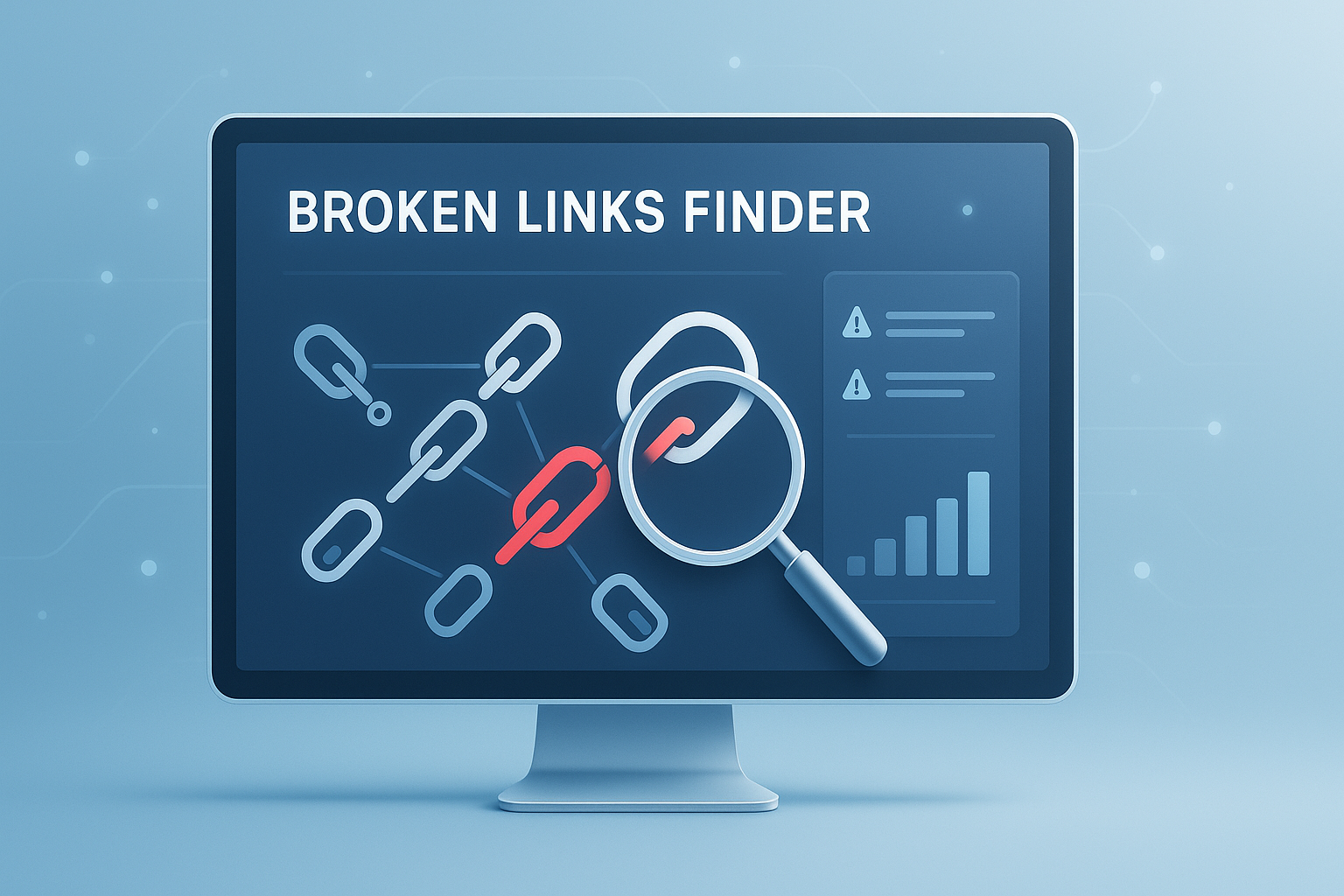
Suggested Image: Technology concept showing website crawling, broken link alerts, and SEO health indicators
What is a broken links finder?
A broken links finder is a tool that scans a website or page and detects links that lead to missing, inaccessible, or invalid destinations. It helps marketers find internal and external URLs that return errors such as 404, 410, 500, timeout issues, redirect loops, or malformed URLs.
In plain terms, it checks whether the links on your site still work.
- Internal broken links point to pages on your own site that no longer load correctly.
- External broken links point to third-party websites or resources that are gone or unavailable.
- Broken media and file links can include PDFs, images, scripts, downloads, and embedded resources.
For technical context, search engines rely on links to discover pages and understand site structure. If your pages include too many dead paths, crawling and user navigation become less efficient. Google’s SEO guidance consistently emphasizes clear site structure and useful page experiences.
When reviewing page assets, tools that improve site hygiene can also help, especially if missing files are caused by poor media handling. For example, reducing oversized image issues with an Image Compressor can make asset management cleaner when you are updating pages.
Why broken links matter for SEO and user experience
Broken links matter because they interrupt the journey for both users and search engines. A dead link can stop a conversion path, weaken internal linking signals, and create a poor impression of site quality.
Here’s the problem. Many marketers treat broken links as a minor technical issue. In reality, they affect several performance areas at once.
SEO impact
- Search bots may waste crawl effort on invalid URLs.
- Internal PageRank flow can weaken when site architecture contains dead ends.
- Important pages may become harder to discover through internal navigation.
- Repeated error patterns can signal neglected site maintenance.
User experience impact
- Visitors hit error pages instead of useful content.
- Trust drops when cited sources or resources no longer work.
- Bounce rates can rise if users abandon the session.
- Lead generation suffers when broken links appear in menus, CTAs, or download pages.
Not every broken link causes a ranking drop on its own. But clusters of them create friction. That friction adds up. This is especially true on content-heavy websites, resource hubs, e-commerce stores, and large blogs.
If you are also improving page engagement and readability after fixing links, a content cleanup workflow sometimes includes better media formatting, faster page assets, and document conversions. Related utilities such as a JPG to PDF tool can help when rebuilding downloadable resources that previously returned errors.
Which types of broken links should marketers prioritize first?
The most important broken links are the ones connected to revenue, visibility, and site structure. Start with high-impact pages before moving into a full-site cleanup.
This is where many people struggle. They scan thousands of URLs, export a report, and then have no idea what to fix first. A better approach is to rank issues by business impact.
| Link Type | Why It Matters | Priority |
|---|---|---|
| Navigation links | Affects many users and key page discovery | Very high |
| CTA and conversion links | Directly impacts leads, sales, and signups | Very high |
| Internal content links | Supports SEO, relevance, and session depth | High |
| External source links | Affects trust and citation quality | Medium |
| Image and file links | Can hurt usability and downloads | Medium to high |
Start with:
- Homepage and primary service pages
- Main navigation and footer links
- Top traffic blog posts
- Landing pages used in paid campaigns
- Important downloadable assets and resource pages
If you are rebuilding traffic pages, content structure matters too. Teams that refresh underperforming articles often pair link fixes with content quality checks, keyword usage, and readability improvements. A related workflow may include tools like an online word counter to tighten oversized pages after updates.
How a broken links finder works
A broken links finder crawls a page or website, extracts URLs from HTML elements, and then checks the response status for each destination. The output usually includes the source page, target URL, status code, anchor text, and sometimes redirect details.
Now comes the important part. A link checker does not simply flag 404 pages. Good tools also reveal softer problems that marketers often miss.
What it typically checks
- HTTP status codes such as 200, 301, 302, 404, 410, and 500
- Redirect chains and loops
- Timeouts and DNS failures
- Broken image or file references
- Canonical or trailing slash inconsistencies
- Malformed URLs caused by copy-paste errors
Common status codes to understand
| Status Code | Meaning | What to Do |
|---|---|---|
| 200 | Page works normally | No action needed |
| 301 | Permanent redirect | Usually update the link to final destination |
| 302 | Temporary redirect | Review whether temporary is appropriate |
| 404 | Page not found | Update, redirect, or remove the link |
| 410 | Page intentionally gone | Replace the link if still needed |
| 500+ | Server error | Investigate hosting, server, or app issue |
For a deeper explanation of status behavior and URL structure, MDN’s HTTP status documentation is a reliable reference, and the HTTP Semantics standard explains the protocol in more technical detail.
How to use a broken links finder effectively
The best results come from a simple, repeatable workflow: crawl, prioritize, verify, fix, and monitor. Don’t rely on one scan. Treat link checking as an ongoing maintenance task.
- Scan the full site
Run a site-wide check first to get a broad view. Export the report if the tool allows it. - Segment the problems
Separate internal links, external links, media files, and redirects. Each group needs a different fix. - Sort by importance
Focus first on pages that drive traffic, sales, leads, or indexing. - Verify before changing
Some errors are temporary timeouts. Recheck them manually. - Choose the right fix
Update the URL, add a redirect, restore the page, or remove the link if it no longer serves a purpose. - Rescan after cleanup
Always confirm that the fix worked and did not create redirect chains.
A practical rule: if an old page has a strong replacement, redirect it. If no equivalent exists, updating the source link is usually better than sending users to a loosely related page.
Suggested Screenshot: Broken link report with source URL, destination URL, anchor text, and status code columns
When you are checking page structure during link cleanup, HTML correctness also matters. A malformed anchor tag or misplaced quotes can create broken URLs. Marketers working closely with developers may find a quick HTML Viewer useful for spotting markup issues before publishing.
Broken internal links vs broken external links
Broken internal links usually deserve more attention because they affect your own site architecture and user flow. Broken external links matter too, but they are often easier to manage by replacing or removing the reference.
| Criteria | Internal Broken Links | External Broken Links |
|---|---|---|
| Control | You control the fix | You depend on third-party availability |
| SEO effect | Can affect crawling and internal authority flow | Mostly affects trust and reference quality |
| User impact | Often disrupts navigation or conversion paths | Usually interrupts research or validation |
| Fix options | Restore page, update URL, redirect | Replace source, remove link, cite archive if appropriate |
Here’s what experienced professionals do differently. They don’t just remove broken external links. They replace them with better sources whenever the citation still helps the reader. For example, official SEO references from Google’s How Search Works page often age better than informal blog citations.
What usually causes broken links?
Most broken links come from routine website changes, not dramatic technical failures. Pages get renamed, files are deleted, domain structures change, or old campaign URLs keep circulating long after the destination is gone.
- Page URLs changed during a site migration
- Content was deleted without adding redirects
- Typos in manually inserted links
- Trailing slash, uppercase, or protocol mismatches
- Expired external resources or shut down domains
- Incorrect relative paths for images, PDFs, or scripts
- Plugin, CMS, or template updates that rewrote URLs
This small detail changes everything: many broken links are created during perfectly normal content operations. A writer republishes a case study, a developer moves a directory, or a product team retires a download page. No one notices until users click.
That’s one reason teams benefit from standardized URL tracking and content audits. If you maintain large page inventories or update many old articles, supporting tools such as a text diff checker can help compare page revisions and spot accidental link changes during updates.
Best ways to fix broken links without hurting SEO
The right fix depends on why the link broke and whether the missing content still has a useful replacement. The goal is not just to remove errors. It is to preserve relevance and user intent.
Use these fixes in the right situations
- Update the link if the content moved to a new, matching URL.
- Add a 301 redirect if an old page has a clear permanent replacement.
- Restore the missing page if it still serves users and has backlinks or traffic value.
- Remove the link if the reference no longer adds value and no alternative exists.
- Replace the source if an external citation died but a better authoritative source is available.
When redirects help and when they don’t
Redirects are useful when relevance is preserved. Redirecting every missing page to the homepage is usually a poor experience and can confuse users. Google’s redirect documentation explains that redirects should reflect real content moves, not generic catch-all behavior.
Simple rule: If the destination answers the same intent as the old page, redirecting makes sense. If it does not, update or remove the link instead.
Large cleanup projects often include URL normalization and campaign tracking cleanup. If you are reviewing long UTM links or malformed parameters, an URL Encoder Decoder can help check whether encoded characters or formatting errors are causing bad destinations.
How often should you check for broken links?
Most marketing websites should run broken link checks at least monthly. High-volume publishers, e-commerce sites, and frequently updated resource centers often need weekly checks or automated monitoring.
The answer depends on one thing: how often your URLs change.
Recommended schedule
- Small brochure site: once a month
- Active blog: every 2 to 4 weeks
- E-commerce store: weekly
- Large publisher or directory site: weekly or continuous monitoring
- After migrations or redesigns: immediately, then again within a few days
You should also rescan after:
- changing permalink settings
- moving content folders
- deleting seasonal landing pages
- switching CMS themes or plugins
- updating navigation or footer structures
Google Search Console can also help identify crawl and indexing issues related to missing pages. The official Search Console overview is worth bookmarking if you want a second source of validation beyond a crawler.
What to look for in a broken links finder
A useful broken links finder should do more than produce a list of 404s. For marketers, the best tools make it easier to understand source pages, prioritize fixes, and verify the impact of changes.
Helpful features
- Internal and external link detection
- Status code reporting
- Source page and anchor text visibility
- Redirect chain identification
- Exportable reports
- Support for images, scripts, PDFs, and other assets
- Fast crawling with manageable filters
- Clear handling of temporary errors vs true failures
Marketers also benefit from tools that are easy to use without heavy technical setup. If reporting is confusing, problems get ignored. Clarity wins.
For broader technical reviews, teams sometimes combine link checks with page speed, mobile layout, and asset optimization. If page resources are failing due to oversized visuals or inconsistent file handling, an Image Resizer can support asset cleanup during content refreshes.
A simple broken link audit workflow for marketing teams
If you manage content across multiple campaigns, products, or regions, create a workflow that fits your publishing process. Random cleanup sessions are better than nothing, but a documented routine prevents the same issues from repeating.
- Assign ownership
Decide who reviews site health: SEO manager, content lead, web manager, or a shared team. - Crawl on a schedule
Run scans monthly or weekly depending on publishing volume. - Label issues by type
Internal, external, media, redirect, and server-side problems should be separated. - Map business impact
Flag errors on high-traffic, revenue, and lead pages first. - Create fix rules
Use standard decisions for update, redirect, restore, remove, or replace. - Recheck after publishing
Confirm fixes and watch for redirect chains or unexpected canonical behavior. - Track repeat sources
Patterns often reveal a process issue, not just isolated mistakes.
Suggested Infographic: Broken link audit workflow from crawl to fix to rescan
Common mistakes that make broken link problems worse
Some fixes solve the error but create a different problem. That’s why cleanup should be deliberate, not rushed.
- Redirecting everything to the homepage
This often frustrates users and weakens intent matching. - Ignoring internal broken links while focusing only on backlinks
Your site architecture deserves attention first. - Removing references without replacing them
This can strip helpful context from your content. - Forgetting media and file URLs
Broken PDFs, downloads, and images still harm user experience. - Leaving redirect chains in place
A direct link to the final URL is usually cleaner. - Checking only once a year
Sites change too often for that to be enough.
One more practical point: not every reported broken URL is truly permanent. Temporary outages happen. Verify before making sweeping redirects or content removals.
Frequently asked questions
1. Does a broken links finder improve rankings directly?
Not directly in the way a new page or better content might, but it can support stronger SEO performance. A broken links finder helps remove friction from crawling, internal navigation, and user journeys. When key pages are easier to reach and visitors stop hitting dead ends, your site becomes easier to use and maintain. That indirectly supports better search visibility over time.
2. Are broken external links as serious as broken internal links?
Usually not. Broken internal links tend to matter more because they affect your own site structure, page discovery, and conversion flow. Broken external links still matter because they reduce trust and make your content look outdated, especially when you cite studies, tools, or official sources. The best approach is to fix internal issues first, then replace or remove dead external citations where needed.
3. Should I redirect every 404 page?
No. Redirect only when there is a relevant replacement that satisfies the same search or user intent. If the old page has no meaningful equivalent, a redirect can confuse users and dilute page relevance. Sometimes the better choice is updating the source links or restoring the original content if it still has value. Blanket homepage redirects are rarely the right answer.
4. How many broken links are too many?
There is no universal threshold, but even a small number can be serious if they appear in navigation, conversion pages, or core content hubs. A few broken links on an old archive page may have little business impact. A single broken CTA on a paid landing page can be expensive. Focus on the location, traffic, and purpose of each broken link rather than chasing a single number.
5. Can broken links affect crawl budget?
Yes, especially on large websites. Search engines have limited crawl resources per site, and repeated requests to invalid URLs can waste some of that effort. On smaller sites, the impact is often less dramatic, but broken internal links still reduce crawl efficiency and weaken page discovery. If your site has thousands of pages, regular link audits become much more important.
6. Is a broken links finder useful for small websites?
Absolutely. Small sites often rely on a handful of pages to generate most of their leads or sales. If one of those pages contains a dead form link, outdated download, or broken internal path, the business impact can be immediate. Smaller sites may not need constant monitoring