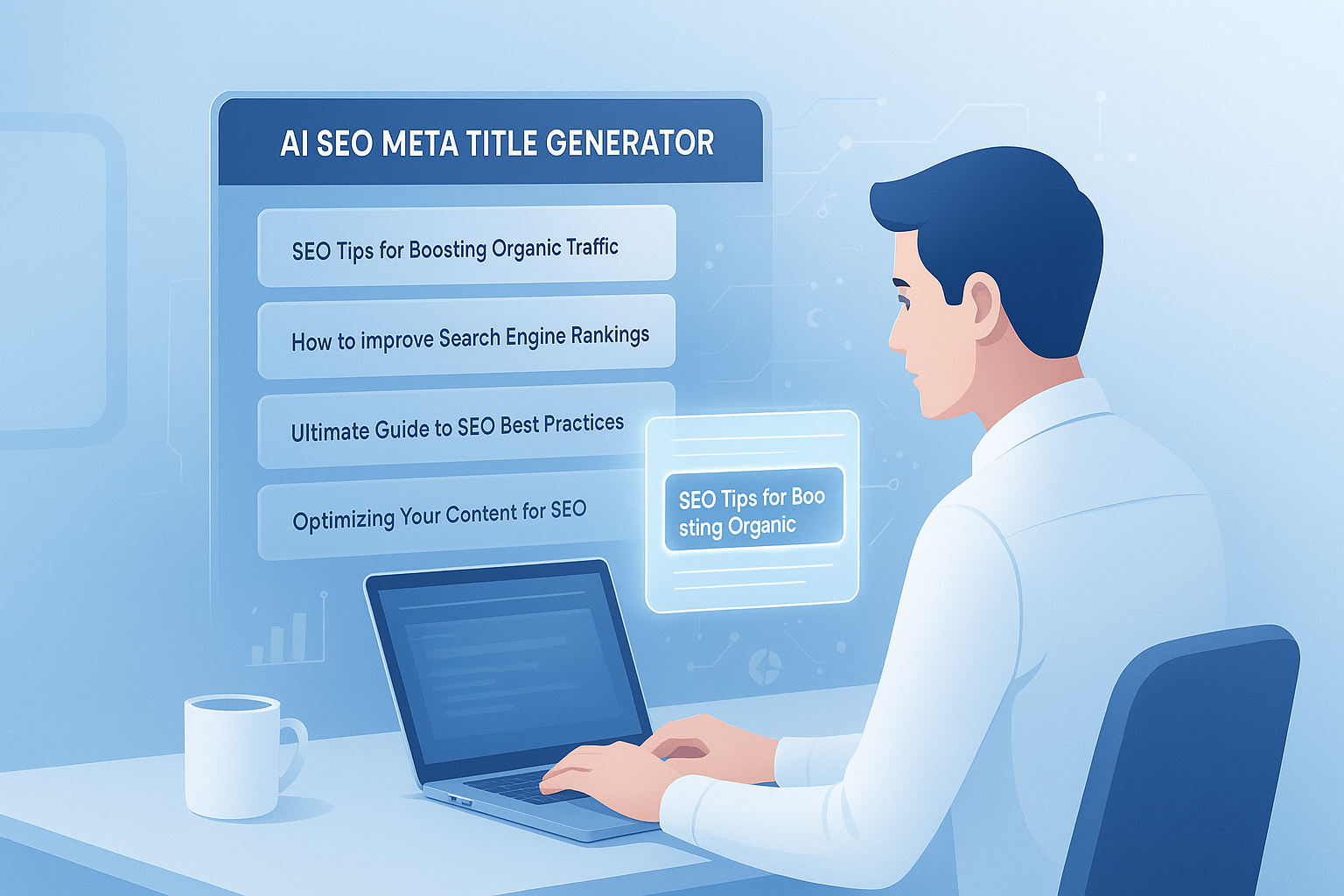
Most marketers don’t have a ranking problem first. They have a title problem.
A page can be useful, well-written, and technically sound, yet still miss clicks because the title is vague, too long, or written for the team instead of the searcher. That’s where an AI SEO meta title generator becomes practical. It helps you move faster, test angles, and shape titles that are clearer for both humans and search engines.
But speed alone isn’t enough. A title that sounds smart in a tool can still fail in search results. You need the right inputs, solid judgment, and a simple process for refining what AI gives you.
This guide explains how to use an AI SEO meta title generator well, what makes a strong title in 2026, common mistakes to avoid, and how to turn rough ideas into titles that earn more clicks and stronger AI search visibility.
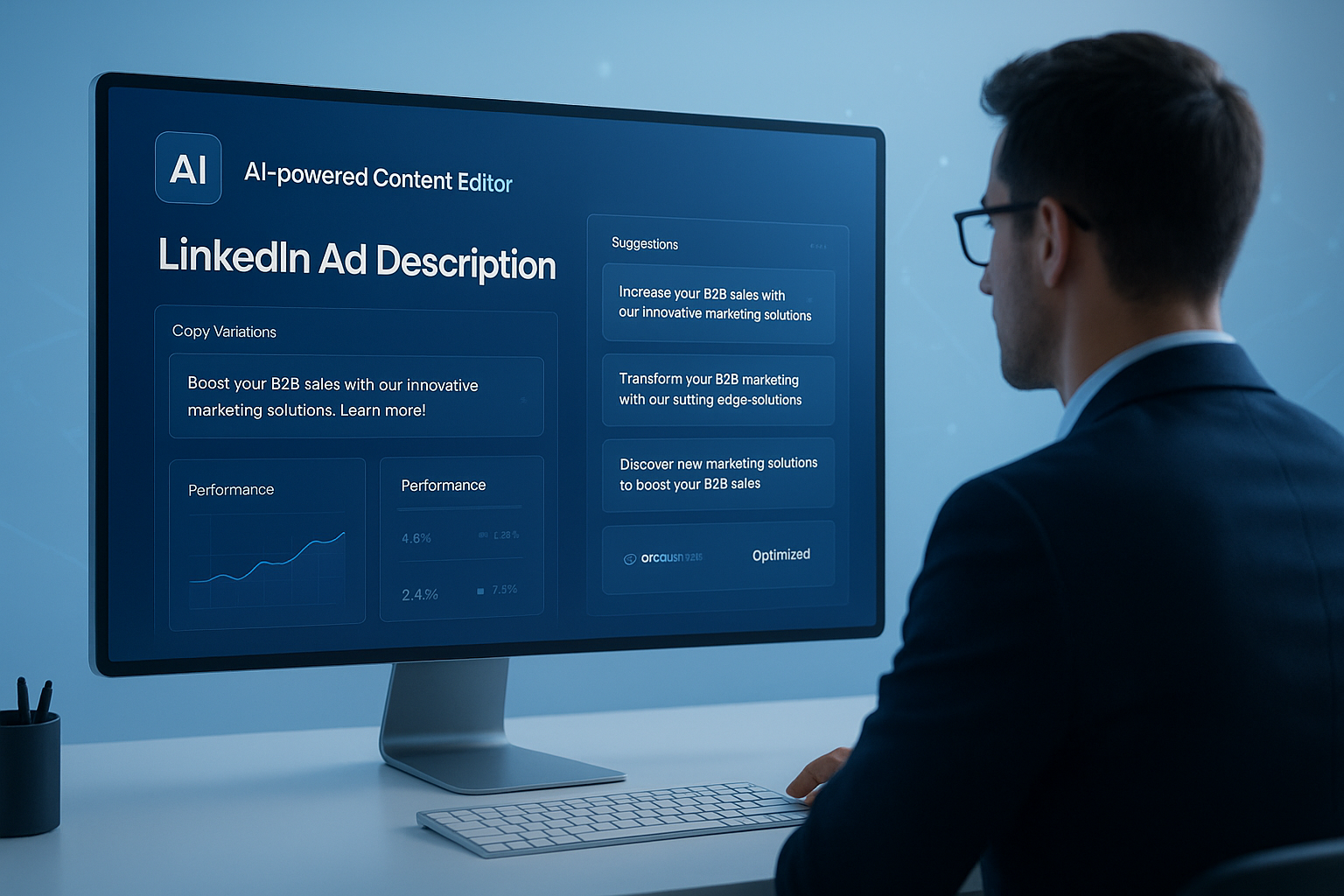
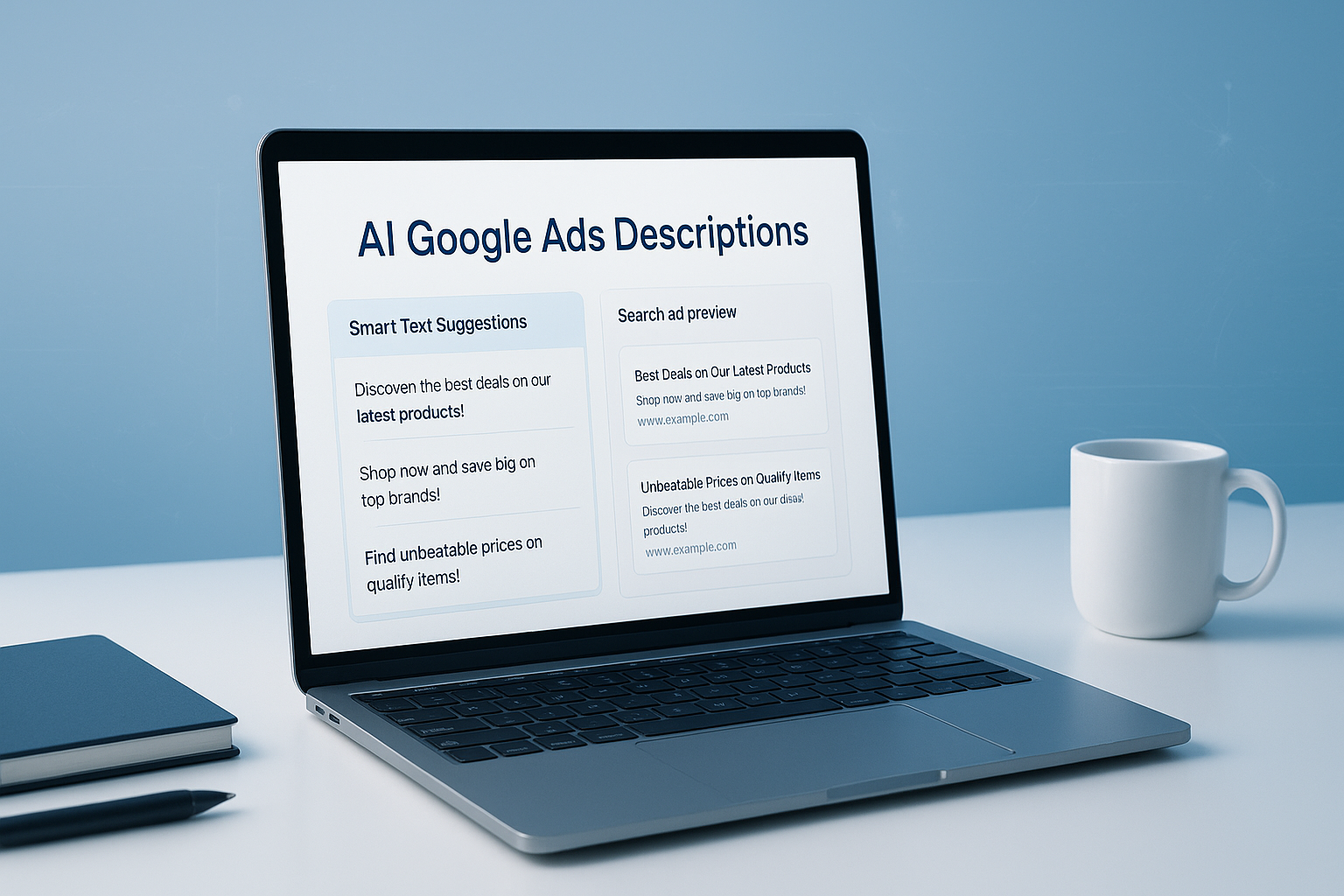
Suggested Image: Modern illustration of a marketer comparing multiple SEO title options on a search results screen
What is an AI SEO meta title generator?
An AI SEO meta title generator is a tool that creates page title suggestions based on your keyword, topic, audience, and intent. Its job is to speed up ideation, improve relevance, and help you write titles that can perform better in search results and AI-driven search experiences.
In practice, the tool usually takes a few signals:
- Primary keyword
- Page topic
- Search intent
- Audience type
- Brand tone or title style
- Preferred length
It then produces multiple title options, often with different angles such as educational, benefit-led, question-based, or click-focused. If you also create page descriptions, a related AI SEO meta description generator can help align the snippet message with the title.
The key point is this: AI should support title creation, not replace editorial judgment. Search engines still reward clarity, relevance, and user value. As Google’s helpful content guidance makes clear, content should be created for people first.
Why meta titles still matter for SEO and clicks
Meta titles remain one of the clearest signals about a page’s topic. They influence how users interpret your result, how search engines understand the page, and how likely someone is to click when your listing appears beside competing options.
Here’s why experienced marketers still spend time on title writing:
- They shape first impressions. Your title is often the first thing a searcher sees.
- They influence click-through rate. Better wording can increase qualified clicks.
- They support topical relevance. A precise title helps search engines connect the page to search intent.
- They improve AI retrieval and summarization. LLM-based systems often use page titles as a strong contextual clue.
- They reduce ambiguity. Clear titles make it easier for users to predict what they’ll get after clicking.
This matters even more as search behavior shifts. Searchers now interact with traditional results, AI Overviews, answer engines, and chat-based assistants. Titles must work across all those surfaces. If you’re building surrounding content assets too, the SEO and digital marketing tools section can help connect title work with broader optimization tasks.
Meta title vs headline: what’s the difference?
Many teams treat them as the same thing, but they don’t have to match exactly. A page headline speaks to readers already on the page. A meta title is written for search results and discovery systems.
| Element | Primary Purpose | Best Practice |
|---|---|---|
| Meta title | Improve visibility and clicks in search | Keep it clear, relevant, and concise |
| Page headline | Engage visitors after they land | Make it readable, useful, and aligned with content |
Google may sometimes rewrite titles in search results. To reduce that risk, follow Google’s title link recommendations and avoid boilerplate or misleading phrasing.
How an AI SEO meta title generator actually helps marketers
An AI SEO meta title generator is most useful when you already know the page goal but need better options, faster. It removes blank-page friction and helps teams test stronger phrasing without spending 20 minutes on every draft title.
Here’s what it does well:
- Generates variation quickly. You can test educational, commercial, and curiosity-driven formats.
- Surfaces keyword placement ideas. It often places the target phrase earlier, where it’s easier to scan.
- Matches intent more consistently. Good tools can reflect whether the page is informational, transactional, or navigational.
- Saves time during content production. This matters for teams publishing at scale.
- Supports title testing across templates. Useful for blog posts, landing pages, product pages, and category pages.
Let’s be honest, though. The output is only as good as the prompt and the review process. If your content brief is weak, your titles will be weak too. That’s why many marketers pair title generation with topic planning tools such as an AI blog title generator and content polishing tools like the AI paraphrasing tool when refining drafts.
What makes a high-performing SEO meta title in 2026?
A strong title does four things at once: it names the topic clearly, reflects search intent, gives a reason to click, and stays readable within search result constraints. The best titles feel obvious to the right audience.
Here are the core traits of a good title:
- Clear topic match: the user should know what the page is about immediately.
- Natural keyword use: include the target phrase without making the title awkward.
- Specific value: show a benefit, outcome, guide, comparison, or solution.
- Reasonable length: usually around 50 to 60 characters is a helpful target, though pixel width matters more than raw count.
- Human readability: it should sound like something a person would actually click.
- Consistency with on-page content: overpromising hurts trust and engagement.
For title length and snippet behavior, Google does not set a strict character limit, but display depends on device and width. A practical way to manage this is to check title length while drafting. If you’re working with character limits across assets, a simple character counter can help you trim titles without cutting meaning.
A simple formula that works
When teams struggle, I usually recommend this structure:
- Start with the main topic or keyword.
- Add the format or use case.
- Include a clear benefit or outcome.
Examples:
- AI SEO Meta Title Generator Guide for Better Clicks
- Best CRM for Small Teams: Features, Pricing, and Setup Tips
- Technical SEO Checklist for 2026: Fix Crawl and Indexing Issues
Suggested Infographic: Breakdown of a well-structured SEO title with keyword, intent, and benefit labels
How to use an AI SEO meta title generator step by step
The best results come from a structured workflow, not a single button click. Start with search intent, define the page value, generate options, then edit with judgment. That’s where many people improve title quality dramatically.
- Identify the primary keyword. Choose one clear target phrase for the page.
- Define the search intent. Is the user learning, comparing, buying, or solving a problem?
- Summarize the page in one sentence. This keeps the AI grounded in the actual content.
- Add constraints. Mention title length, audience, tone, and whether the keyword should appear near the front.
- Generate multiple versions. Ask for at least 10 to 20 variations.
- Group by angle. Separate guide-style, benefit-led, question-based, and list-based titles.
- Edit manually. Remove fluff, repetition, and unnatural keyword use.
- Check SERP fit. Make sure the title stands out from common competitor phrasing.
- Align with the meta description. The title gets the click; the description supports it.
- Track performance and revise. Update underperforming titles over time.
If you’re tightening supporting copy after title creation, an sentence rewriter can help refine awkward phrasing in intros and descriptions so the snippet message feels cohesive.
How to write better prompts for title generation
The quality of your prompt changes everything. Vague instructions produce generic titles. Specific inputs produce useful options that need less editing and better reflect search intent.
Here’s a poor prompt:
Write an SEO title for my article about meta titles.
Here’s a better prompt:
Create 15 SEO meta title options for an informational article targeting marketers. Primary keyword: AI SEO meta title generator. Search intent: informational. Tone: clear and practical. Keep most titles under 60 characters. Include a mix of guide-style, benefit-led, and click-focused options. Avoid hype and keyword stuffing.
Useful prompt inputs include:
- Primary keyword
- Secondary keywords
- Audience
- Intent
- Content format
- Tone
- Length guidance
- Words to avoid
- Brand style preference
If you need fast wording experiments for supporting messaging, the AI text generator can help build and compare phrasing angles before you finalize the title.
Best title formats for different search intents
The best title style depends on why the user searched in the first place. A title that works for a product page may fail for a tutorial. Matching the title format to search intent is one of the easiest ways to improve relevance.
| Search Intent | Best Title Pattern | Example |
|---|---|---|
| Informational | Keyword + guide or how-to + outcome | AI SEO Meta Title Generator Guide for Better Clicks |
| Commercial investigation | Best + category + qualifier | Best SEO Title Tools for Content Teams in 2026 |
| Transactional | Action-focused + product outcome | Generate SEO Meta Titles in Seconds |
| Comparison | X vs Y + decision helper | AI SEO Title Generator vs Manual Writing: Which Works Better? |
For content planning, these structures connect closely with Google’s guidance on SEO basics from Google Search Central. The main idea is simple: help the user understand the result before they click.
Common mistakes AI-generated titles make
AI can produce good first drafts, but it also repeats patterns that weaken performance. Most failures come from sounding generic, overusing keywords, or focusing on style over clarity.
Watch for these issues:
- Keyword stuffing: repeating the same phrase unnaturally
- Empty adjectives: words like ultimate, amazing, powerful, or revolutionary with no real value
- Misleading promises: claims the content does not support
- Weak specificity: vague titles that could fit hundreds of articles
- Wrong intent match: listicle language on a service page, or sales language on a guide
- Duplicate title patterns: many pages sounding too similar across a site
- Overlong titles: key meaning gets cut or buried
This is where editors make the difference. AI is good at generating options. Humans are better at removing what sounds generic and keeping what feels useful. If you’re also refining article structure, a word counter can help keep surrounding content concise enough to support strong snippet messaging.
AI-generated titles vs manual title writing
Neither approach is perfect on its own. AI is faster at idea generation. Humans are better at context, nuance, brand fit, and knowing what will resonate with a specific audience segment.
| Approach | Strengths | Limitations |
|---|---|---|
| AI-generated | Fast, scalable, good for variation and brainstorming | Can be repetitive, generic, or weak on nuance |
| Manual writing | Better judgment, brand alignment, and intent precision | Slower and harder to scale across many pages |
| Hybrid workflow | Combines speed with editorial quality | Still requires review discipline |
For most marketing teams, the hybrid model wins. Generate options with AI, then edit aggressively. That process is especially effective when paired with real performance data from Google Search Console.
How to improve AI search visibility with better titles
AI search systems need clear signals. A strong title helps LLM-based engines understand page topic, likely use case, and relevance to a question. It won’t guarantee inclusion in AI-generated answers, but it improves the page’s interpretability.
Here’s what helps:
- Use explicit topic language. Avoid clever but unclear phrasing.
- Reflect the actual question being answered. This supports retrieval in answer engines.
- Align page title, heading, and intro. Consistency improves understanding.
- Show utility. Words like guide, checklist, examples, template, pricing, and comparison add context.
- Support with strong page structure. Clear headings, lists, and concise answers matter.
Search systems increasingly reward pages that are easy to parse. Guidance from Bing Webmaster Guidelines also emphasizes clarity, quality, and accuracy. Titles are only one signal, but they are one of the easiest to improve quickly.
Practical examples: weak titles vs stronger titles
The easiest way to spot title quality is side-by-side comparison. When you compare weak and strong versions, the difference usually comes down to clarity, intent, and usefulness.
| Weak Title | Stronger Title | Why It’s Better |
|---|---|---|
| Meta Titles with AI | AI SEO Meta Title Generator Guide for Better Clicks | Clear keyword, format, and benefit |
| Best SEO Tool | Best SEO Title Tools for Faster Content Publishing | More specific and intent-matched |
| Write Better Titles | How to Write SEO Titles That Increase Click-Through Rate | Names the task and expected outcome |
Now comes the important part. Strong titles aren’t always flashy. Often, the best option is the one that feels the most direct and easiest to trust.
Best practices for teams publishing at scale
When a team publishes dozens or hundreds of pages, title quality becomes a systems issue. Individual writing skill still matters, but consistency depends on process, templates, and review standards.
- Create title rules by content type.
- Define preferred formats for blog posts, landing pages, and category pages.
- Keep a short banned-word list for hype terms and filler adjectives.
- Review duplicate patterns across the site.
- Test title changes on pages with stable rankings but weak CTR.
- Document examples of top-performing titles by intent.
If your workflow includes screenshots, graphics, or blog images, compressed media can also improve page performance. A fast-loading page supports user experience after the click, so tools like the Image Compressor can be useful when publishing content at scale.
Suggested Screenshot: Title optimization workflow showing keyword, prompt, AI outputs, and final edited title
How to measure whether your title is working
A good title should earn the right clicks, not just more impressions. The best evaluation combines search data, user behavior, and page-level context. One metric alone rarely tells the full story.
Track these signals:
- Click-through rate: the most direct signal for title effectiveness
- Impressions: helps you understand how often the page is eligible to appear
- Average position: important context when judging CTR
- Bounce or engagement quality: a click is less valuable if the title misleads
- Conversion rate: especially for commercial or transactional pages
Google Search Console is the starting point. Google explains performance reporting in its Search Console performance report documentation. Use a before-and-after review window long enough to reduce noise, especially if the page has low traffic.
Frequently asked questions
Is an AI SEO meta title generator good for beginners?
Yes, especially for beginners who struggle to turn a keyword into a clear, click-worthy title. The tool speeds up brainstorming and shows different title styles you might not think of on your own. Still, beginners should not publish outputs blindly. The safest approach is to generate several options, compare them with search intent, and choose the most accurate and readable version.
Can AI-generated titles improve rankings directly?
Not directly in a guaranteed way. A better title can improve relevance and click-through rate, which may support stronger performance over time, but rankings depend on many signals beyond titles. Content quality, internal linking, page experience, topical authority, and indexing all matter. Think of title optimization as an important lever, not a magic switch.
What is the ideal length for an SEO meta title?
There is no perfect fixed character count because search engines display titles based on pixel width, not just length. That said, many marketers aim for roughly 50 to 60 characters so the main topic is visible on most devices. The real rule is simpler: put essential words early, avoid wasted filler, and make sure the title still reads naturally.
Should the primary keyword always appear at the beginning?
Not always, but placing the primary keyword near the front is often helpful. It improves scannability and makes topical relevance clearer. That said, forcing the keyword into an awkward position can hurt readability. If the title sounds unnatural, rewrite it. A natural, specific title usually performs better than a rigid keyword placement rule.
How many title options should I generate before choosing one?
For most pages, 10 to 20 options is enough to see strong patterns and find a few usable directions. Fewer than that often limits creativity. More than that can create noise unless you’re doing large-scale testing. A practical method is to generate several formats, shortlist three, then manually edit those finalists for clarity, specificity, and fit.
Can I use the same meta title as my page headline?
Yes, you can, and sometimes that’s the best choice. But they do not have to be identical. A headline can be slightly more conversational once the user lands on the page, while the meta title should focus on search visibility and click clarity. The important part is alignment. If the title promises one thing and the headline says another,