Writing Google Ads headlines sounds simple until you have to create dozens of them fast, stay within character limits, match search intent, and still sound persuasive. That’s where AI Google Ads Titles become useful. They help marketers move faster without starting from a blank page every time.
But speed alone is not the goal. A title that is quick to generate and weak in relevance will not help your campaign. Good ad headlines need to align with keywords, user intent, landing page content, and the rules of responsive search ads. According to Google Ads responsive search ad guidelines, strong assets improve the system’s ability to serve better combinations.
In this guide, you’ll learn how AI Google Ads Titles work, when they help most, where they fall short, and how to turn raw AI suggestions into higher-quality ad headlines. If you also create supporting visuals for ads, tools like the Image Compressor can help reduce page asset size for faster landing page performance.
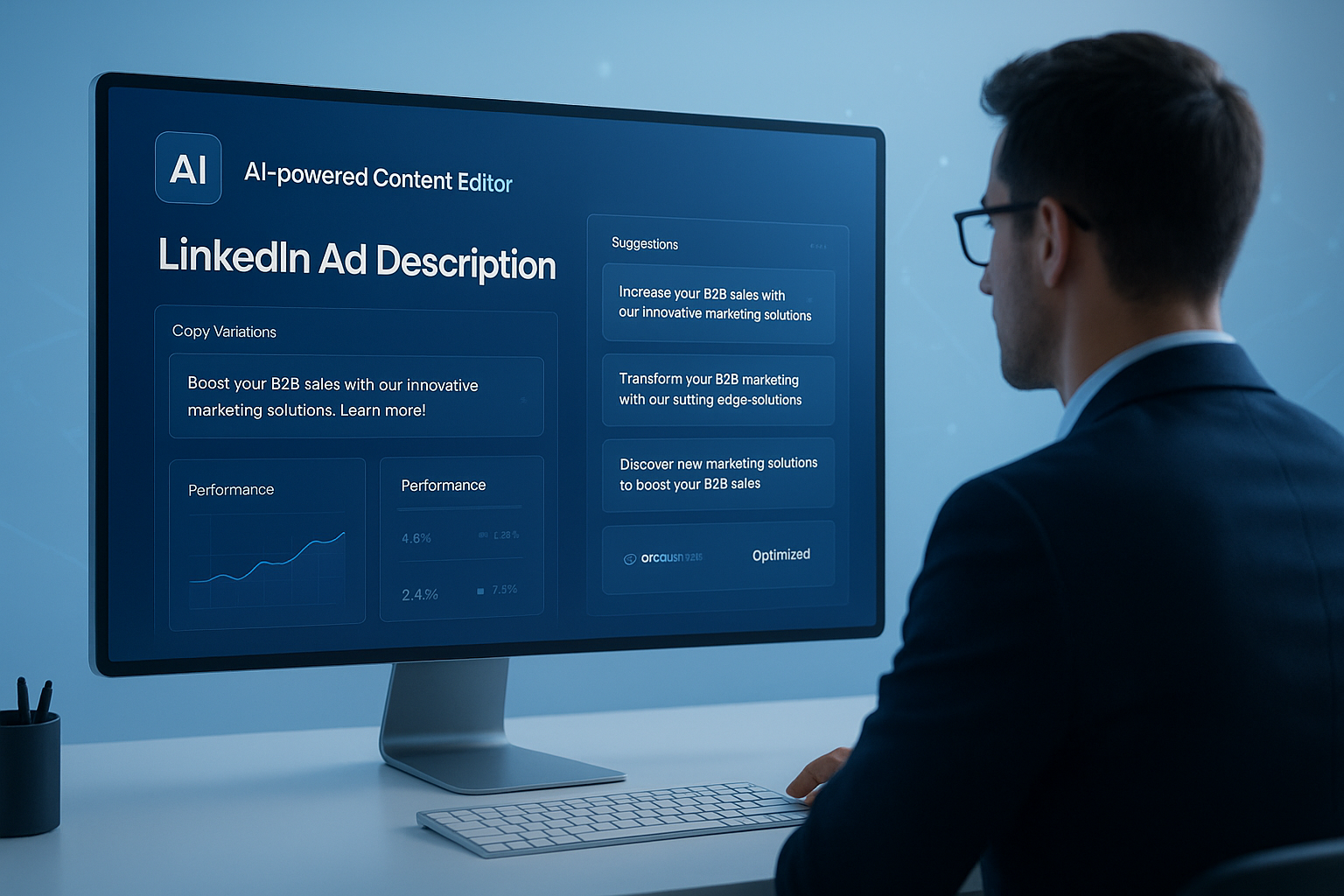
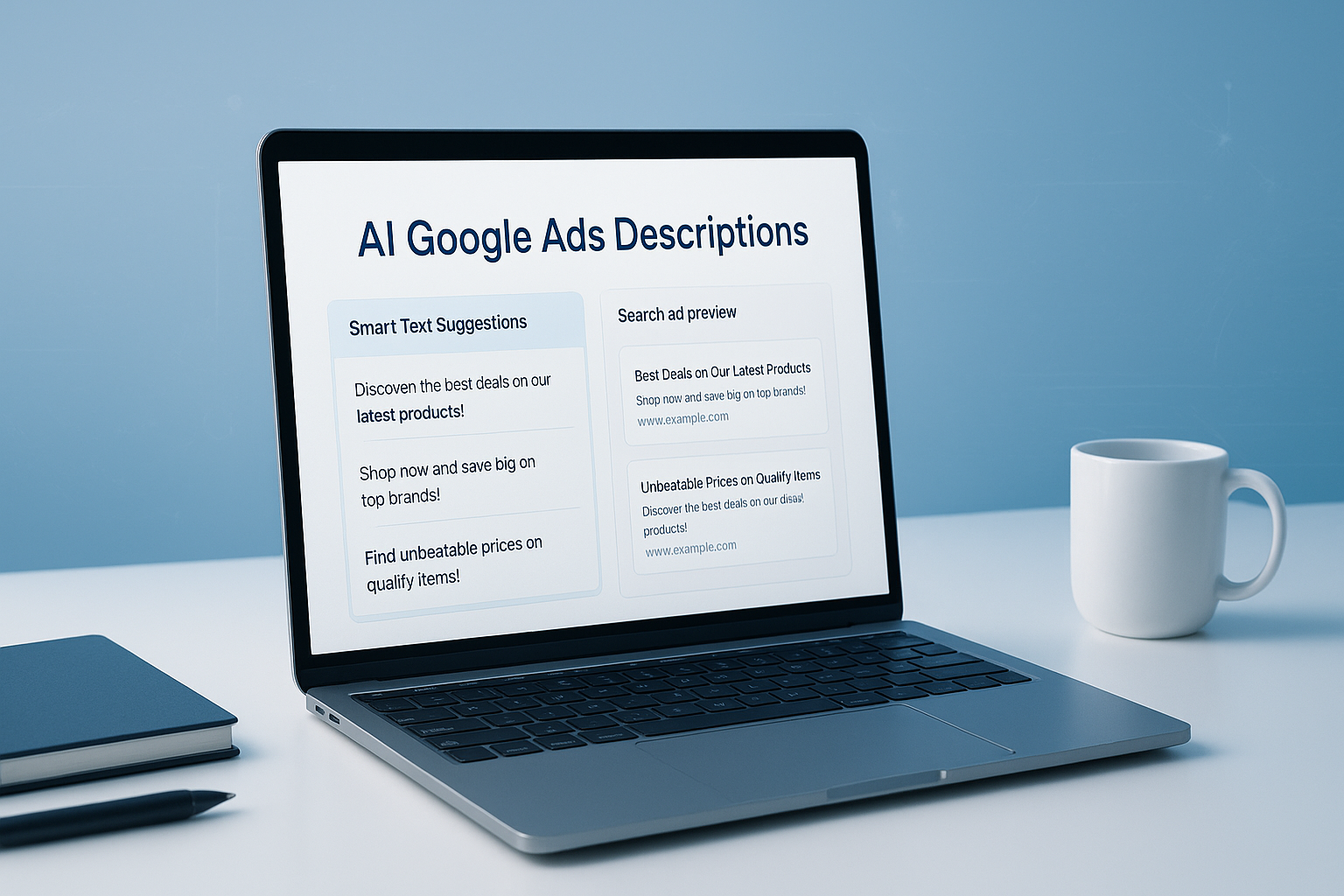
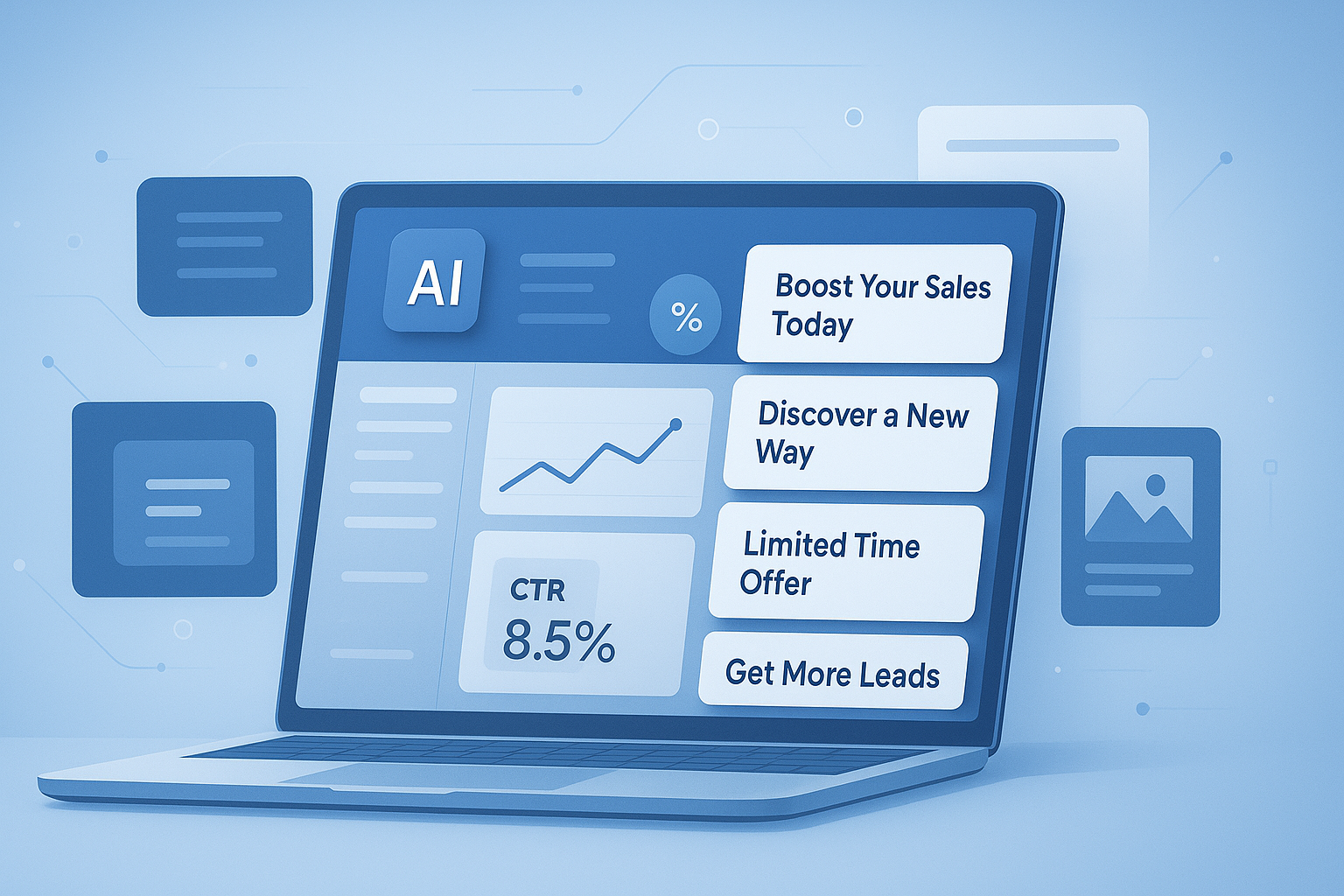
Suggested Image: Technology concept showing AI-generated ad headlines on a digital marketing dashboard
What are AI Google Ads Titles?
AI Google Ads Titles are machine-assisted headline suggestions created to help advertisers write ad copy faster. They usually combine your keywords, offer details, brand tone, and audience intent to produce multiple headline options that fit Google Ads formatting requirements.
In practice, these tools are most useful for:
- Generating first-draft headlines quickly
- Creating variants for A/B testing
- Matching ads to different keyword groups
- Exploring benefit-focused and intent-focused messaging
- Reducing repetitive manual copywriting work
They do not replace strategy. You still need to decide what matters most in the ad:
- Price
- Speed
- Trust
- Results
- Location
- Urgency
- Brand differentiation
If you’re building a broader workflow around AI-driven content, reviewing tools like the AI Meta Description Generator can help you keep messaging consistent across ads and organic search snippets.
Why marketers use AI Google Ads Titles
Marketers use AI Google Ads Titles because headline production often becomes a bottleneck. Campaigns need multiple assets, different angles, and constant testing. AI helps generate options faster so teams can spend more time refining strategy and less time staring at a blank field.
Here’s the real advantage. AI is not just about writing more headlines. It helps uncover phrasing patterns you may not have considered.
Key benefits
- Speed: Produce many headline variations in seconds
- Scale: Support large PPC accounts with many ad groups
- Testing support: Create multiple messaging angles for experiments
- Consistency: Keep offers and value propositions aligned
- Idea generation: Surface headline structures that break writer’s block
Where this matters most
- Ecommerce campaigns with many products
- Local service ads with location-based variations
- B2B campaigns targeting multiple pain points
- Agencies managing several client accounts
- Seasonal promotions with fast turnaround times
This is also where SEO and PPC start to overlap. If your campaign language mirrors how people search, both paid and organic messaging usually become clearer. For related keyword planning tasks, marketers often use a Keyword Density Checker to review how heavily a term appears in supporting landing page copy.
How AI headline generators actually improve ad performance
AI Google Ads Titles improve performance when they help you create more relevant, more varied, and more testable headlines. The gain does not come from AI itself. It comes from better input, stronger filtering, and smarter optimization by the advertiser.
Let’s break this down. Better headlines usually improve these four areas:
- Relevance: The title matches the search query more closely
- Click-through rate: Stronger wording can earn more clicks
- Message coverage: Multiple angles speak to different users
- Testing depth: More variants make optimization easier
Google’s own recommendations emphasize ad strength, asset variety, and alignment with user intent. You can review current best practices in the Google Ads ad strength documentation.
| Manual Headline Writing | AI-Assisted Headline Writing |
|---|---|
| Slower for large campaigns | Faster idea generation across many ad groups |
| Highly dependent on copywriter bandwidth | Useful for scaling headline variation |
| Often fewer test variants | Makes multi-angle testing easier |
| Can be stronger on nuance from the start | Needs human review for nuance and compliance |
What makes a strong Google Ads title in 2026
A strong Google Ads title in 2026 is clear, relevant, specific, and useful. It tells the searcher why your result deserves attention without sounding vague, stuffed, or exaggerated. The best headlines are not clever first. They are understandable first.
Strong titles often include one or more of these elements:
- The main keyword or close variation
- A direct benefit
- A trust signal
- An offer or differentiator
- Urgency, when appropriate
- Location, if local intent matters
Examples of weak vs strong titles
| Weak Title | Why It Falls Short | Stronger Alternative |
|---|---|---|
| Best Marketing Solutions | Too broad and generic | PPC Management for Ecommerce Brands |
| Buy Now and Save Big | No product or audience relevance | Save 20% on CRM Software Plans |
| Trusted Experts Online | Lacks specificity | Certified Tax Help for Small Businesses |
Google also enforces editorial and policy requirements, so claims must be accurate and compliant. For that, the Google Ads policy center is worth reviewing before launching sensitive campaigns.
How to generate better AI Google Ads Titles
The quality of AI Google Ads Titles depends heavily on the prompt, source inputs, and review process. If you feed the tool weak context, it will produce generic headlines. If you give it clear campaign intent, it becomes much more useful.
Here’s what experienced professionals do differently.
Step 1: Start with one ad group, not the whole account
Focus on a tight keyword cluster. A headline generator performs better when the topic is specific. “Running shoes” is broad. “Women’s trail running shoes” gives the system something concrete to work with.
Step 2: Define the search intent
Are users comparing options, looking for prices, ready to buy, or searching for a local provider? Headline style changes based on intent. Informational intent usually needs clarity. Transactional intent often needs urgency or offer details.
Step 3: Provide key inputs
- Primary keyword
- Secondary keyword variations
- Audience type
- Offer details
- Brand tone
- Geographic target
- Main benefit
- Unique selling point
- Character constraints
Step 4: Ask for multiple headline angles
Don’t ask for 15 similar titles. Ask for categories such as:
- Benefit-driven headlines
- Urgency-based headlines
- Trust-focused headlines
- Price-focused headlines
- Keyword-first headlines
- Location-based headlines
Step 5: Filter aggressively
AI output is a draft, not the final asset. Remove vague language, duplicated ideas, misleading claims, and unnatural phrasing. Then choose headline options that support different user motivations.
If you want to clean up raw marketing copy before final review, the Grammar Checker can help catch simple phrasing issues before publishing.
Example prompt
Create 20 Google Ads headlines for a local roofing company targeting homeowners in Austin, Texas. Use the keyword “roof repair Austin.” Keep headlines within Google Ads headline length best practices. Include a mix of urgency, trust, local relevance, and free estimate messaging. Avoid generic wording and avoid unrealistic claims.
Best headline formulas AI handles well
AI Google Ads Titles work especially well with headline formulas that follow clear patterns. These structures help the tool generate useful options quickly while still leaving room for human refinement and testing.
- Keyword + Benefit: Email Marketing Software That Saves Time
- Problem + Solution: Slow Website? Fix Load Speed Fast
- Location + Service: Chicago Family Lawyer Consultation
- Trust + Offer: Certified Accountants, Free First Call
- Urgency + Outcome: Book HVAC Repair Today
- Audience + Value: CRM Tools for Small Sales Teams
This small detail changes everything: formula use is helpful, but not every ad group should rely on the same structure. Variety matters for responsive search ads because Google can mix and match assets. For broader on-page SEO alignment, some teams also review title structures with an AI Title Generator when building corresponding landing page content.
Common mistakes when using AI for ad headlines
Most problems with AI Google Ads Titles are not technical. They come from poor inputs, weak review, or overconfidence. AI can create usable drafts quickly, but it can also produce bland, repetitive, or risky copy if nobody edits it carefully.
- Using broad prompts: Generic input creates generic headlines
- Ignoring intent: A title for researchers is different from a title for buyers
- Repeating the same keyword pattern: This reduces variety and testing value
- Trusting every output: AI may invent claims or awkward wording
- Forgetting character limits: Long headlines may lose impact or be unusable
- Not checking landing page alignment: The headline must match what users see next
- Ignoring compliance: Sensitive industries need extra review
Landing page experience still matters a lot. Google’s Quality Score overview explains how ad relevance, expected CTR, and landing page experience contribute to campaign performance.
AI Google Ads Titles vs human-written headlines
AI Google Ads Titles are best for speed and variation. Human-written headlines are best for nuance, brand judgment, and strategic messaging. In strong PPC teams, the best approach is not one or the other. It is AI for drafting and humans for selection, refinement, and testing.
| Factor | AI Headlines | Human Headlines |
|---|---|---|
| Speed | Very fast | Slower |
| Volume | High output | Lower output |
| Brand nuance | Limited without strong prompts | Usually stronger |
| Strategic judgment | Needs oversight | High |
| Testing support | Excellent for variations | Good but time-intensive |
If you regularly rewrite ad and landing page content, the Paraphrasing Tool can be useful for exploring alternate phrasing without relying on a single wording pattern.
How to review AI-generated headlines before publishing
Before any AI Google Ads Titles go live, review them like an editor and a media buyer at the same time. The question is not “Does this sound acceptable?” The better question is “Will this headline help the right searcher click for the right reason?”
- Check keyword relevance
- Confirm the title matches ad group intent
- Remove duplicate or near-duplicate headlines
- Verify factual accuracy and offer details
- Check policy compliance
- Make sure the landing page can fulfill the promise
- Keep a healthy mix of headline types
- Test, then refine based on data
A simple review checklist
- Would a real customer understand it instantly?
- Does it say something specific?
- Does it match the query and landing page?
- Is it free of hype and unsupported claims?
- Is it distinct from the other headlines in the set?
Suggested Screenshot: Example review checklist for AI-generated Google Ads headlines
Practical use cases by campaign type
Different campaigns need different types of AI Google Ads Titles. The same headline logic that works for a local plumber would fail for SaaS, healthcare, or high-ticket B2B services. Context matters more than creativity.
Ecommerce
Focus on product category, promotions, shipping, price points, and strong buying intent. Examples include stock availability, seasonal offers, and product benefits.
Local services
Location, urgency, trust, and availability matter most. Terms like same-day, near me, licensed, and free estimate often matter when they are truthful and relevant.
B2B software
Clarity beats cleverness. Buyers want outcomes, integrations, demos, ROI signals, and use-case relevance. Vague language usually underperforms.
Lead generation
Use AI to create headline sets around trust, pain point resolution, and friction reduction. Good examples include free consultation, no obligation, or fast response time when supported by the business.
When campaign workflows involve multiple assets and documents, practical support tools like the PDF to Word Converter can help marketers quickly repurpose briefs, client notes, or ad review documents into editable formats.
Can AI Google Ads Titles improve Quality Score?
AI Google Ads Titles can contribute to better Quality Score indirectly, but they do not improve it automatically. What matters is whether the generated headlines actually increase relevance, expected click-through rate, and landing page consistency.
Here’s the problem. Many people assume more titles means better performance. That’s not always true.
AI helps when it produces:
- Closer keyword-to-headline alignment
- Stronger intent matching
- More compelling value framing
- Better structured testing
It hurts when it produces:
- Repetitive assets
- Misleading wording
- Off-topic headlines
- Low-clarity phrases that attract weak clicks
For landing pages tied to ads, technical performance also matters. You can check image-heavy pages with the JPG to WebP Converter to reduce file size and support faster page loading, which can improve user experience.
Best practices for using AI Google Ads Titles in a real workflow
The smartest way to use AI Google Ads Titles is inside a repeatable process. AI should support your workflow, not control it. Teams that see the best results usually combine prompt discipline, human review, and structured testing.
- Build prompts from actual ad group briefs
- Generate headlines by intent cluster, not broad campaign theme
- Ask for distinct messaging angles
- Edit for specificity and compliance
- Use performance data to refine prompts over time
- Keep a swipe file of winning title structures
- Refresh underperforming assets regularly
If you manage content and ads together, a broader resource hub like the SEO and digital marketing tools category can help connect ad creation, landing page optimization, and copy review into one workflow.
Frequently asked questions
Are AI Google Ads Titles good enough to publish without editing?
Usually no. AI can produce useful first drafts, but publishing without review is risky. Headlines may be too generic, slightly off-intent, factually weak, or not compliant with ad policies. A human should always check accuracy, relevance, clarity, and landing page alignment before launching. The fastest workflow is still AI draft first, human edit second.
How many AI-generated headlines should I create for one ad group?
A practical starting point is to generate 15 to 30 options, then narrow them down. You want enough variety to cover different user motivations, but not so many that review becomes messy. Focus on distinct angles such as benefit, trust, urgency, keyword relevance, and offer-based messaging. Quality matters more than raw quantity.
Do AI Google Ads Titles help small businesses or only large advertisers?
They help both. Small businesses benefit because AI reduces the time needed to write ads from scratch. Larger advertisers benefit because AI helps scale headline production across many campaigns and markets. The difference is in process. Small teams often use AI for speed, while larger teams use it for structured testing and workflow efficiency.
Can AI-generated headlines hurt campaign performance?
Yes, if they are used carelessly. Weak prompts can create vague headlines. Poor review can allow unsupported claims, repetitive wording, or irrelevant messaging to go live. That can reduce click quality and make optimization harder. AI should be treated as a drafting assistant, not as a final decision-maker.
What should I include in a prompt for better Google Ads headlines?
Include the main keyword, audience, campaign goal, offer, location if relevant, preferred tone, and the types of headlines you want. It also helps to mention what to avoid, such as hype, generic wording, or unrealistic claims. Better inputs almost always lead to better outputs.
Are AI Google Ads Titles useful for responsive search ads?
Yes, especially because responsive search ads need multiple headline assets. AI is valuable for producing variations quickly, which gives Google more combinations to test. The key is making sure the headlines are meaningfully different. Reworded duplicates do not add much value. Variety with relevance is what matters.
Will AI headline tools replace copywriters in PPC?
No. They reduce repetitive drafting work, but they do not replace strategic judgment. Good PPC copy still requires customer insight, offer positioning, compliance awareness, and performance analysis. AI is very useful for generating options. Copywriters and marketers are still needed to choose the right ones and refine them for real campaigns.
What is the biggest mistake marketers make with AI ad titles?
The biggest mistake is assuming the tool understands business context automatically. Without clear guidance, AI often falls back on generic marketing phrases. That leads to bland copy that does not match buyer intent. The fix is simple: use focused prompts, review hard, and test based on actual performance data rather than assumptions.
Conclusion
AI Google Ads Titles can save time, expand testing options, and make ad creation far more efficient. But the real value comes from how you use them. Strong prompts, careful editing, and campaign-level relevance are what turn raw AI output into better ad headlines.
If you want better PPC performance, start small. Pick one ad group, generate several headline angles, edit ruthlessly, and compare results. That approach will teach you more than producing hundreds of titles with no review process.
For your next steps, it may help to explore the AI Meta Description Generator for supporting search copy, the AI Title Generator for landing page ideas, the Grammar Checker for final copy cleanup, and the SEO and digital marketing tools category for broader optimization work.