
Most Amazon listings don’t fail because the product is bad. They fail because the title is weak. A vague, stuffed, or badly structured title can bury a good product under better-optimized competitors.
That’s where an AI Amazon Product Title Generator becomes useful. It helps sellers turn rough product details into titles that are clearer, more search-friendly, and easier for shoppers to trust. Used well, it can save time and improve consistency across a catalog.
This guide explains how an AI Amazon product title generator works, what makes a strong Amazon title in 2026, where AI helps, where human review still matters, and how businesses can create titles that support both visibility and conversions.
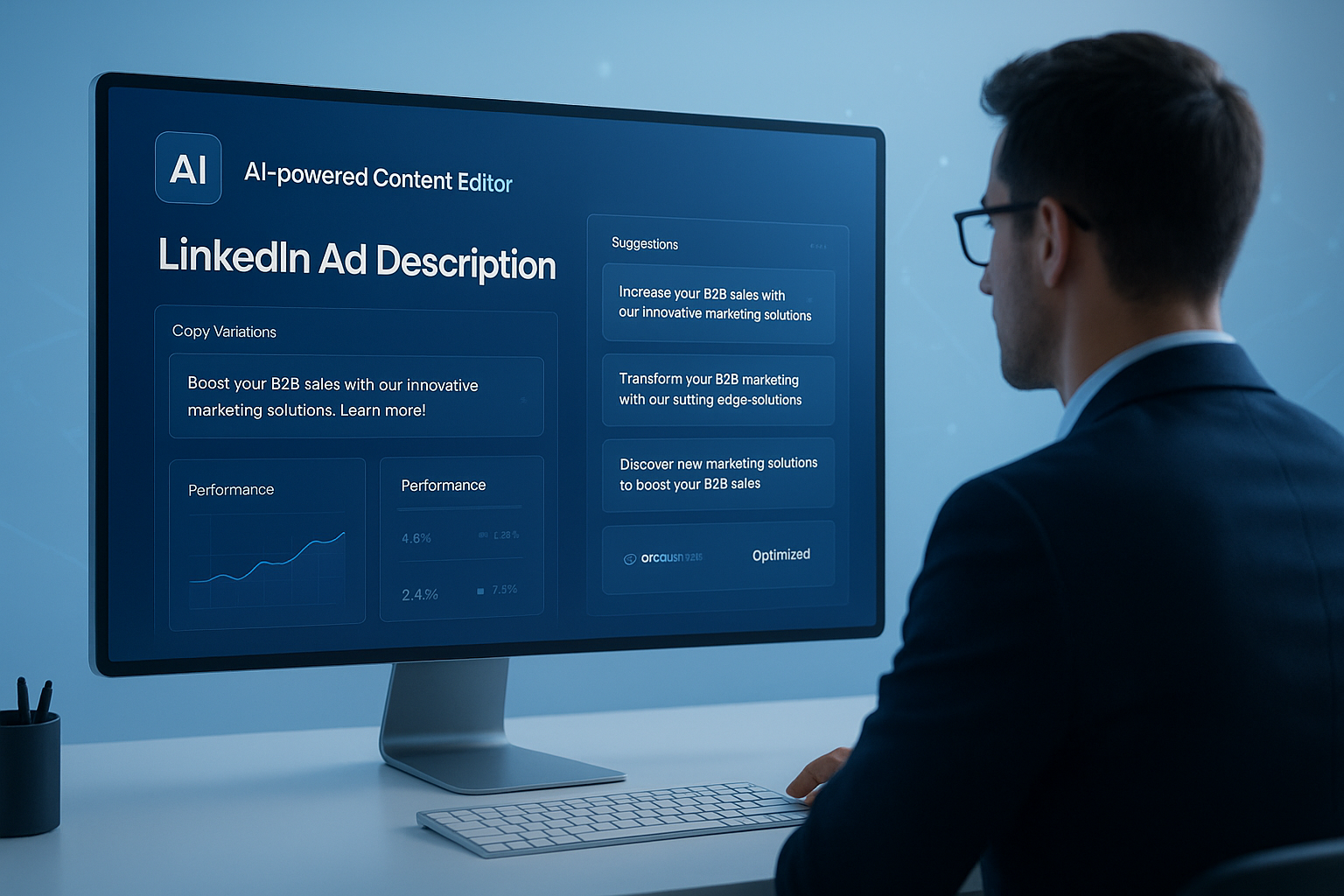
Suggested Image: Technology concept showing AI generating optimized Amazon product titles on an ecommerce dashboard
What is an AI Amazon Product Title Generator?
An AI Amazon product title generator is a tool that uses product inputs such as brand, category, features, size, material, and target use to create title options for Amazon listings. Its goal is to produce titles that are readable, relevant to search intent, and aligned with marketplace best practices.
In simple terms, it helps sellers answer one question fast: How do I describe this product in a way Amazon can understand and shoppers actually want to click?
- It organizes product details into a logical order
- It suggests relevant wording based on product context
- It can reduce repetitive manual writing work
- It helps teams create more consistent titles at scale
- It often improves speed when launching many SKUs
For businesses handling large catalogs, this can be a major productivity gain. If your team also uses AI for supporting copy tasks, a related AI product description generator can help extend the same workflow beyond titles.
Why Amazon product titles matter so much
Your title does several jobs at once. It helps Amazon understand the product, helps shoppers evaluate relevance, and influences whether someone clicks or keeps scrolling. A strong title supports discovery and conversion at the same time.
Here’s the problem. Many sellers treat the title as a place to dump keywords. That usually backfires. Amazon shoppers want clarity first.
- Search visibility: relevant terms help your listing appear for matching product searches
- Click-through rate: cleaner titles are easier to scan in crowded results
- Trust: accurate details reduce confusion and buyer hesitation
- Conversion: shoppers can quickly confirm size, use case, model, or compatibility
- Catalog consistency: businesses can standardize titles across teams and products
Amazon provides category-specific guidance for listings, so businesses should review official seller resources before finalizing format decisions. Starting with Amazon Seller Central and the broader Amazon selling documentation is a smart first step.
How an AI Amazon Product Title Generator works
Most tools follow a similar process. You provide structured product details, the AI identifies the key attributes, then it arranges them into title variations based on common ecommerce and SEO patterns.
- Enter the product name or core item type
- Add brand, model, color, size, quantity, or pack count
- Include important features such as material, compatibility, or main benefit
- Choose tone or title style if the tool allows it
- Generate several title options
- Review each one for policy fit, clarity, and accuracy
- Edit manually before publishing
This is where many people struggle. They expect AI to know the product better than they do. It doesn’t. The output quality depends heavily on the input quality.
If your source data is messy, the result will be messy too. Teams often clean raw inputs first with supporting productivity tools. For example, a quick word counter can help keep titles concise during editing, especially when different marketplaces have different character expectations.
What makes a high-converting Amazon title?
A high-converting title is clear, specific, and easy to scan. It includes meaningful search terms, but it also reads like something written for a shopper, not just an algorithm.
Core elements of a strong Amazon title
- Brand name when relevant
- Main product type
- Important differentiator such as size, quantity, model, or material
- Top feature that affects buying decisions
- Use case or compatibility when it matters
- Natural wording with no spammy repetition
What good titles usually do well
- Front-load the most important information
- Answer obvious buyer questions quickly
- Use specific language instead of vague claims
- Avoid keyword stuffing
- Match the category and shopper intent
For example, compare these two title styles:
| Weak Title | Improved Title |
|---|---|
| Water Bottle Best Sports Bottle Leakproof Bottle for Gym Hiking Bottle | Brand Stainless Steel Water Bottle, 32 oz, Leakproof Insulated Sports Bottle for Gym, Travel, and Hiking |
| Phone Case Shockproof Durable Cover Protective Case | Brand Shockproof Phone Case for iPhone 15, Slim Protective Cover with Raised Edges, Black |
If your product images also need cleanup before listing, a fast Image Compressor can help reduce file size without slowing down your workflow.
AI vs manual title writing: which is better?
The answer depends on one thing: scale. For a few premium products, careful manual writing may be enough. For larger catalogs, AI is often the better first draft system, as long as humans still review the output.
| Factor | AI Generator | Manual Writing |
|---|---|---|
| Speed | Very fast for bulk titles | Slower |
| Consistency | High when prompts are structured | Depends on writer |
| Creativity | Useful but variable | Higher for nuanced products |
| Accuracy risk | Needs review | Lower if product knowledge is strong |
| Best use case | Large catalogs, drafts, testing | Flagship products, final polishing |
Here’s what experienced professionals do differently: they use AI for structure and speed, then use human judgment for compliance, brand tone, and buyer psychology.
How to use an AI Amazon Product Title Generator effectively
The best results come from giving the tool structured, useful inputs. If you enter only a product name, you’ll usually get generic output. If you enter buying-relevant details, the title options improve dramatically.
Step 1: Gather the product facts first
Before generating anything, collect:
- Brand
- Exact product type
- Model or version
- Size or dimensions
- Color or material
- Pack count
- Main benefit
- Compatibility details
- Target use case
If dimensions matter, supporting tools can speed up prep work. A simple cm to inches converter is useful when product specs need market-friendly measurements.
Step 2: Prioritize the details shoppers actually care about
Not every feature belongs in the title. Put the most decision-driving details first. For one product, that may be size. For another, it may be compatibility, scent, material, or quantity.
Step 3: Generate multiple variations
Don’t stop at the first title. Create several versions using different emphasis points:
- Feature-first
- Use-case-first
- Compatibility-first
- Size-first
- Brand-led
Step 4: Edit for clarity and policy fit
Now comes the important part. Read each title like a buyer would. Remove awkward phrasing, repeated keywords, and unsupported claims. Check category requirements before publishing.
Step 5: Test and refine
If your catalog size allows it, compare title styles over time using search visibility, click-through rate, and conversion trends. AI helps generate options, but results data tells you what works.
Suggested Screenshot: AI title generator workflow with input fields for brand, product type, features, and output variations
Best practices for Amazon titles in 2026
Amazon listing expectations keep evolving, and cleaner retail content is increasingly favored across marketplaces. In 2026, the safest approach is clear, shopper-friendly formatting supported by accurate product data.
- Write for scanability first
- Use only relevant keywords
- Keep claims factual and provable
- Avoid all-caps unless required for accepted brand terms
- Don’t overload the title with minor attributes
- Match the category and local marketplace style
- Review titles after marketplace policy changes
Good SEO writing principles apply here too. Search engines and AI-driven systems increasingly reward content quality, usefulness, and clarity. Google’s guidance on helpful, people-first content is worth reviewing through Google Search Central documentation on helpful content.
If you want to tighten supporting text across product pages, a practical AI paragraph rewriter can help improve readability without having to rewrite everything manually.
Common mistakes businesses make with AI-generated Amazon titles
AI can speed up title creation, but it can also scale mistakes if no one reviews the output. Most problems come from weak inputs, missing oversight, or misunderstanding shopper intent.
- Keyword stuffing: repeating near-identical terms makes titles hard to read
- Including too many features: clutter reduces clarity
- Ignoring category rules: not every field belongs in every title
- Trusting AI blindly: generated text can include awkward or inaccurate phrasing
- Leading with low-value words: unimportant adjectives waste prime title space
- Using vague claims: phrases like “best” or “ultimate” often add little value
This small detail changes everything: Amazon titles are not just for ranking. They are also a conversion asset. If a title ranks but fails to reassure the buyer, it still underperforms.
Real examples of AI-assisted title improvements
The clearest way to understand the value of an AI Amazon product title generator is to look at how rough product data becomes a stronger, buyer-friendly title.
Example 1: Kitchen product
Input data: Brand, silicone spatula set, heat resistant, non-stick safe, 5 pieces, black
Weak title: Silicone Spatula Set Kitchen Cooking Utensils Heat Resistant Set
Improved AI-assisted title: Brand Silicone Spatula Set, 5-Piece Heat-Resistant Cooking Utensils, Non-Stick Safe, Black
Example 2: Electronics accessory
Input data: USB-C charger, 65W, fast charging, laptop and phone compatible, travel design
Weak title: Fast Charger USB C Charger Adapter for Devices
Improved AI-assisted title: Brand 65W USB-C Fast Charger, Compact Travel Adapter for Laptops, Tablets, and Phones
Example 3: Pet supply
Input data: dog leash, reflective, 6 ft, padded handle, medium to large dogs
Weak title: Dog Leash Strong Reflective Leash Comfortable Handle
Improved AI-assisted title: Brand Reflective Dog Leash, 6 ft with Padded Handle, Strong Lead for Medium and Large Dogs
Notice the pattern. Better titles are not just longer. They are more specific, more organized, and easier to trust.
How businesses can build a scalable title workflow
If you manage dozens or thousands of listings, title generation should be a repeatable process, not an improvised writing task. AI works best when plugged into a clear content workflow.
- Create a standard product input template
- Define title rules by category
- Generate 3 to 5 options per SKU
- Review for compliance and brand style
- Approve final version in a content QA step
- Track listing performance after publication
- Refine prompt structure based on outcomes
For teams documenting title logic, content briefs, or optimization notes, a PDF to Word converter can help turn supplier documents or listing audits into editable working files.
What to look for in an AI Amazon Product Title Generator
Not all generators are equally helpful. Some produce generic text. Others make it easier to shape titles based on real product data and marketplace needs.
- Simple input fields for product attributes
- Multiple title variations
- Fast generation for bulk workflows
- Usable output that sounds natural
- Easy editing and copy workflow
- Support for ecommerce-specific formatting needs
- Consistent results across categories
It also helps if the tool works well alongside other content assets. Businesses often pair title generation with listing copy, ad copy, and marketplace SEO. If your team needs help drafting short promotional text too, an AI ad copy generator can be useful for related campaigns.
Are AI-generated titles safe for SEO and compliance?
Yes, if they are reviewed. AI-generated titles are generally safe to use when they remain accurate, readable, and aligned with Amazon rules. The risk is not the AI itself. The risk is publishing unverified output.
Businesses should pay attention to three things:
- Accuracy: never let AI invent product features
- Policy alignment: check title practices for your category and marketplace
- User experience: optimize for real shoppers, not just keyword density
For broader quality and trust principles, Google’s spam policies for web content and FTC advertising and marketing guidance are useful references when making product claims online.
Frequently asked questions
1. Can an AI Amazon product title generator improve sales?
It can help, but indirectly. A better title may improve search relevance, click-through rate, and buyer confidence, which can support stronger sales over time. The tool itself does not guarantee performance. Results depend on the product, competition, images, pricing, reviews, and how accurately the title reflects what buyers want to see.
2. Is it better to write Amazon titles manually or use AI?
For small catalogs, manual writing may be enough. For larger businesses, AI is usually the more efficient starting point. The strongest approach is hybrid: use AI to generate structured drafts quickly, then have a human editor refine wording, verify accuracy, and make sure the final title fits brand standards and marketplace requirements.
3. How many keywords should be in an Amazon title?
There is no perfect number. Focus on including the most relevant terms naturally rather than trying to hit a keyword count. A good title usually covers the product type, major differentiator, and one or two decision-driving details. If the title sounds stuffed or repetitive, it probably includes too many keywords.
4. What information should I give the AI for better titles?
Provide structured product data: brand, exact product type, size, color, material, quantity, compatibility, model, and main use case. The more useful and accurate your inputs are, the better the generated titles tend to be. Generic prompts usually produce generic titles, so detailed product context matters a lot.
5. Can I use AI-generated titles across all Amazon categories?
Yes, but with caution. Different categories may emphasize different details such as size, compatibility, scent, pack count, or technical specs. That means the same title formula won’t work everywhere. AI can help generate category-specific drafts, but you should still review each title according to the product type and current Amazon guidance.
6. Are free AI title generators good enough for businesses?
They can be useful for brainstorming and early drafts, especially for small teams and early-stage sellers. For larger operations, the real question is whether the tool saves time while producing usable output consistently. Even a free tool can be valuable if it fits your workflow and reduces editing time without lowering quality.
7. What is the biggest mistake when using AI for Amazon titles?
The biggest mistake is publishing the output without review. AI can misread product importance, overuse keywords, or include awkward phrasing. Another common issue is giving the tool poor input data. Businesses get much better results when they supply clean product details and treat AI as a drafting assistant, not a final decision-maker.
8. How often should I update Amazon product titles?
Review titles when performance drops, when a category changes, when customer search behavior shifts, or when product details change. Many businesses also do regular listing audits quarterly or biannually. In 2026, keeping titles current is especially important because clearer, cleaner retail content tends to perform better across both search and AI-assisted discovery systems.
Conclusion
An AI Amazon Product Title Generator can be a practical tool for businesses that want faster, more consistent listing creation. It works best when you use it to draft smart title options, not to replace judgment. Strong titles are accurate, easy to scan, relevant to search intent, and useful to shoppers.
If you want better results, start with clean product data, generate multiple variations, and edit with both SEO and customer clarity in mind. That combination tends to outperform rushed manual writing and unreviewed AI output.
As a next step, you might pair title work with a few supporting tools: an AI product description generator for listing copy, an Image Compressor for product visuals, a word counter for trimming long drafts, and a paragraph rewriter for polishing supporting content.