Most Facebook ad campaigns don’t fail because the budget is too small. They fail because the setup is slow, the targeting is vague, and the creative doesn’t match what people actually respond to. That’s exactly where AI Facebook Ads can make a real difference.
Used well, AI can help marketers move faster without guessing. It can improve audience selection, speed up copy and visual testing, and uncover patterns that are easy to miss in a standard ads dashboard. But it’s not magic. You still need the right inputs, the right goals, and a clear process.
In this guide, you’ll learn how AI Facebook Ads work, where AI actually helps, what to watch out for, and how to build smarter campaigns in 2026 without handing over strategy to automation blindly.
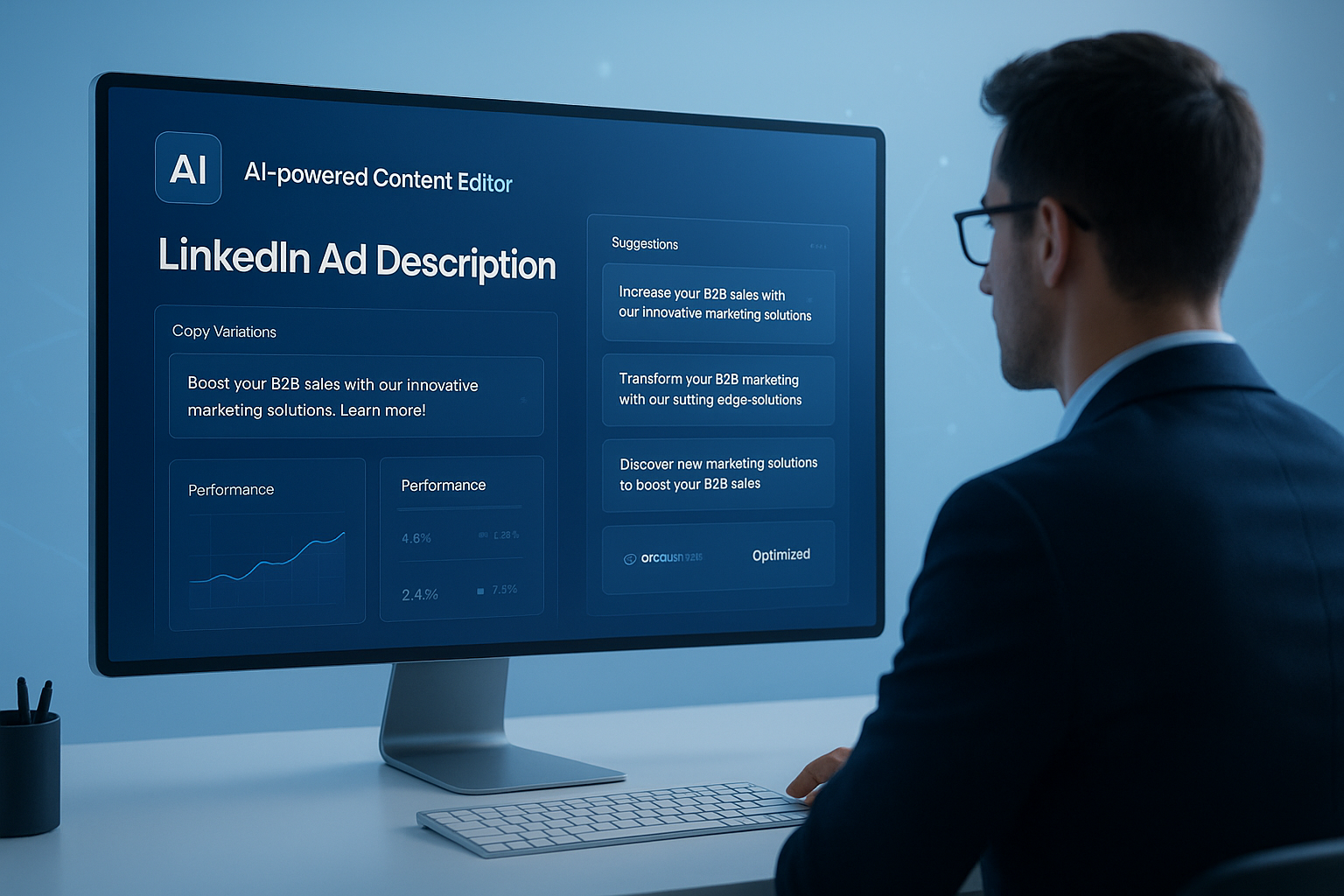
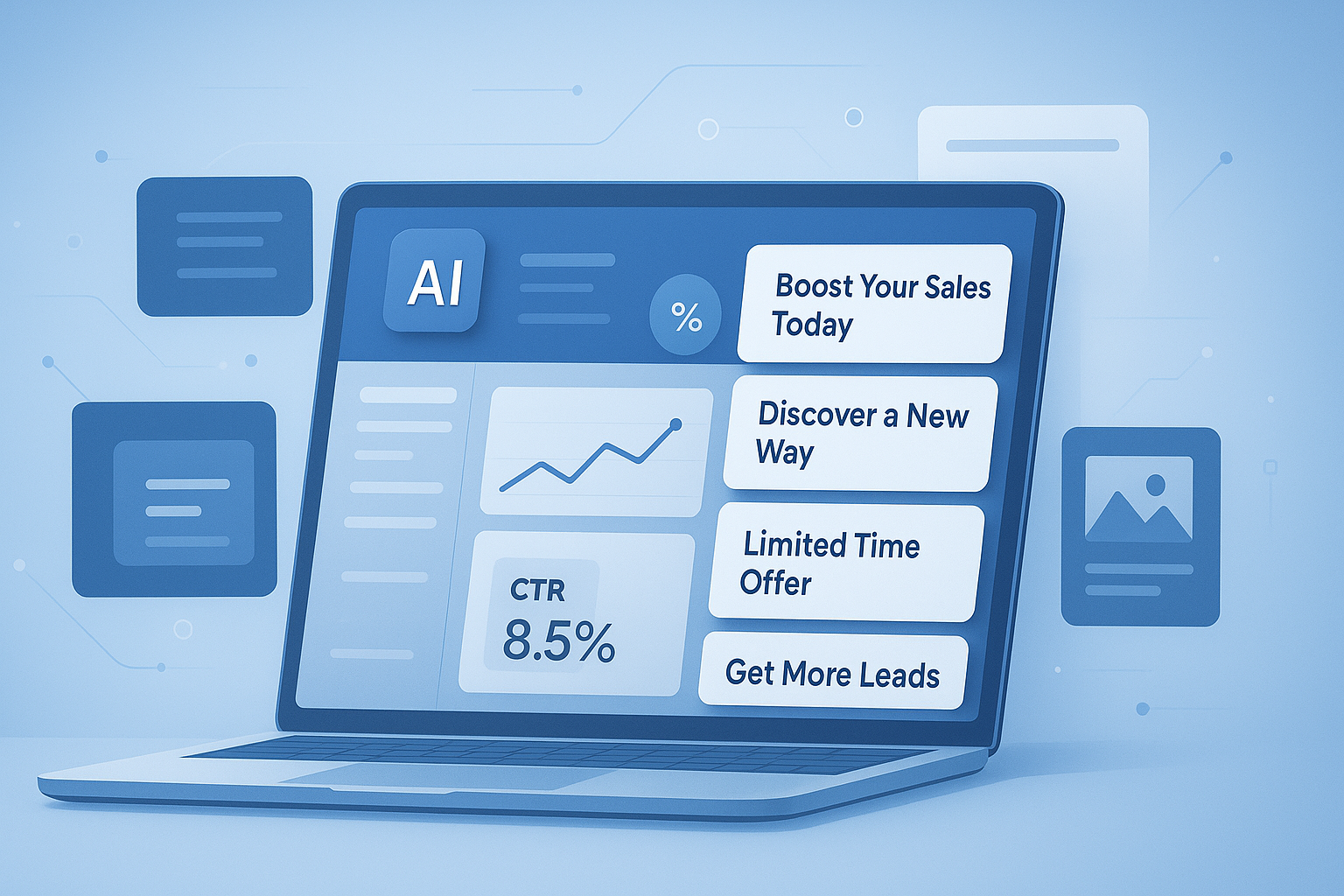
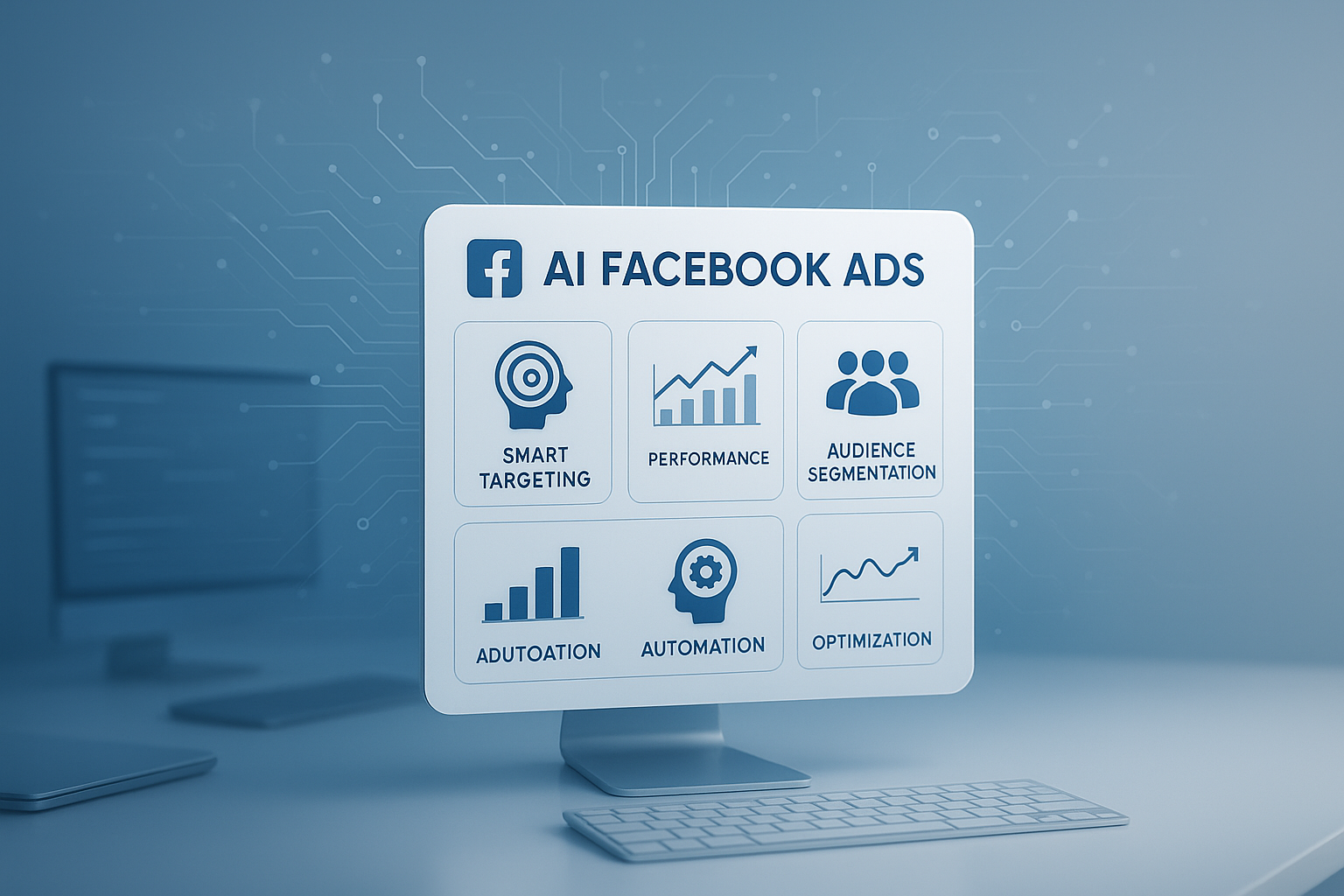
Suggested Image: Technology concept showing AI-driven ad targeting, creative testing, and campaign optimization dashboard
What are AI Facebook Ads?
AI Facebook Ads are Facebook and Instagram ad campaigns that use artificial intelligence to improve targeting, bidding, creative variation, audience prediction, and performance optimization. The AI may come from Meta’s own ad system, third-party tools, or your own workflow for generating copy, images, and testing ideas.
Here’s the simple version: AI helps reduce manual work and improve decision-making. Instead of manually defining every detail, marketers can use machine learning to let the platform identify likely converters, optimize delivery, and test multiple ad combinations at scale.
Meta already uses machine learning across ad delivery, auction dynamics, and conversion prediction. If you want to understand how Meta frames automation, the Meta Advantage suite is a useful starting point.
- AI can suggest or generate ad copy
- AI can create creative variations for testing
- AI can help identify high-intent audiences
- AI can automate bid and budget adjustments
- AI can predict which combinations are most likely to convert
For marketers creating creative assets quickly, using the right image preparation tools matters too. Before uploading visuals, an Image Compressor can help reduce file size without making ads load poorly across devices.
Why marketers are using AI Facebook Ads more aggressively in 2026
AI Facebook Ads have become more important because manual campaign management no longer scales well. Privacy changes, signal loss, creative fatigue, and rising acquisition costs have made old-school micro-targeting less reliable than it used to be.
Here’s the problem. Many teams are still trying to optimize campaigns with outdated habits like narrow audience stacking, over-segmentation, and constant manual edits. That often hurts performance instead of improving it.
AI is gaining traction because it helps in areas where modern ad platforms now have the strongest advantage:
- Broad audience modeling
- Creative testing at speed
- Real-time bidding adjustments
- Conversion pattern analysis
- Automated placement optimization
Privacy expectations also shape how campaigns should be built. Marketers should understand the basics of consumer data standards from the FTC privacy and data security guidance and Meta’s own event tracking setup requirements. That context matters when you rely on AI systems trained on behavioral signals.
If you’re also refining landing pages and campaign messaging, browsing the SEO and digital marketing tools category can help support the full funnel, not just the ad click.
How AI improves Facebook ad performance
AI improves Facebook ad performance by finding conversion signals faster, testing combinations more efficiently, and adjusting delivery based on predicted outcomes. It works best when the campaign objective, event tracking, and creative inputs are already strong.
1. Smarter audience targeting
AI is especially useful now that manual targeting has become less precise. Instead of relying only on narrow interests, Meta’s systems can use broader input signals and optimize based on who is most likely to act.
This works well when you:
- Use broad or semi-broad audiences
- Feed the system clean conversion data
- Allow enough budget and time for learning
- Avoid resetting campaigns too often
Experienced advertisers don’t just ask, “Who should I target?” They ask, “What data is the algorithm using to learn?” That small detail changes everything.
2. Faster creative testing
Creative fatigue is one of the biggest reasons campaigns stall. AI helps by generating multiple headlines, body copies, hooks, and visual concepts quickly. That gives marketers more angles to test before costs spike.
You can use AI to create:
- Headline variations
- Short primary text options
- Different calls to action
- Image prompts and visual concepts
- Audience-specific ad messaging
For example, one product might need three very different hooks:
- Problem-aware: “Still wasting hours on manual reporting?”
- Benefit-driven: “Cut campaign setup time in half”
- Proof-led: “Used by teams managing 100+ ad variations”
If you’re adapting images to fit placements, an Image Resizer is useful for quickly preparing assets for feeds, stories, and reels without awkward cropping.
3. Better budget and bid optimization
AI can analyze performance shifts faster than a human reviewing reports once or twice a day. It can reallocate spend, optimize toward conversions, and manage bids based on likely outcomes in the auction.
That does not mean full automation always wins. It means you should automate the parts the platform can evaluate faster than you can, while keeping control over strategy, offer, and creative direction.
4. Improved campaign learning
Machine learning gets better when your setup is cleaner. Tools like the Meta Pixel Helper can help you validate basic tracking environments, which is essential if you want AI systems to optimize toward the right event signals.
According to Meta Pixel documentation, event quality and implementation accuracy directly affect optimization. If the data is messy, the AI doesn’t become smart. It becomes confidently wrong.
What AI can and cannot do in Facebook advertising
AI is powerful, but it has limits. It can process patterns and speed up execution. It cannot replace positioning, market understanding, or a weak offer. That distinction keeps marketers from expecting too much from automation.
| What AI does well | What AI does poorly |
|---|---|
| Generate ad copy variations quickly | Understand brand nuance without guidance |
| Optimize delivery based on performance signals | Fix a weak offer or poor landing page |
| Test multiple creative combinations | Guarantee profitable results |
| Spot trends across larger datasets | Explain strategic market context well |
| Reduce repetitive manual setup work | Replace human judgment on messaging priorities |
Here’s what experienced professionals do differently: they use AI as a performance assistant, not a substitute for thinking. Human marketers still decide the core message, the audience pain point, the value proposition, and the business goal.
How to create AI Facebook Ads step by step
The fastest way to get better results from AI Facebook Ads is to improve the inputs before you touch automation. Start with a clear objective, reliable tracking, strong creative angles, and a landing page that matches the ad promise.
- Choose one primary campaign goal. Pick leads, purchases, app installs, or another core outcome. Don’t mix goals too early.
- Verify tracking. Confirm that events fire correctly and map to the right conversion action.
- Build a message framework. Define pain point, promise, proof, objection, and CTA before generating variations.
- Create multiple creative angles. Let AI help with versions, but not with the whole strategy.
- Use broad targeting where appropriate. Give the algorithm room to learn.
- Launch enough variations. Test hooks, images, videos, and offers in structured batches.
- Review performance by signal strength. CTR, CPC, CVR, CPA, and revenue all tell different stories.
- Refine, don’t constantly rebuild. Too many edits can reset learning and distort results.
If you’re writing multiple versions of primary text and headlines, formatting and character control matter more than many marketers think. A Character Counter can help tighten short-form ad copy for placements where brevity improves readability.
Suggested Screenshot: Example workflow showing campaign objective selection, event setup, creative inputs, and ad variation testing
Best use cases for AI Facebook Ads
AI Facebook Ads are most effective when scale, speed, and variation matter. They are especially helpful for marketers managing multiple audiences, products, or creative themes at the same time.
Ecommerce prospecting
AI works well for prospecting campaigns with broad audiences and multiple products. It can identify buyer patterns, prioritize likely converters, and adapt delivery faster than manual segmentation in many cases.
Lead generation
For lead campaigns, AI can help test different lead magnets, forms, and hooks. But lead quality must be measured beyond cost per lead. Cheap leads are easy to buy. Qualified leads are not.
Creative iteration for small teams
Small marketing teams often struggle to keep up with creative demand. AI can speed up ideation, create rough first drafts, and reduce the time needed to launch new tests every week.
Retargeting support
Retargeting still benefits from AI, especially in creative sequencing and bid optimization. But strategy matters more here than scale. Your message should match how familiar the audience already is with your brand.
If ad visitors are landing on downloadable resources or reports, keeping files lean helps with user experience. A PDF Compressor can make downloadable lead magnets easier to access on mobile.
Manual campaigns vs AI Facebook Ads
The choice is not really manual or AI. The better question is which parts of the campaign should stay manual and which parts should be automated. Most high-performing accounts use both.
| Campaign area | Best handled manually | Best supported by AI |
|---|---|---|
| Offer strategy | Yes | No |
| Audience expansion | Partly | Yes |
| Ad copy first drafts | Partly | Yes |
| Creative testing at scale | No | Yes |
| Performance interpretation | Yes | Partly |
| Budget pacing | Partly | Yes |
Now comes the important part. If you automate before you understand your funnel, AI just helps you make mistakes faster. But if your fundamentals are already strong, automation can become a significant advantage.
Common mistakes that make AI Facebook Ads underperform
Most underperforming AI Facebook Ads fail because marketers either trust automation too much or interrupt it too often. The system needs direction, clean data, and enough stability to learn from real outcomes.
- Using weak conversion signals: optimizing for low-value actions instead of meaningful outcomes
- Launching too few creative options: starving the system of variation
- Editing campaigns every day: resetting learning and creating noise
- Writing generic AI copy: copy that sounds polished but says nothing specific
- Ignoring landing page fit: ad promise and page experience don’t match
- Over-segmenting audiences: limiting the algorithm’s learning capacity
- Judging results too early: reacting before enough data accumulates
This is where many people struggle. AI-generated copy often sounds acceptable at first glance, but it lacks distinctiveness. If every ad says “boost efficiency” or “unlock growth,” performance usually drops because nothing feels concrete or believable.
To sharpen creative ideas before launch, some marketers structure campaign notes in simple text format first. A Word Counter can help trim bloated messaging and keep propositions crisp.
What metrics matter most when evaluating AI Facebook Ads?
The right metric depends on your goal, but no single number tells the full story. AI Facebook Ads should be judged using a combination of delivery, engagement, conversion, and business outcome metrics.
Top metrics to watch
- CTR: tells you whether the ad earns attention
- CPC: shows how expensive that attention is
- Conversion rate: indicates post-click effectiveness
- CPA or CPL: measures acquisition efficiency
- ROAS: useful for ecommerce, but not enough alone
- Lead quality or sales quality: often more important than low cost
- Frequency: helps spot fatigue
For analytics best practices, check Google Analytics guidance on conversion measurement. Even if your primary campaign runs on Meta, cross-checking downstream behavior can reveal whether AI is attracting the right users or just cheap clicks.
| Metric | What it tells you | Common mistake |
|---|---|---|
| CTR | How appealing the ad is | Assuming high CTR means profitability |
| CPC | Cost of traffic | Optimizing for cheap clicks only |
| CVR | Landing page and offer effectiveness | Blaming the ad for landing page issues |
| CPA | Cost to acquire a result | Ignoring quality of the result |
| ROAS | Revenue efficiency | Ignoring margin and repeat purchase behavior |
Best practices for AI Facebook Ads that actually convert
The best AI Facebook Ads combine human strategy with machine speed. You’ll usually get better results when you use AI to multiply good ideas, not generate your whole campaign from scratch.
- Start with one clear audience problem
- Write a sharp value proposition before prompting AI
- Create 3 to 5 distinct creative angles, not tiny wording tweaks
- Feed the system accurate conversion data
- Align ad copy with landing page language
- Judge creative by business outcomes, not vanity metrics alone
- Give the algorithm enough time before making major changes
- Document test results so future campaigns improve
If you publish campaign content across channels beyond paid social, the AI Paragraph Rewriter can help reshape base messaging into alternative versions for emails, landing pages, or organic posts without repeating the same phrasing everywhere.
For broader advertising policy awareness, review Meta advertising standards and the creative fatigue guidance from Amazon Ads. While the platforms differ, the creative performance principles are highly relevant.
Frequently asked questions about AI Facebook Ads
1. Are AI Facebook Ads good for beginners?
Yes, but only if beginners understand the basics first. AI can simplify setup, generate copy ideas, and automate parts of optimization. What it cannot do is teach you what a strong offer looks like or why a campaign is failing. Beginners should use AI as a support layer, then focus on learning objectives, event tracking, testing, and messaging fundamentals.
2. Do AI Facebook Ads always perform better than manually managed ads?
No. AI-supported campaigns often outperform fully manual setups in targeting and delivery optimization, but that does not mean every automated campaign will win. If your creative is weak, your tracking is wrong, or your offer is unclear, automation may scale poor decisions. The best results usually come from combining manual strategy with AI-assisted execution.
3. Can AI create Facebook ad copy automatically?
Yes, AI can create headlines, primary text, calls to action, and test variations very quickly. That said, automatically generated copy often needs editing to sound specific, credible, and on-brand. Strong marketers use AI to produce raw material, then refine the final message based on customer pain points, objections, and proven language from real campaigns.
4. What budget do I need for AI Facebook Ads?
There is no universal minimum because budget depends on your objective, market, and conversion event. In general, AI needs enough data to learn patterns, so extremely low budgets can limit performance. A practical approach is to choose one goal, keep the test focused, and fund it long enough to collect useful conversion data before making major decisions.
5. Is broad targeting better when using AI?
Often, yes. Broad targeting gives Meta’s machine learning system more room to identify likely converters, especially when your pixel and conversion events are set up properly. But broad targeting is not a shortcut. It works best when the signal quality is good, the creative is relevant, and the campaign objective is clear. Without those inputs, broad audiences can waste spend.
6. How often should I update AI Facebook Ads?
Update creative when performance declines, frequency rises, or the message stops producing efficient results. Avoid constantly changing campaigns just because a metric dips slightly for a day or two. AI systems need stability to learn. A better habit is to review on a structured schedule, compare trends over time, and only make changes when the data supports them.
7. Are AI Facebook Ads safe from a data privacy standpoint?
They can be, but safety depends on how data is collected, stored, and used. Marketers should follow platform policies, applicable privacy laws, and basic security best practices. Be transparent about tracking where required, and avoid collecting unnecessary personal data. Automation does not remove compliance responsibility. It simply changes how data-informed decisions are made at scale.
8. What tools help improve AI Facebook Ads beyond Ads Manager?
Useful supporting tools include image optimization tools, copy editing tools, pixel validation helpers, landing page analytics, and content refinement tools. Small improvements around creative preparation, message clarity, and event accuracy often produce outsized gains. The ad platform may run the auction, but your surrounding workflow strongly influences how well AI can optimize the campaign.
Final thoughts on using AI Facebook Ads effectively
AI Facebook Ads can absolutely help marketers build smarter campaigns faster, but only when the foundation is solid. Good automation starts with good inputs: a clear goal, accurate tracking, strong creative angles, and a landing page that keeps the promise made in the ad.
If you take one practical step next, make it this: audit your current setup before adding more automation. Check your event tracking, rewrite vague ad copy, and prepare more creative variations than you usually do. That alone will improve how AI performs.
To keep refining your workflow, the next helpful tools are often simple ones: an Image Compressor for faster-loading creatives, an Image Resizer for placement-ready assets, the Meta Pixel Helper for cleaner tracking checks, and an AI Paragraph Rewriter for adapting campaign messaging across channels.
The real advantage is not using more AI. It’s using AI Facebook Ads with better judgment.