Most pages do not lose clicks because they rank badly. They lose clicks because the search snippet fails to make a clear promise.
That is exactly where an AI SEO meta description generator can help. It speeds up drafting, gives you new angles, and helps turn flat page summaries into snippets people actually want to click.
But here’s the catch. AI can write a decent meta description in seconds, yet many marketers still publish snippets that are too vague, too long, or disconnected from search intent. The tool is not the strategy.
In this guide, you’ll learn how to use an AI SEO meta description generator properly, what good meta descriptions look like in 2026, where AI helps most, and how to review outputs before they go live.
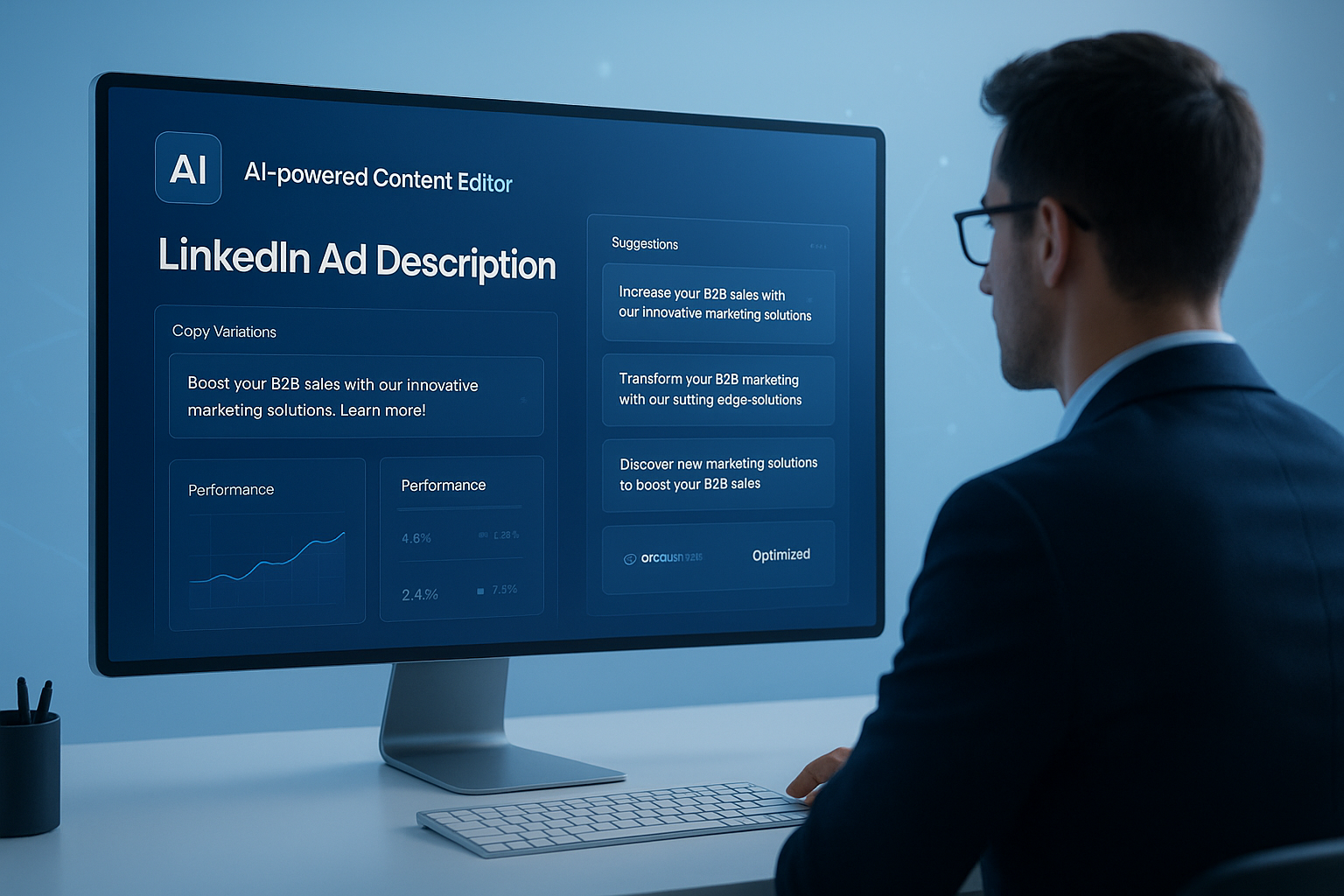
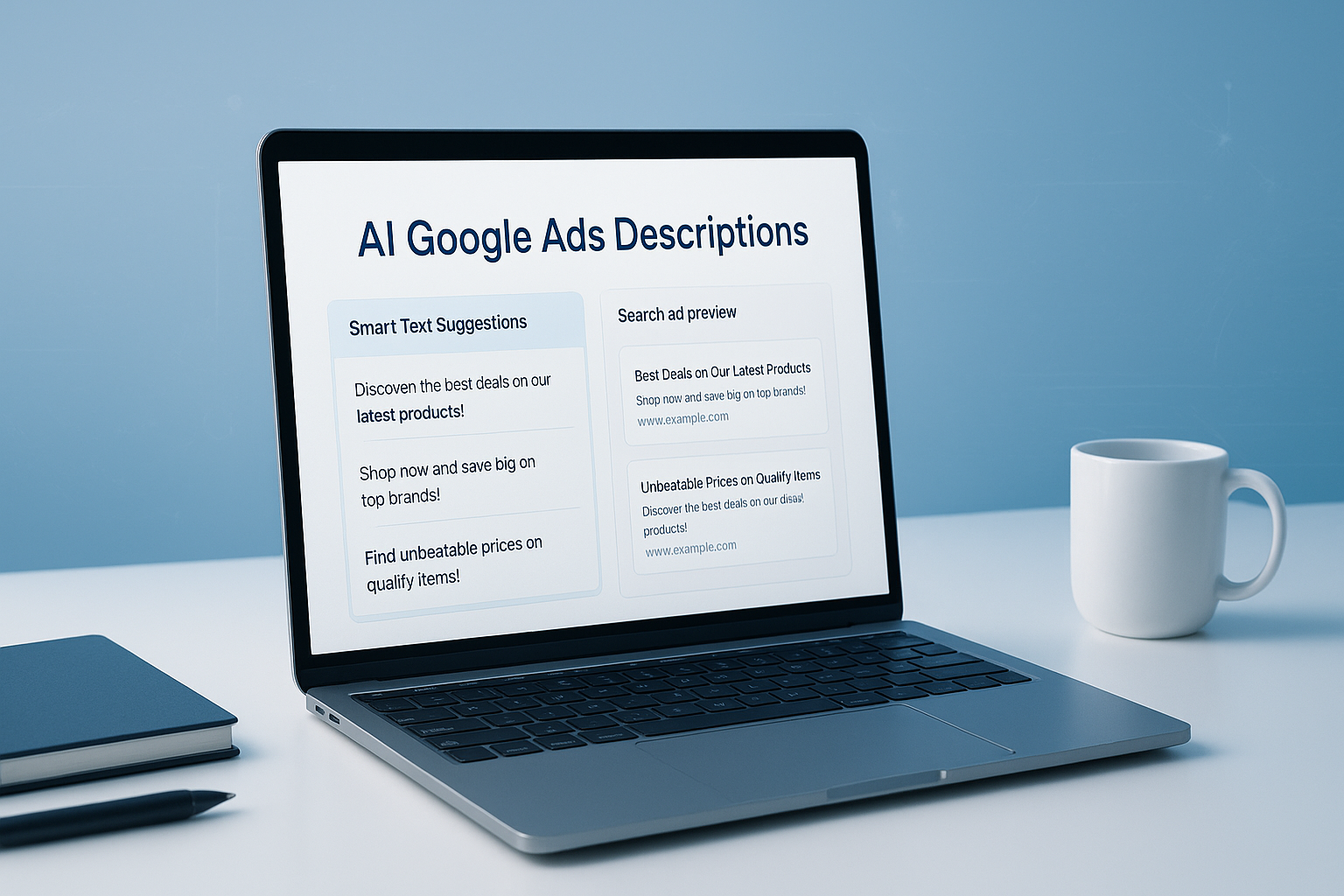
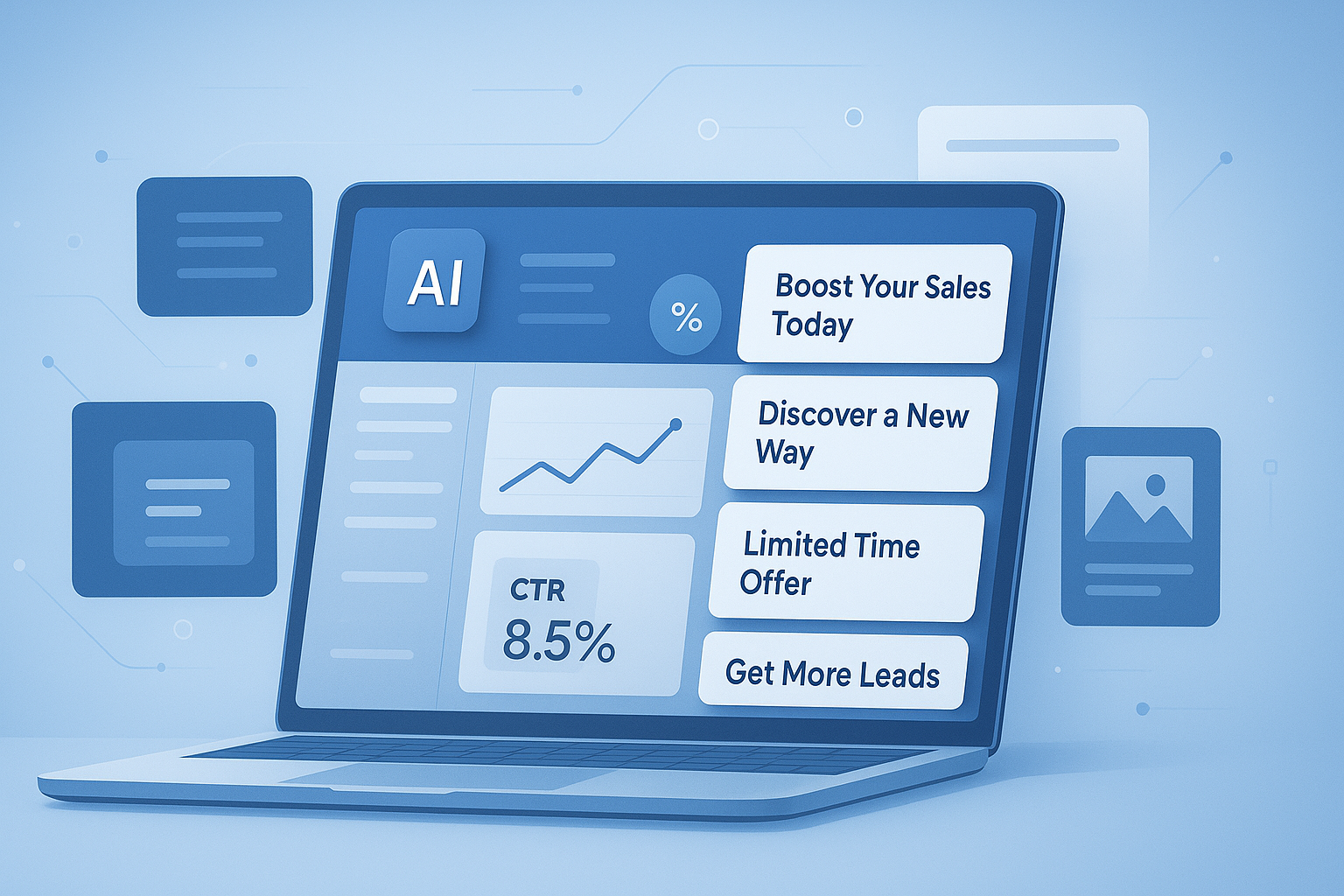
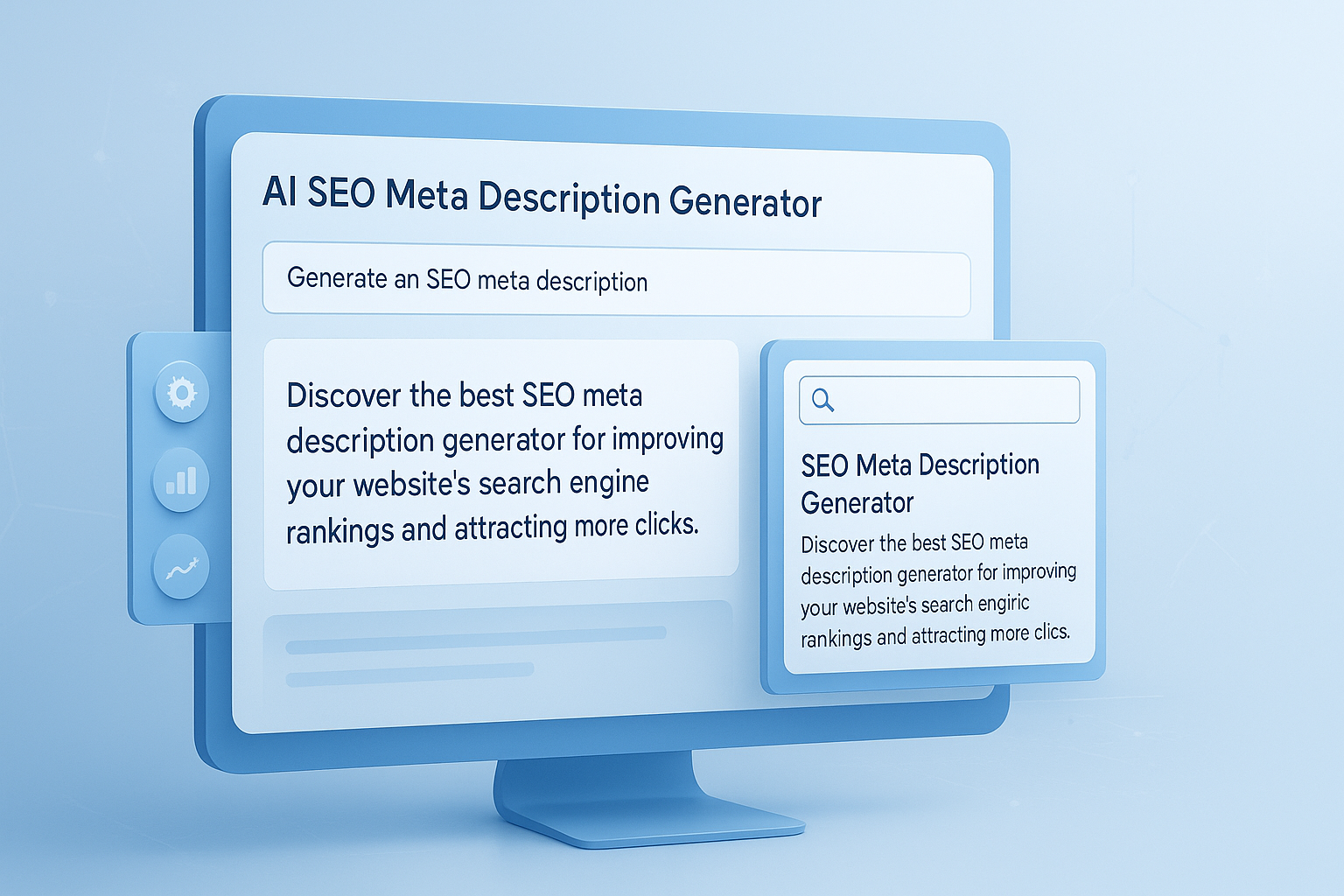
Suggested Image: Technology concept showing AI generating search snippets on a desktop dashboard
What is an AI SEO meta description generator?
An AI SEO meta description generator is a tool that creates suggested meta descriptions for web pages based on inputs such as page title, target keyword, page topic, product details, or on-page copy. Its goal is to help marketers write concise search snippets that improve relevance and encourage clicks.
In simple terms, it helps with one small but important SEO task: writing the short summary that may appear under your page title in search results.
A strong generator usually does three things well:
- Identifies the page topic quickly
- Works the main keyword into the snippet naturally
- Produces copy that sounds useful rather than forced
If you are building optimized pages at scale, tools like an AI SEO meta description generator can save time and reduce blank-page friction. The value is not just speed. It is also about generating multiple angles, such as benefit-focused, action-focused, or intent-matching snippets.
For the technical side of metadata and search appearance, Google provides useful background in its Google Search documentation.
Why meta descriptions still matter for SEO and AI search
Meta descriptions are not a direct ranking signal in the traditional sense, but they still matter because they influence click behavior, snippet quality, and how your page is summarized across search surfaces and AI-powered tools.
Let’s clear up a common misunderstanding. A meta description will not push a page to position one on its own. However, it can improve how appealing the result looks once you are already visible. That can affect traffic in a very real way.
Meta descriptions matter for several reasons:
- Higher click-through potential: Better snippets can improve CTR when users compare similar results
- Clearer relevance signals: A precise description helps confirm that the page matches the searcher’s need
- Better page summaries for AI systems: AI search tools often summarize content from multiple signals, and a strong snippet can reinforce the page’s focus
- Brand consistency: Search users often meet your site through snippets before they ever visit your page
Google may rewrite your meta description when it believes another snippet better matches the query. That is normal. Still, writing a strong description is worth it because it gives search engines a high-quality default to work with. Google explains this behavior in its guidance on controlling titles and snippets in search results.
If you are also refining page-level SEO elements, a related workflow is pairing snippet writing with an AI SEO title generator so the title and description support the same intent.
How an AI SEO meta description generator actually helps marketers
The biggest benefit is not that AI writes faster. It is that AI helps marketers move from guesswork to structured testing. Instead of staring at a blank field, you get several usable drafts that can be reviewed, improved, and aligned with the page goal.
Here is where marketers usually get the most value:
1. Faster production for large sites
Ecommerce stores, SaaS websites, publishers, and agencies often manage hundreds or thousands of pages. Writing every meta description manually takes time. AI can create a first draft for category pages, product pages, service pages, and blog posts quickly.
2. Better angle variety
One description may emphasize features. Another may focus on results, urgency, simplicity, or competitive differentiation. AI is useful when you want multiple framing options without rewriting from scratch.
3. Cleaner keyword placement
Many manually written snippets either overuse the target keyword or avoid it completely. AI tools can help place important terms naturally, especially when the prompt includes the primary keyword, search intent, and audience.
4. Support for content refreshes
Older pages often have weak metadata. AI makes it easier to update snippets across legacy content without creating a huge editing bottleneck.
5. Localized and segmented messaging
Marketers often need variants by audience, region, or funnel stage. AI can help generate versions for beginners, technical buyers, decision-makers, or local search audiences.
When preparing prompts or supporting content assets, some teams first clean and rework raw copy with an paragraph rewriter tool before turning it into metadata.
| Manual Writing | AI-Assisted Writing |
|---|---|
| Strong strategic control from the start | Fast draft generation with multiple options |
| Slower at scale | Efficient for large content libraries |
| Often limited to one angle per writer | Easy to test different messaging approaches |
| Quality depends heavily on writer time and expertise | Quality depends on prompt quality and human review |
What makes a good meta description in 2026?
A good meta description clearly explains what the page offers, matches search intent, includes the main topic naturally, and gives the user a reason to click without sounding clickbait-heavy or generic.
This is where many people struggle. They try to make the description “SEO-friendly” and end up writing something robotic. Search users do not click because they see keywords. They click because they understand the value.
Strong meta descriptions usually include:
- A clear summary of the page
- Natural use of the target keyword or a close variant
- A user benefit, solution, or outcome
- A tone that matches the audience
- Reasonable length so the snippet is not cut awkwardly
Best practices to follow:
- Lead with the page purpose, not filler
- Reflect the actual content on the page
- Use active language where it fits
- Avoid repeating the title tag word for word
- Do not make promises the page cannot fulfill
If your draft needs character cleanup or quick measurement before publishing, an word and character counter can help you check snippet length fast.
Suggested Screenshot: Side-by-side example of weak vs strong search result snippets
How to use an AI SEO meta description generator the right way
The best results come from giving the tool context, not just a keyword. If you only enter a broad phrase, you will usually get broad, forgettable copy. Give the AI enough detail to understand the page and the audience.
Here is a practical workflow marketers can use.
Step 1: Define the search intent
Start with the real purpose behind the query. Is the page informational, commercial, transactional, or navigational? A blog guide needs a different snippet than a product page or service page.
Step 2: Gather the page inputs
Have these ready before generating:
- Page title
- Primary keyword
- Secondary keywords or key entities
- One-sentence page summary
- Target audience
- Desired tone
- Main benefit or CTA angle
Step 3: Ask for multiple variants
Do not settle for a single output. Request 5 to 10 variants with different approaches, such as educational, direct, benefit-first, problem-solution, or action-oriented.
Step 4: Review for intent match
Now comes the important part. Does the snippet truly match what users will find after clicking? If not, edit it. AI often writes plausible copy that sounds good but misses the page’s real value.
Step 5: Check length and readability
You do not need to obsess over one exact character count because search engines display snippets differently by device and query. Still, concise descriptions tend to work better than bloated ones.
Step 6: Publish and monitor CTR
Use performance data to improve weak pages over time. Google Search Console is one of the best places to spot pages with impressions but disappointing click-through rates. See the official Google Search Console overview for setup and reporting details.
If you are drafting prompts from existing article pages, a quick pass through an text summarizer tool can help you condense the source material into a tighter input for the generator.
Prompt examples that produce better meta descriptions
Better prompts produce better snippets. The strongest prompts include page purpose, target audience, keyword, benefit, and tone. Without those details, AI tends to fall back on generic SEO language.
Here are useful prompt templates marketers can adapt.
Basic prompt
Write 5 SEO meta descriptions for a blog post about AI SEO meta description generators. Target audience: marketers. Search intent: informational. Include the keyword naturally. Keep each description clear, compelling, and under typical search snippet length.
Benefit-focused prompt
Create 6 meta description options for a guide that teaches marketers how to use AI to write better meta descriptions, improve CTR, and optimize snippets for search and AI overviews. Tone: practical and professional.
Product page prompt
Write 5 meta descriptions for a SaaS landing page offering an AI SEO meta description generator. Focus on speed, ease of use, and quality of snippet suggestions. Include a soft call to action.
Local business prompt
Generate 4 meta descriptions for a local dental clinic page targeting emergency dental care in Austin. Emphasize location, trust, urgent appointments, and clear service relevance.
Experienced teams often keep a prompt library so outputs stay more consistent across writers, clients, and page types.
Examples of weak vs strong AI-generated meta descriptions
The easiest way to judge quality is to compare weak and strong versions side by side. A bad description is usually vague, repetitive, and disconnected from what the page actually offers. A better one is specific, useful, and easy to understand at a glance.
| Page Type | Weak Description | Stronger Description |
|---|---|---|
| Blog guide | Learn about AI SEO meta descriptions and how they can help your website with SEO and rankings. | Learn how an AI SEO meta description generator helps marketers write clearer snippets, improve CTR, and optimize pages for search and AI results. |
| Product page | Use our AI tool for SEO meta descriptions and better online performance today. | Generate faster, more relevant meta descriptions with AI. Create click-worthy SEO snippets for product, blog, and landing pages in minutes. |
| Service page | Professional SEO services for all businesses. Contact us now for help. | Explore SEO services built to improve visibility, content performance, and organic traffic with practical strategy for growing businesses. |
The stronger versions work because they do four things:
- State the topic clearly
- Highlight a practical outcome
- Use natural language
- Avoid empty phrases like “best solution” or “online success”
If you need to clean up draft copy for readability before extracting metadata, an grammar checker tool can help spot awkward phrasing quickly.
Common mistakes when using AI for meta descriptions
Most poor results come from weak inputs and no editorial review. AI can produce polished-sounding descriptions that still fail in search because they are generic, misleading, or too similar across pages.
Here are the mistakes to watch for:
- Using the same prompt for every page: This creates repetitive snippets with little differentiation
- Forcing the keyword: Overstuffed descriptions look unnatural and may reduce trust
- Ignoring the page content: If the snippet promises something the page does not deliver, users bounce
- Publishing duplicate descriptions sitewide: This weakens page uniqueness
- Making the copy too salesy: Informational content usually performs better with clarity than hype
- Relying on AI without testing: Good snippet writing improves over time through actual CTR data
For technical guidance on descriptions, metadata, and HTML practices, the MDN HTML documentation is a reliable reference.
How to optimize meta descriptions for Google AI Overviews and AI search engines
You cannot write a meta description that guarantees inclusion in AI Overviews, ChatGPT, Gemini, or Perplexity answers. What you can do is make your page easier to interpret by keeping metadata clear, aligned, and consistent with the page’s actual content.
Here is what helps most:
- Stay literal first: AI systems interpret direct language better than vague promotional wording
- Match the surface-level question: If the page answers “what is,” “how to,” or “best practices,” reflect that in the snippet
- Support the page entity clearly: Mention the primary topic naturally
- Reinforce the page outcome: Explain what the reader will gain
- Keep on-page headings aligned: The description should not promise a different scope than the article delivers
This small detail changes everything: AI search optimization is less about “talking to AI” and more about reducing ambiguity. A precise snippet helps both users and machine interpretation.
Structured content also matters. Google offers broader recommendations through its guidance on creating helpful, reliable, people-first content.
If your workflow includes page assets, you may also want to prepare lightweight visuals for SEO posts using an image compressor so pages load faster without sacrificing image usefulness.
AI-generated vs human-edited meta descriptions: which is better?
The best answer is usually both. AI is faster at producing options. Humans are better at understanding nuance, brand voice, and real search intent. In practice, the highest-performing workflow is AI generation followed by human editing.
| Approach | Best Use Case | Main Limitation |
|---|---|---|
| Fully manual | Small sites, premium pages, highly strategic campaigns | Time-intensive |
| Fully AI-generated | Large-scale draft creation | Higher risk of generic or inaccurate copy |
| AI plus human edit | Most marketing teams and agencies | Still requires review process |
Here’s what experienced professionals do differently. They do not ask whether AI can replace the task. They ask which parts should be automated and which parts still need judgment.
Best practices for teams managing meta descriptions at scale
When you manage snippets across many URLs, consistency matters almost as much as creativity. Teams that scale this well usually rely on templates, review rules, and performance data instead of treating each description as an isolated one-off task.
Useful operational practices include:
- Create prompt templates by page type
- Keep keyword and intent fields standardized
- Set review rules for accuracy, length, and duplication
- Log variants tested for important pages
- Monitor CTR trends in Search Console monthly
- Refresh weak snippets during content audits
A simple workflow can look like this:
- Pull page URL, title, keyword, and page summary
- Generate 5 to 10 ad-like but accurate descriptions
- Filter out generic or repetitive options
- Edit top 2 choices manually
- Publish one version
- Review CTR and rewrite if performance lags
If you work with exported metadata lists or spreadsheets, a quick case converter tool can help normalize messy title or snippet text before review.
Suggested Infographic: AI meta description workflow from page input to CTR review
Frequently asked questions
Do meta descriptions still affect SEO if Google rewrites them?
Yes. Even when Google rewrites a snippet for a specific query, your meta description still matters as the default page summary you provide. A strong description helps search engines understand the page and can still be used in many results. It also improves your own content quality standards and keeps messaging consistent across your site.
What is the ideal length for a meta description?
There is no single perfect number because snippet display changes by device, query, and search result format. In practice, marketers usually aim for concise descriptions that communicate value quickly. Focus less on chasing an exact character limit and more on clarity, relevance, and front-loading the most useful information near the beginning.
Can an AI SEO meta description generator improve click-through rate?
It can help, but not automatically. The generator gives you faster draft options and more messaging angles to test. CTR improves when the final description matches search intent, clearly explains the benefit of the page, and stands out from competing results. AI helps with speed and variation. Human review is what usually improves performance.
Should every page on a site have a unique meta description?
Ideally, yes, especially for pages that target different keywords, audiences, or page purposes. Unique descriptions help users understand why one result is different from another. For very large websites, complete uniqueness may not always be practical at first, but important landing pages, category pages, service pages, and high-traffic content should absolutely be prioritized.
Is it safe to use AI-generated metadata on client websites?
Yes, if there is a review process. The risk is not the use of AI itself. The risk is publishing unchecked outputs that contain weak claims, inaccurate wording, duplicate messaging, or brand voice issues. Treat AI as a drafting assistant, not a final approval system. Review every snippet before publishing, especially on regulated or high-stakes pages.
What inputs should I give an AI tool for better meta descriptions?
At minimum, provide the page title, primary keyword, target audience, search intent, and a short page summary. Better outputs usually come from adding a key benefit, page type, and tone preference. The more specific your inputs are, the less likely the tool is to generate generic copy that could apply to almost any page.
How do I know if a meta description needs rewriting?
Look for pages with strong impressions but weak CTR in Search Console. You should also rewrite descriptions that are outdated, duplicated, too vague, too long, or disconnected from the current page content. If the snippet does not answer “Why should someone click this result?” within seconds, it likely needs a better version.
Is an AI-generated description better than writing one manually?
That depends on the page and the process. For a single strategic landing page, a skilled human writer may produce the best final snippet from scratch. For larger sites, AI usually wins on speed and idea generation. The strongest overall method is AI-assisted drafting followed by human editing, especially when consistency and scale both matter.
Final takeaway
An AI SEO meta description generator is most useful when you treat it as a smart drafting tool, not as autopilot. It can help marketers produce better snippet options, save time across large sites, and support stronger click-through performance. But the final quality still depends on intent, accuracy, and editing.
If you want better results, start with one content cluster or page type. Generate multiple descriptions, edit the best one, publish it, and track CTR over time. That small testing loop usually teaches more than any generic SEO rule.
To make the workflow easier, you can also use FreeToolr tools like the AI SEO title generator, word and character counter, grammar checker tool, and text summarizer tool as part of your metadata review process.