
Publishing faster is easy. Publishing useful content consistently is much harder. That’s why a solid AI content writing workflow matters. Without one, teams end up with vague prompts, generic drafts, repeated edits, and content that looks finished but doesn’t perform.
Marketers don’t need AI to replace strategy. They need it to remove friction from research, outlining, drafting, optimization, and repurposing. The right workflow turns AI into a reliable assistant instead of a content risk.
This guide walks through a practical process you can use in 2026: how to plan, prompt, draft, fact-check, refine, optimize, and publish AI-assisted content that still sounds human. You’ll also see where people lose quality, how to prevent it, and which steps deserve human judgment every time.
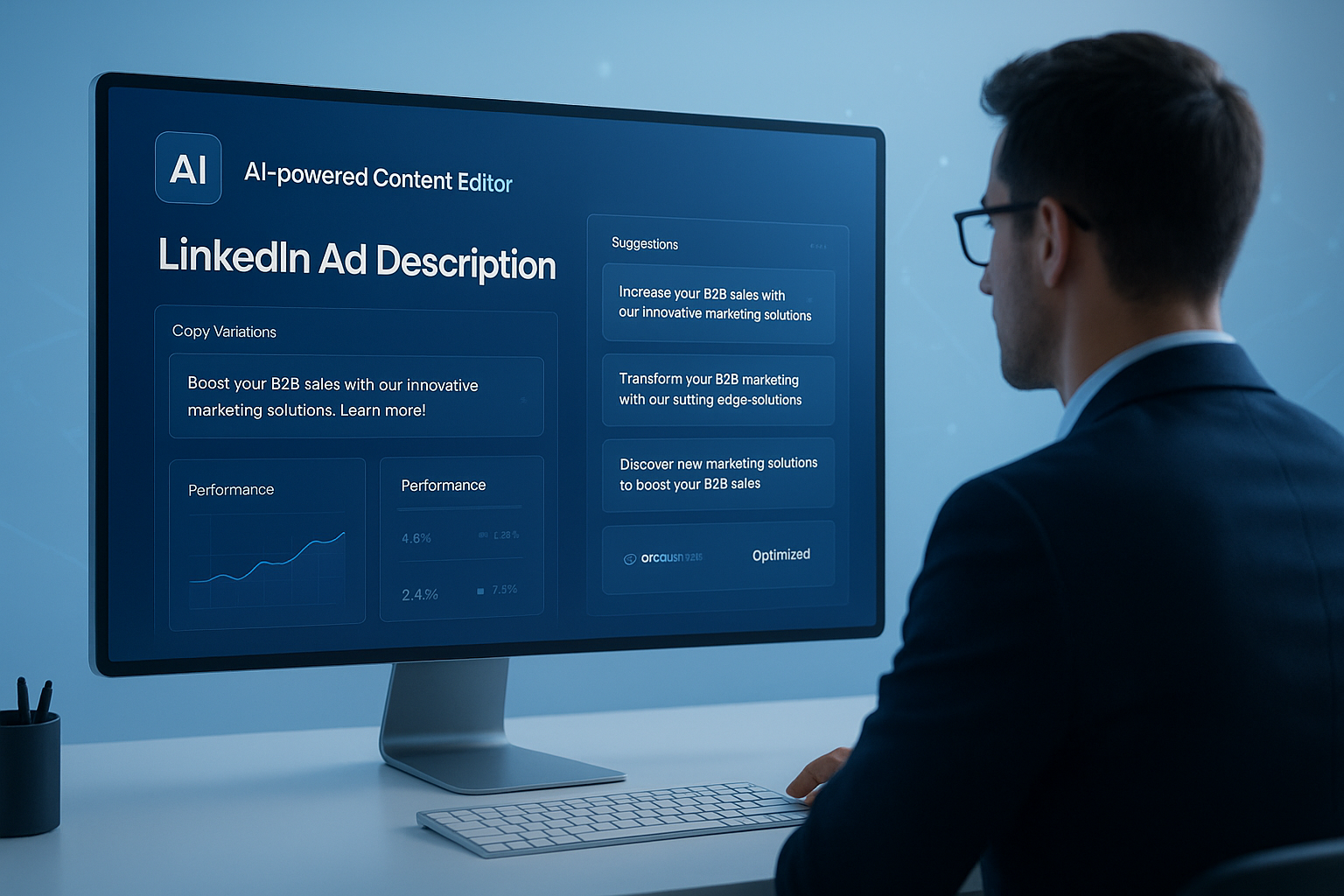
Suggested Image: Technology concept showing a marketer moving through an AI-assisted content workflow from research to publishing
What is an AI content writing workflow?
An AI content writing workflow is a repeatable process for using artificial intelligence to support content creation from idea to publication. It usually includes research, keyword planning, prompt design, outlining, drafting, editing, fact-checking, SEO optimization, formatting, and post-publish updates.
The keyword here is workflow. AI on its own generates text. A workflow turns that text into content that matches search intent, brand voice, and quality standards.
- AI handles: ideation, summarization, first drafts, variations, formatting help
- Humans handle: strategy, positioning, accuracy, experience, final judgment
- Best results come from: clear inputs, strong review steps, and defined approval rules
If you also manage content assets after drafting, a tool like Image Compressor can help reduce image size before publication so pages stay fast and easier to load.
Why marketers need a workflow instead of random prompting
Here’s the problem. Many teams use AI like a shortcut, not a system. That often leads to inconsistent quality, duplicated ideas, weak differentiation, and content that sounds polished but empty.
A structured AI content writing workflow helps marketers protect performance in three areas: efficiency, quality, and trust. It also makes collaboration easier across SEO, content, design, and approvals.
| Without a Workflow | With a Workflow |
|---|---|
| Prompts vary by person and task | Prompts follow a repeatable structure |
| Drafts often miss search intent | Content maps to keywords, audience, and format |
| Editing takes longer than expected | Review is faster because standards are clear |
| Tone changes across articles | Brand voice stays more consistent |
| Higher risk of factual errors | Fact-checking is built into the process |
Google continues to emphasize helpful, reliable, people-first content in its guidance, which makes editorial controls more important than ever. See Google’s helpful content guidance for the broader standard AI-assisted content still needs to meet.
The complete AI content writing workflow step by step
A high-performing workflow starts before the first prompt. If the input is weak, the draft will be weak too. The process below keeps AI focused on useful output rather than generic prediction.
1. Define the content goal
Start with purpose, not prompts. Decide what the content must achieve for the business and the reader.
- Is the goal traffic, leads, product education, or retention?
- What search intent should the page satisfy?
- Who is the reader, and what do they already know?
- What should they do next after reading?
A simple content brief is enough. If your team needs to standardize article length or word targets, an online word counter tool can help set realistic scope before drafting begins.
2. Research keywords and search intent
This is where many people rush. AI can suggest terms, but marketers still need to validate intent and topic direction. Search results themselves are often the best clue.
Look for:
- Primary keyword and close variations
- Questions people ask around the topic
- Common subtopics ranking pages cover
- SERP features such as snippets, videos, FAQs, and AI Overviews
- Whether the query is informational, commercial, or navigational
Google’s documentation on SEO basics is still a useful reference for understanding how search visibility depends on clear relevance, crawlability, and helpful page structure.
3. Gather source material before prompting
AI performs better when it has something grounded to work from. Don’t ask for a final article based on nothing. Collect product notes, expert quotes, customer pain points, internal docs, performance data, and trusted external references first.
This step improves originality because the model is reacting to your information, not just generating a broad average of the web.
- Internal briefs
- Sales call notes
- SME interviews
- Research papers or documentation
- Analytics from existing content
- FAQs from support or customer success
If your team works with screenshots, downloadable files, or visual references, a PDF to JPG converter can help turn source pages into assets that are easier to review and reuse in content planning.
4. Build a strong prompt framework
A good prompt gives AI constraints. A weak prompt invites filler. Experienced professionals don’t write “Write me a blog post.” They provide role, audience, format, key points, exclusions, and success criteria.
A useful prompt structure looks like this:
- Define the role: editor, SEO writer, product marketer
- Define the audience: beginners, marketers, SaaS buyers
- Define the goal: educate, compare, explain, convert
- Provide source notes or facts
- Specify tone and reading level
- List required sections and questions to answer
- State what to avoid, such as fluff or unsupported claims
Example prompt pattern: Create an outline for an informational blog post aimed at content marketers. The article should explain the full AI content writing workflow from research to final SEO checks. Use clear subheadings, practical steps, and common mistakes. Avoid hype, vague advice, and repetitive language.
5. Ask AI for an outline before the draft
Now comes the important part. Don’t jump straight to 2,000 words. Get an outline first and review it. This gives you a chance to fix weak angles, missing sections, or poor hierarchy before the writing starts.
Review the outline for:
- Logical flow
- Coverage depth
- Intent match
- Originality opportunities
- Sections that need expert input
If you need to clean up copied research notes before turning them into prompts, a remove line breaks tool can make raw text easier to paste and process.
6. Generate a rough draft in sections
Long prompts often produce flat writing. A better approach is section-by-section generation. Ask AI to draft one heading at a time so you can guide depth, clarity, and examples as the piece develops.
This improves quality because you can:
- Correct tone early
- Prevent repeated ideas
- Add brand-specific details
- Insert examples where generic text appears
- Challenge weak claims before they spread through the article
For technical formatting or code-based publishing environments, HTML Formatter can help tidy article markup before upload.
7. Add human experience and differentiation
This small detail changes everything. AI can explain common knowledge well. It usually struggles with lived experience, strong editorial judgment, and nuanced positioning. That’s where marketers earn differentiation.
Add details like:
- What actually happens during team reviews
- Why a tactic fails in real campaigns
- Trade-offs between speed and quality
- Examples from specific industries
- Lessons from updating underperforming pages
Without this layer, AI-assisted content often feels complete but forgettable.
8. Fact-check every important claim
Never assume the draft is accurate. AI can invent sources, merge facts, or present outdated advice with confidence. Review anything related to statistics, legal requirements, technical instructions, health, finance, or platform guidance.
Trusted sources for checks include:
- Google Search Central documentation
- MDN Web Docs
- Microsoft Learn
- Official company documentation for tools being referenced
- Government and academic sources when relevant
If you quote or summarize published material, make sure references are accurate and current.
9. Edit for readability, voice, and trust
This is where the draft becomes publishable. Editing is not just grammar correction. It is where you remove generic phrasing, tighten logic, simplify complex lines, and make the article sound like a real person with expertise.
Edit with these questions in mind:
- Would a reader learn something specific here?
- Does the article answer the query early enough?
- Are examples practical or just decorative?
- Is the tone consistent with the brand?
- Are there any claims that need proof?
For page copy that includes meta titles or descriptions, a character counter for SEO fields helps keep snippets within practical display ranges.
10. Optimize for SEO and AI search systems
SEO now overlaps with answer engines, summaries, and conversational search results. That means structure matters as much as keywords. Make the article easy for both readers and machines to interpret.
Optimize with:
- Clear H2 and H3 headings
- Direct answers under question-based sections
- Lists and tables for scanability
- Natural internal linking
- Concise definitions
- Relevant entities and supporting terms
- Strong introduction and conclusion alignment
Google also recommends writing descriptive title links and helpful snippet-friendly content. See Google guidance on title links for practical details.
11. Format, publish, and monitor performance
The workflow does not end at publish. The strongest AI-assisted teams revisit pages based on search performance, engagement signals, conversions, and content freshness.
Track:
- Ranking movement
- Click-through rate
- Time on page
- Scroll depth
- Conversion behavior
- Sections users skip or revisit
After updates, keep media light and pages clean. If you create supporting visuals from text-heavy documents, a JPG to PDF tool can help package screenshots or review assets for stakeholder approval.
What should humans do and what should AI do?
The answer depends on one thing: risk. The more strategic, sensitive, or brand-defining a task is, the more human oversight it needs. AI is excellent at acceleration. It is less reliable at judgment.
| Task | Best Owner | Why |
|---|---|---|
| Keyword brainstorming | AI with human review | Fast pattern detection, but intent still needs validation |
| Content strategy | Human | Requires business judgment and prioritization |
| Outline creation | AI first, human refinement | Good for speed, but structure needs editorial logic |
| First draft | AI assisted | Saves time on routine exposition |
| Fact-checking | Human | Accuracy cannot be delegated fully |
| Brand voice polishing | Human | Nuance and tone consistency need human judgment |
| Meta descriptions and variants | AI with human selection | Useful for testing multiple options quickly |
How to make AI-written content sound more human
Most weak AI content has the same problems: predictable phrasing, broad statements, thin examples, and too many sentences that say something without really saying anything. The fix is not “tricking detectors.” The fix is better writing.
Here’s what experienced editors do differently:
- Replace vague claims with specific observations
- Use examples from real workflows, not abstract scenarios
- Cut duplicate transitions and repeated sentence patterns
- Add contrast, such as what works and what fails
- Use shorter paragraphs and uneven rhythm
- Prefer plain language over polished emptiness
Before and after example
| Weak AI-style sentence | Improved human-edited version |
|---|---|
| AI can help businesses improve their content creation process in many different ways. | AI is most useful when it speeds up repetitive tasks like outlining, summarizing research, and generating draft variations that a marketer can quickly refine. |
| It is important to ensure quality and optimization. | If you skip fact-checking and final SEO review, the time saved in drafting usually comes back as lost performance after publication. |
Suggested Screenshot: Example of an AI draft before editing and the same section after human revision
Common mistakes that weaken an AI content writing workflow
Most teams don’t fail because AI is bad. They fail because their process is loose. A few avoidable mistakes create most quality problems.
- Starting with drafting instead of strategy: the content ends up directionless
- Using one broad prompt for everything: output becomes generic
- Skipping source collection: the article lacks authority and originality
- Trusting AI facts without review: errors slip into published pages
- Over-optimizing keywords: readability drops and intent gets distorted
- Ignoring formatting: walls of text reduce engagement
- Not updating after publish: performance stalls while competitors improve
For teams handling CMS uploads or code snippets inside content templates, a JSON Formatter can be useful when validating structured data or workflow exports during handoff.
A practical AI workflow marketers can use each week
If you want a working system, keep it simple enough to repeat. The best workflow is the one your team will actually follow under deadlines.
- Monday: choose topics, confirm keyword intent, build briefs
- Tuesday: gather sources, draft outlines, review structure
- Wednesday: generate and expand drafts in sections
- Thursday: edit for clarity, examples, voice, and accuracy
- Friday: optimize for SEO, add links, format, and schedule publication
This rhythm works especially well for lean teams because it keeps research, generation, and editorial review separate. That separation is important. It prevents weak prompts from quietly shaping the whole article.
How this workflow supports Google, AI Overviews, and answer engines
Search visibility is no longer just about ranking ten blue links. Your content may be summarized, quoted, compared, or extracted into AI-generated answers. That changes how articles should be written and structured.
To improve visibility across search and AI platforms:
- Answer the main question early
- Use clear definitions under headings
- Break processes into steps
- Use comparison tables where decisions are involved
- Support claims with trusted sources
- Include original observations and examples
- Keep article structure logical and readable
Google explains many of these presentation principles in its structured data introduction, which is useful when you want content elements to be easier for search systems to interpret.
Frequently asked questions
Can AI write a full blog post without human editing?
It can, but that does not mean it should. AI can produce a readable article quickly, yet speed is not the same as quality. Human editing is still needed for search intent alignment, fact-checking, examples, brand voice, and stronger conclusions. In most marketing teams, AI is best used for structured assistance, not unsupervised publishing.
What is the biggest benefit of using an AI content writing workflow?
The main benefit is consistency. A defined workflow reduces random results and makes production easier to manage across writers, editors, and SEO teams. It also shortens the time spent on repetitive work while preserving the parts that need real judgment, such as strategy, positioning, and trust-building.
How many prompts should be used for one article?
Usually more than one. Strong content is rarely created from a single prompt. Many marketers use separate prompts for research summaries, headline ideas, outline generation, section drafting, FAQ creation, and revision. Breaking the work into stages gives you more control and usually produces a better final article.
Is AI content bad for SEO?
No. Low-quality content is bad for SEO, whether a human or AI wrote the first draft. Search engines care more about usefulness, originality, trust, and relevance than about the writing method alone. If AI-assisted content is accurate, clearly structured, and genuinely helpful, it can perform well.
How do I keep AI-generated content from sounding generic?
Give the model better inputs, then edit aggressively. Include source material, audience context, real examples, and required takeaways in your prompt. After drafting, remove vague language, add specific observations, and rework repeated sentence patterns. The more original detail you add, the less generic the article feels.
What parts of the workflow should never be fully automated?
Content strategy, fact-checking, legal or compliance review, and final editorial approval should stay under human control. These steps involve risk, nuance, and business context that AI cannot reliably manage on its own. Automation works best in support tasks, not final accountability tasks.
Does this workflow work for small teams and solo marketers?
Yes. In fact, small teams often benefit the most because AI can reduce the workload of outlining, brainstorming, and first-draft creation. The key is keeping the workflow lean. You do not need a complex system. You need a repeatable one with clear checkpoints for accuracy and quality.
Which metrics matter most after publishing AI-assisted content?
Start with search impressions, clicks, rankings, click-through rate, and conversions. Then look at engagement measures such as time on page or scroll depth if available. If a page is getting visibility but not clicks, the headline or snippet may need work. If it gets clicks but low engagement, the content likely misses intent or clarity.
Final thoughts
A strong AI content writing workflow does not make marketers less important. It makes their judgment more valuable. AI can speed up research, outlines, and drafting, but the content that performs well still depends on human choices: what to say, what to verify, how to structure it, and how to make it worth reading.
If you want better results, start with one repeatable process. Build a brief, collect real sources, prompt in stages, edit hard, and review every key claim before publishing. That alone will put your content ahead of most rushed AI output.
As a next step, refine the practical parts of your process with helpful tools such as an online word counter tool, character counter for SEO fields, Image Compressor, and HTML Formatter. These won’t replace strategy, but they will make the workflow cleaner, faster